Laminitis Prevention: Keeping Hooves Happy
Which Horses Need Extra Care?
Any horse, pony or donkey can get laminitis, but some need more watching than others:
- Good-doers that put on weight easily, including many native ponies, cobs and donkeys.
- Overweight horses, or any horse with a hard, thick crest along the top of the neck.
- Older horses, since some hormonal conditions that raise the risk are more common with age.
- Horses that have had laminitis before, which are more likely to have it again.
If your horse is in one of these groups, ask your vet to help you make a prevention plan.
Keep Weight Steady
Weight is the big one. A large UK study that followed more than 1,000 horses and ponies found that those that gained weight were more than twice as likely to develop laminitis as those that kept their weight steady or lost it, and that owners often missed the gain.
Score your horse's condition by hand every few weeks and take a weigh-tape reading at the same time, then write both down. Our body condition scoring guide shows where to feel. If the numbers creep up, act early: weigh the hay, cut out extra bucket feeds and treats, and think about whether your horse needs a blanket at all, since a horse that keeps itself warm burns more energy.
Manage the Grass
Rich, fast-growing grass is one of the most common triggers. Grass can surge in spring and again in autumn after rain, and its sugar levels change with the weather and the time of day. Ways to keep grazing under control include:
- Strip grazing: moving an electric fence a little at a time so the horse gets a small fresh strip, not the whole field.
- A track system: a fenced track around the edge of the field keeps horses walking while limiting grass.
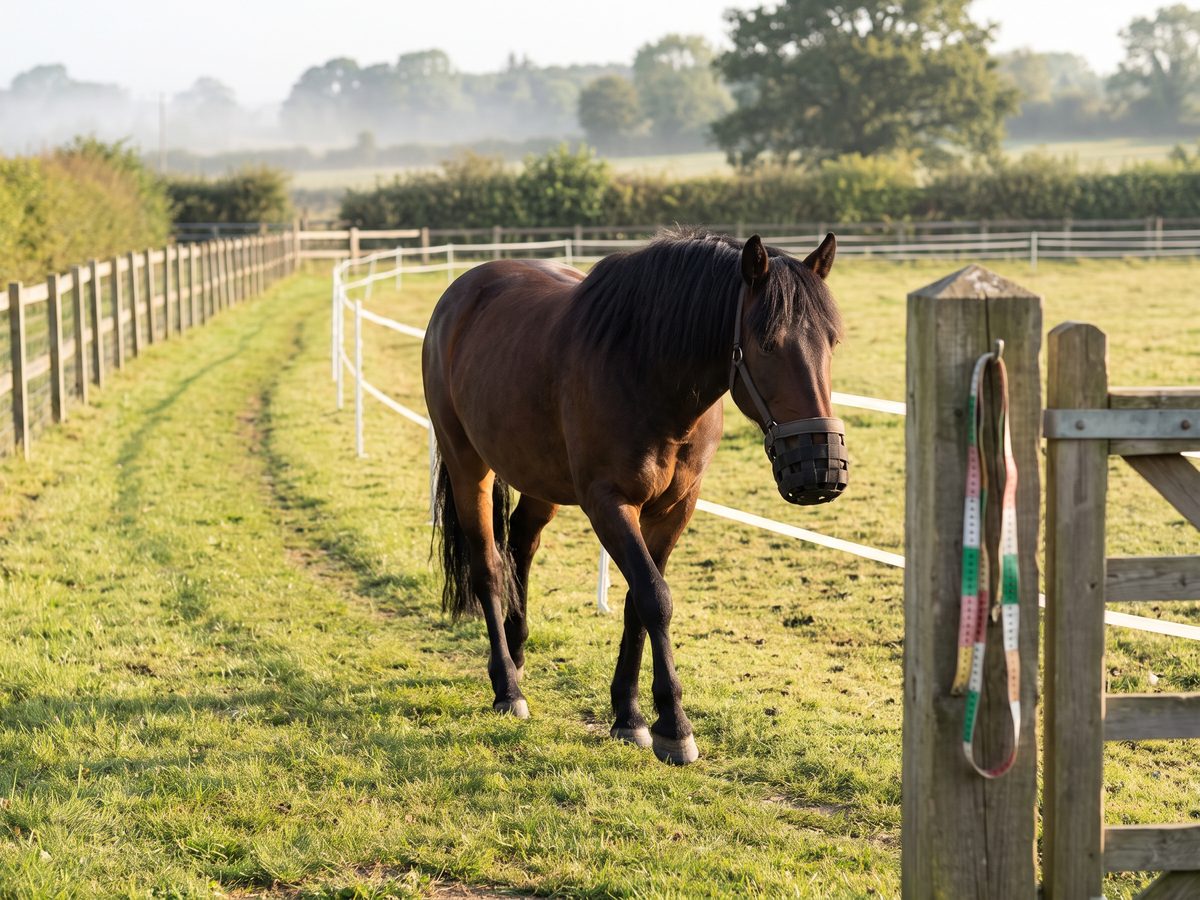
- A grazing muzzle: lets a good-doer stay out with friends while eating less. Ask your vet how long it should be worn each day.
- A dry lot or sand paddock: a grass-free area with weighed hay for part of the day.
- Watching the weather: many vets suggest extra care on lush pasture after sunny days followed by cold nights. Ask your vet what suits your horse.
Our grazing and pasture management page covers fencing and field care in more detail.
Hay and Hard Feed
Feed forage first: hay or haylage should make up most of the diet, weighed so you know how much your horse really gets. Many at-risk horses do best on hay with a low sugar content, and a hay analysis can tell you what yours contains. Soaking hay can lower its sugar, but ask your vet or an equine nutritionist before you start.
Keep sugary and starchy hard feeds to a minimum, make any feed change slowly, and keep the feed room locked: a loose horse that gorges on grain or mix is at real risk. See feeding horses forage first and reading a feed tag.
Supplements, medicines and anything sold as a treatment: see your vet or a pet supply store with trained staff. Don't rely on a supplement to make up for too much grass.
Gear for Grass and Weight Control
Each button opens a search in your own country's Amazon store. As an Amazon Associate we earn from qualifying purchases.
A weigh tape and a hanging scale help you track weight and weigh hay. A small-hole haynet makes hay last longer, a soaking tub helps if your vet suggests soaked hay, and electric fencing makes strip grazing and track systems easy to set up. A grazing muzzle is worth having if your vet recommends one.
Movement and Hoof Care
Regular exercise helps keep weight down, as long as your horse is sound and your vet is happy. Brisk walking and steady trotting are a good start, and a track system adds gentle movement all day.
Keep up regular visits from your farrier or trimmer. The same study found a higher risk in horses whose feet were trimmed or shod more than eight weeks apart. Your farrier can tell you the right interval for your horse. See hoof care and the farrier.
A Plan With Your Vet
Some horses have hormonal conditions that make laminitis more likely. If you have an older horse, a good-doer that's hard to slim down, or a horse that has had laminitis before, ask your vet whether checks make sense and what a yearly plan should include. Your vet can also help you set a target weight.
Frequently Asked Questions
What owners ask about keeping laminitis away.
Can laminitis be prevented completely?
Not always, but many cases are linked to things owners can manage, such as weight gain and rich grass. Keeping weight steady, controlling grazing and keeping up hoof care all lower the risk.
Which horses are most at risk?
Good-doers that gain weight easily, many native ponies, cobs and donkeys, overweight horses, older horses and any horse that has had laminitis before. Your vet can tell you how your horse fits in.
Is spring grass the only danger?
No. Grass can grow fast in autumn too, and laminitis can happen at any time of year. Weight and grazing need watching all year round.
Should my pony wear a grazing muzzle?
A muzzle can cut down how much grass a good-doer eats while still letting it move and be with friends. Ask your vet whether one suits your pony and how long to use it each day.
Does soaking hay help?
Soaking can lower the sugar in hay for some horses, but it also washes out some nutrients. Ask your vet or an equine nutritionist before you start, and how long to soak.
Related Reading
- Body condition scoring: fat, thin or just right.
- Grazing and pasture management: limiting rich grass.
- Donkeys and miniature donkeys: good-doers that need careful feeding.
This page is about prevention only. If you're worried about your horse's feet or the way it's moving, best to call your vet.