Labrador Retriever: Temperament, Appetite and Everyday Care
Who a Labrador Suits
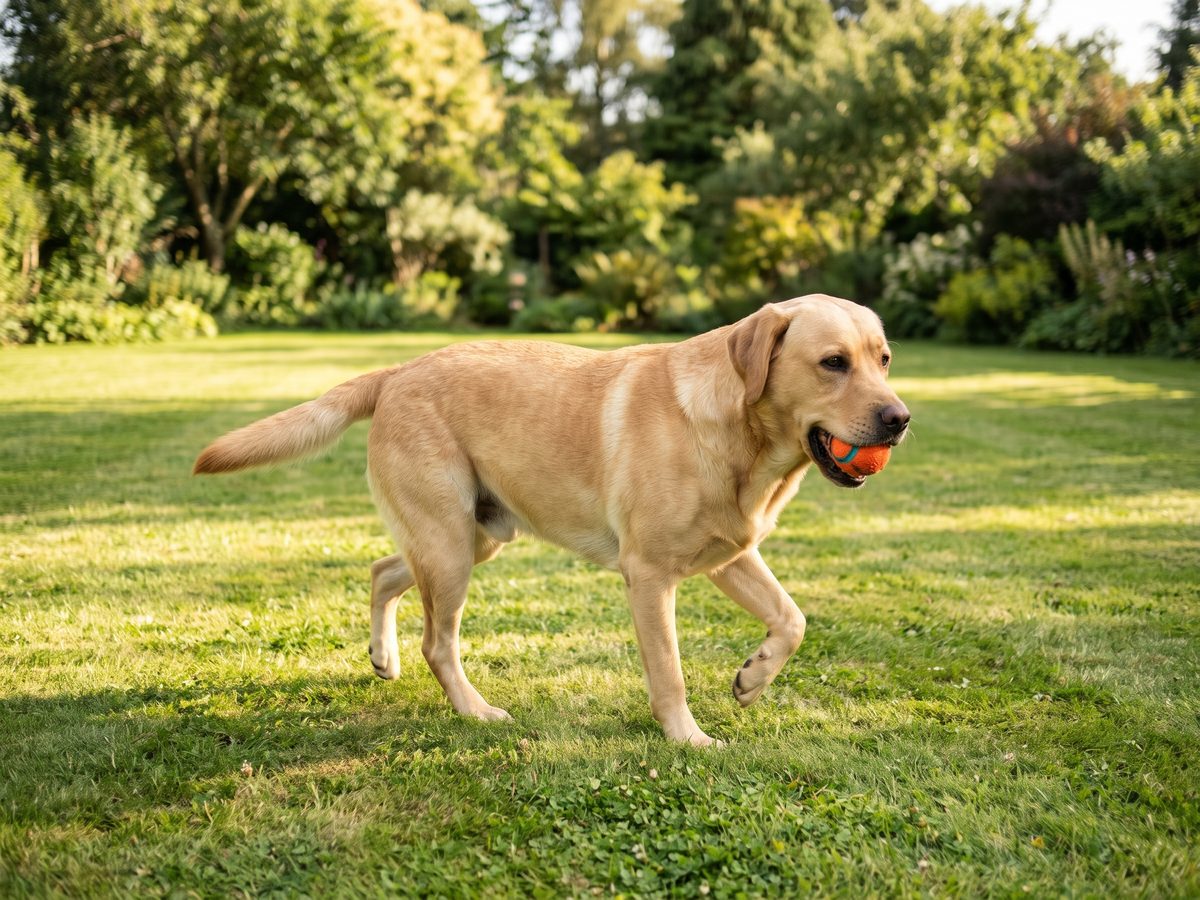
Labs are sociable, good-natured and keen to please, which is why so many work as assistance and guide dogs. They suit families who enjoy walks, play and a bit of training every day.
They are a harder fit for long days alone, for very tidy homes, and for anyone expecting a calm dog from day one. Apartment life can work with plenty of exercise, but a bored young Lab will find its own entertainment, often involving shoes.
Appetite and Weight
Many Labradors are extremely food-motivated. Research from the University of Cambridge found a gene variant in some Labradors that is linked to stronger food drive and higher weight, though not every carrier is overweight.
- Weigh meals rather than scooping by eye.
- Count treats as part of the day's food, and use some of the daily ration for training.
- Check body condition by feel: the thick coat hides a creeping waistline.
- Ask your vet to weigh your dog at each visit.
A lean Lab carries less strain through its joints over a lifetime, so this is one of the most useful habits you can build.
Exercise, Retrieving and Mental Work
Labs were bred to fetch game for hunters, so carrying things and working with a person comes naturally. The Royal Kennel Club suggests more than two hours of exercise a day for an adult. Mix walks with retrieving games, scent puzzles and training. Most Labs love to swim, which is easy on the joints where it's safe.
For a puppy, ask your vet or breeder how much exercise suits its age. Work early on loose-leash walking and not jumping up; a 70 lb (32 kg) greeting is a lot of dog.
The Puppy Phase Is Long
The calm adult reputation hides a mouthy, energetic puppy and teenage stage that often runs well past a year. Consistent reward-based training, chew toys and enough exercise get you through it. See puppy biting and mouthing. An adult rescue Lab has often already outgrown this stage, which is worth thinking about.
Gear That Fits a Labrador
Each button opens a search in your own country's Amazon store. As an Amazon Associate we earn from qualifying purchases.
A harness cut for a broad, deep chest sits better than one made for a slimmer dog. A slow-feed bowl stretches out a meal for a dog that inhales it. A tough, floating retrieving toy suits a strong mouth and a love of water. A deshedding tool handles the seasonal shed, and kitchen scales make measured meals easy.
Health: What to Ask the Breeder and Your Vet
In the UK, The Royal Kennel Club lists hip, elbow and eye screening and several DNA tests (including for exercise-induced collapse and a form of progressive retinal atrophy) as good practice for Labrador breeders. In the US, ask for OFA hip, elbow and eye results. Ask to see results for both parents.
Floppy ears and a love of swimming mean damp ears, so dry them after swims and check them weekly; see cleaning dog ears safely. Book a check-up soon after your dog comes home, and ask your vet about vaccinations, neutering timing and a parasite prevention plan.
Worming, flea and tick products and joint supplements: see your vet or a pet supply store with trained staff. They can tell you what suits your dog.
Frequently Asked Questions
Food, energy and fur top the list.
Are Labradors always hungry?
Many are. Some carry a gene variant linked to stronger food drive. Measured meals and counted treats are part of normal Lab care.
How much exercise does an adult Labrador need?
The Royal Kennel Club suggests more than two hours a day. Mix walks, retrieving, swimming and training. Too little exercise tends to show up as weight gain and chewing.
Are Labradors good with children?
Usually, yes, which is why they are such popular family dogs. A bouncy young Lab can knock over a small child, so supervise and teach calm greetings.
Do Labradors shed a lot?
Yes. The short double coat sheds all year and heavily in spring and fall. A weekly brush, more in shedding season, keeps it under control.
When do Labradors calm down?
Many settle somewhere after their second birthday, though it varies. Training and enough exercise make a big difference along the way.
Can a Labrador be left alone?
For short periods, once it has learned to settle. Labs are sociable and don't do well with long days alone.
Related Reading
- Golden Retriever: the Lab's feathered cousin.
- Dog enrichment ideas: brain games for busy retrievers.
- Dog feeding and watering: slow feeders and bowls.
Breed traits are tendencies, not promises. If your Labrador is limping, has a sore ear, or its appetite or behavior changes suddenly, call your vet.