Ragdoll Cats: Handling, Enrichment and Heart Screening
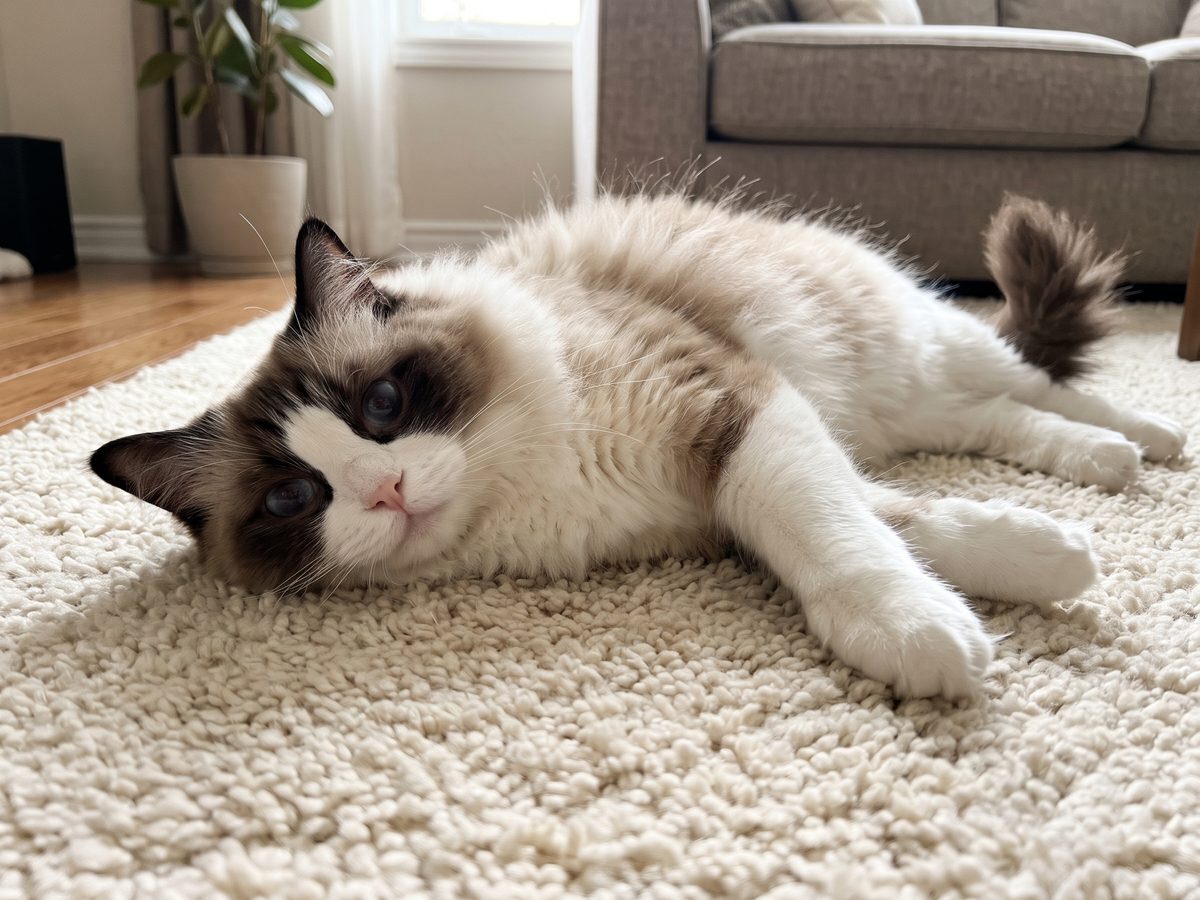
Docile on paper, still a cat that needs a plan. The table below is where that plan starts.
| Size | Growth period | Handling | Energy | Lifespan | Good with |
|---|---|---|---|---|---|
| Large, often 10–20 lb (4.5–9 kg) as an adult | Roughly three to four years to full size | Tolerant, often goes limp when held | Low to moderate, generally laid-back | Often 13–18 years | Children with supervision, calm households |
Who Should Bring a Ragdoll Home
A relaxed, deeply handling-tolerant temperament is this breed's whole draw, and that makes it a good fit for a household ready to supervise young kids, not one that assumes the cat's easy nature makes supervision unnecessary. Building enrichment into the daily routine on purpose belongs in the plan too, since a calm temperament doesn't mean this cat will occupy itself the way a more independent breed might.
Expecting a maintenance-free companion purely because the coat sheds less than a true longhair's misreads the tradeoff involved: comfort here still needs active protecting. Overhandling is one risk; an under-stimulated, sedentary routine is the other.
The Flop Is Real, So Handle Gently
Going limp when picked up is a well-known breed tendency, and it's part of what makes this cat so approachable for a busy household, but it carries a real downside: a cat that relaxes fully into someone's arms may also tolerate uncomfortable handling longer before showing any sign of protest than a breed that reflexively squirms free.
That makes active supervision with young children a requirement, not a nice-to-have, since a small child's idea of gentle handling and an adult's can differ significantly. Teaching kids to support the cat's full body weight, never carry it by the middle, and stop the moment the cat shows any discomfort protects a temperament that, left unchecked, would otherwise absorb more than it should.
Enrichment So the Flop Doesn't Become the Whole Personality
A Ragdoll's easygoing nature can slide into real passivity if nothing in the environment invites activity, since this isn't a breed that reliably self-starts play the way a more driven cat does. Building in a short daily wand-toy session, rotating a couple of toys weekly, and giving access to a window perch or two turns a naturally calm cat into an engaged one instead of a cat that simply naps through the day untouched. This site's indoor cat enrichment guide lays out the fuller five-pillar setup, worth treating as a requirement here, not an optional add-on for a more excitable breed.
Growth and Size
Where many cats reach full adult size within their first year, a Ragdoll typically keeps filling out for three to four years, one of the slower growth curves in the cat world alongside the Maine Coon's. A young adult that already looks fully grown at eighteen months may still add real weight and frame over the following couple of years, which matters for gear sizing and for judging body condition: a cat mid-growth naturally carries a different shape than one that has finished. Tracking weight with a vet across this longer window gives a clearer read than comparing against a shorthair breed's much faster timeline.
Heart Screening for HCM
Hypertrophic cardiomyopathy (HCM) is a heart muscle condition seen in Ragdolls, and an owner can't spot it early at home. Breeders can DNA-test for one known gene variant in the breed, and vets screen with a heart scan (echocardiogram). A clear DNA test lowers the risk but doesn't rule HCM out, so ask your vet about a screening plan through adult life.
Our Birman care guide covers a smaller colorpoint breed with its own quieter, steadier version of this same gentle-companion temperament.
Gear for an Easygoing, Growing Cat
A wand toy that draws out a natural chase response pulls its weight for a breed that won't always start play on its own, and a couple of window perches add vertical interest cheaply, without demanding much floor space. A wide-tooth comb suits the semi-long coat's lighter matting needs better than a heavy-duty deshedding tool built for a denser coat. Because size keeps climbing well past most cats' first birthday, a large-breed bed and bowl set sized for the eventual adult saves a frustrating replacement purchase partway through the growth curve.
Frequently Asked Questions
The flop reflex, handling with kids, and HCM screening draw most of the questions on this breed.
Does a Ragdoll actually go limp when picked up?
Many do, at least to some degree. It's the trait the breed is named for: a tendency to relax fully into a person's arms instead of tensing or bracing. Individual cats vary in how strongly this shows up, and it's a temperament tendency, not something every single Ragdoll does identically.
Does going limp mean a Ragdoll puts up with rough handling?
It can mean a Ragdoll tolerates more before it protests, which is why supervision with young children counts for more with this breed than with a cat that squirms away. A Ragdoll's easygoing nature can mean tolerating too much before showing any sign of discomfort, so the adult in the room carries more responsibility for reading the cat.
Is a laid-back Ragdoll basically a low-maintenance cat?
Not entirely. A calm temperament makes daily handling easier, but the same easygoing nature means this cat won't necessarily seek out its own stimulation the way a more assertive breed might. Building play and vertical access into the routine matters just as much here as coat brushing does.
How long does a Ragdoll take to reach full size?
Roughly three to four years for most cats, considerably slower than the one-year timeline most cat breeds follow. A Ragdoll that already looks fully grown at eighteen months may still be adding weight and frame well into its fourth year.
Is HCM more common in Ragdolls than in other cats?
HCM is seen in the breed, and a DNA test exists for one known gene variant, though it doesn't catch every case. That's why heart screening with your vet matters across the cat's whole adult life, not only as a kitten.
Does the semi-long coat need the same daily combing as a true longhair?
Usually not. A Ragdoll's coat lacks the dense undercoat that makes a true longhair mat so readily, so a few sessions a week generally holds up well. The britches, belly, and behind the ears still deserve regular attention, since those spots mat first regardless of overall coat type.
Are Ragdolls a good match for a home with young kids?
Often yes on temperament, since the breed's tolerance suits a busier, less predictable household. That tolerance is exactly why active supervision still matters: a cat this willing to put up with clumsy handling needs an adult making sure that handling stays gentle.
Related Reading
- Ragamuffin: the close relative.
- Birman: another gentle colorpoint.
- Indoor cat enrichment: keeping a docile cat active.
Breed traits are tendencies, not promises, and this guide is no substitute for your vet. Sudden difficulty breathing, open-mouth breathing, or a sudden collapse calls for an emergency vet visit immediately, and a vet who already knows this breed's cardiac risk is best placed to set an appropriate screening schedule.