Horse Feed and Treats: Forage First, Then the Bag
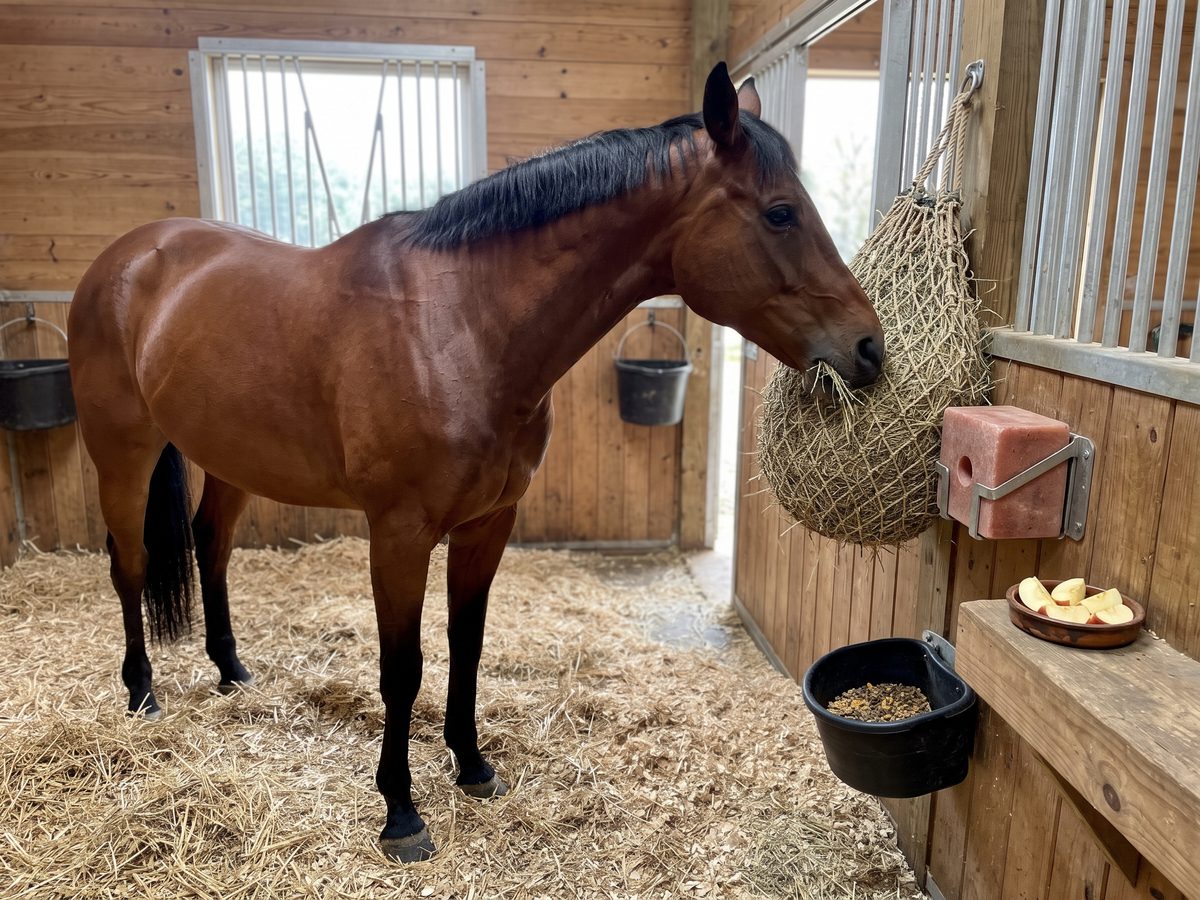
Feed labels, brands and names differ from country to country, so the buttons below search by type. For how much to feed and how to change a diet safely, read feeding horses forage first, and ask your vet or an equine nutritionist about any horse with special needs.
Forage and Hay Alternatives
Each button opens a search in your own country's Amazon store. As an Amazon Associate we earn from qualifying purchases.
Local hay from a supplier you trust is usually the best value, and most owners buy it by the bale or the load. Bagged forage is useful when hay is short or poor: chopped hay or alfalfa (lucerne) for topping up, hay cubes or pellets that can be soaked for horses that struggle to chew, and a hay steamer or soaking tub if your vet suggests it.
Ration Balancers or a Complete Feed?
A ration balancer is a small daily serving of protein, vitamins and minerals for a horse that keeps its weight on forage alone: most native ponies, cobs and resting horses. A complete feed carries fiber and calories as well, so it can replace part of the hay for a horse in hard work, a thin horse or an older horse with worn teeth. Feeding a full complete feed on top of plenty of forage is the common mistake. Our reading a feed tag guide explains the label.
Salt and Mineral Licks
Horses need salt every day, more in hot weather and work. A plain salt lick in the field and stable lets them help themselves, and a holder keeps it clean and off the floor. A mineral lick can help where your horse gets no balancer or bucket feed, but don't stack several mineral products together without advice.
Slow Feeding and Feed Room Kit
Horses are built to eat little and often for much of the day. A small-hole haynet or hay bag makes hay last longer, which helps a good-doer on a weighed ration. A hanging scale lets you weigh hay instead of guessing, and lidded bins keep feed dry and rodents out. Shallow feed buckets or a corner manger are easy to clean.
Treats, Kept Small
A few treats are fine for most horses, and handy for catching and training. Choose low-sugar options for ponies and good-doers, count them as part of the day's food, and feed from a bucket if your horse gets nippy about hands. Slices of carrot or apple are classic; cut them lengthwise so they are less of a choking risk. A treat ball or lick toy can keep a stabled horse busy.
Frequently Asked Questions
Bags, balancers and biscuits: the usual three.
What is the difference between a complete feed and a ration balancer?
A complete feed supplies fiber and calories as well as nutrients, so it can replace part of the hay. A ration balancer is a small daily serving of protein, vitamins and minerals for a horse that already gets enough calories from forage.
Does my pony need a bucket feed at all?
Many native ponies keep their weight on grass and hay alone. They still need vitamins and minerals, which a small balancer or a mineral lick can supply. Ask your vet or a nutritionist if you aren't sure.
Can treats replace part of a meal?
No. Treats are a small extra for reward and training. If your horse needs more food, change the ration itself, with help from your vet or a nutritionist if needed.
How do I change my horse's feed safely?
Gradually, over days, mixing a little more of the new feed or hay in each time. Sudden changes to hay, grass or bucket feed are a common cause of upset.
Related Reading
- Feeding horses forage first: how much hay, and why.
- Reading a feed tag: fiber, sugar, starch and feeding rates.
- Senior horse feeding: when teeth wear down.