Donkeys and Miniature Donkeys: Care, Company and What to Expect
Who Donkeys Suit
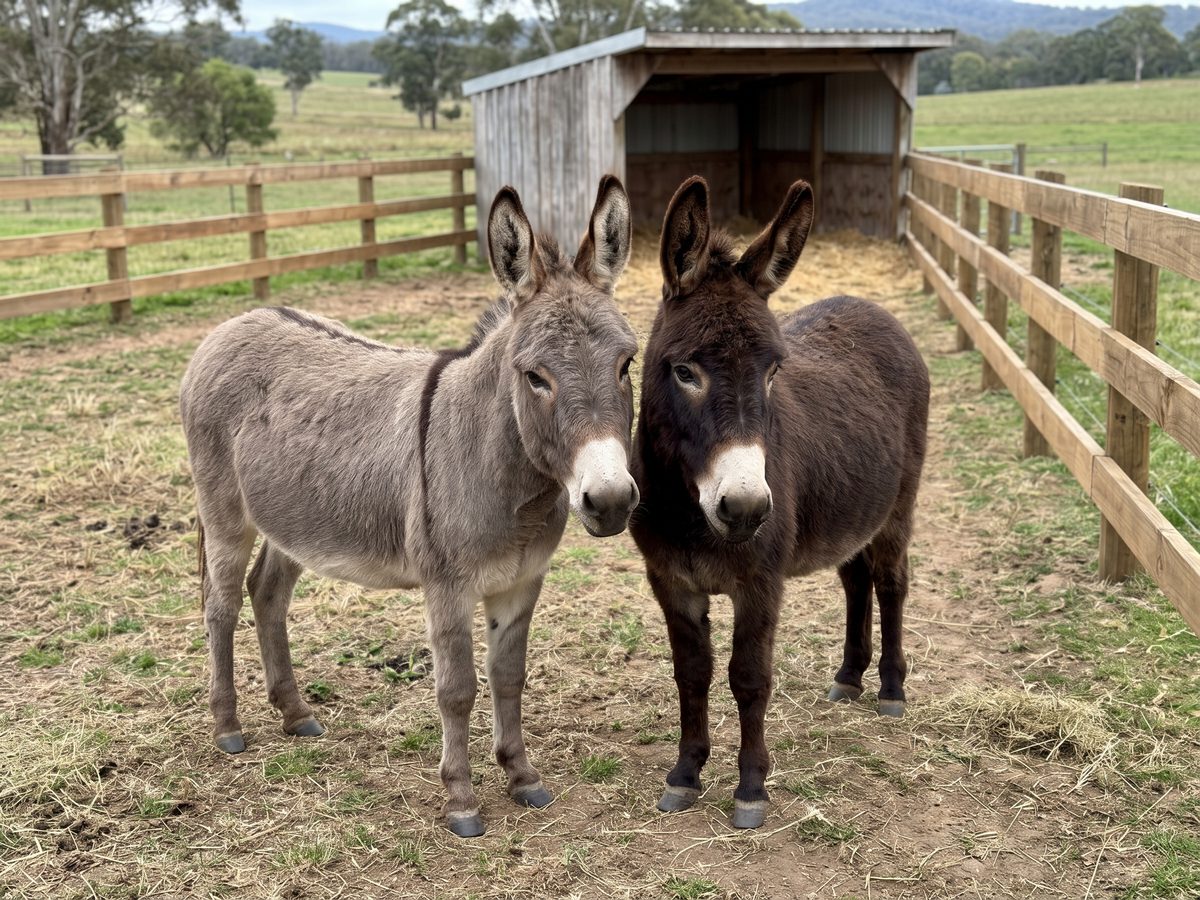
Donkeys suit patient people with secure grazing, good shelter and a long horizon. They are affectionate and steady, and a bonded pair grazing together is one of the most peaceful sights on any smallholding.
They suit people less well if they expect a small horse, a big dog or a lawnmower. Donkeys think before they act, which is often mistaken for stubbornness, and they remember how they were treated. Children enjoy them, but most donkeys are too small to be ridden by anyone but small children, and only if the donkey is trained and the right size for the rider.
Never Alone: Why Donkeys Need a Friend
Donkeys form strong, lasting bonds and do badly on their own, however much time people spend with them. Plan for two from the start. Another donkey is the ideal friend; a horse or pony can work if they get on well.
If a donkey is kept with sheep or goats, it still needs equine company of its own. Bonded donkeys should stay together when rehomed, and when one is gone for good, ask your vet or a donkey charity for advice on the one left behind.
Feeding: Built for Scrubland, Not Lush Grass
Donkeys come from dry, sparse country and are very good at getting by on tough, fibrous food. On rich pasture and plenty of hay they put on fat quickly, and they store fat differently from horses.
- Fiber first: The Donkey Sanctuary in the UK recommends barley straw, available to pick at all day, as the main forage for most healthy donkeys, with some hay. Elsewhere, good grass hay and controlled grazing are the usual base. Ask your vet what suits yours.
- Limit grass in spring and summer with a smaller paddock or a track system.
- Skip sugary treats and bucket feeds unless your vet advises them.
- Salt and water: a plain salt lick and clean, fresh water.
Extra weight raises the risk of laminitis, so ask your vet about keeping your donkeys trim. If a donkey needs to lose weight, plan it with your vet: it must happen slowly. Our body condition scoring guide explains how to check.
Shelter, Hooves and Teeth
A donkey's coat is less waterproof than a horse's, and donkeys dislike getting wet. Give them a dry, draft-free shelter, open so they can go in and out whenever they want, with a dry, easy-clean floor. Hooves stay healthier on dry ground too.
Donkey hooves are shaped differently from horses' and grow steadily. Many donkeys need a trim every 6 to 10 weeks from a farrier who knows donkeys. Book a dental check at least once a year. See hoof care and the farrier.
Gear for a Pair of Donkeys
Each button opens a search in your own country's Amazon store. As an Amazon Associate we earn from qualifying purchases.
A well-fitted donkey or pony headcollar and lead rope are the first buy: donkey heads are a different shape, so try sizes. A small-hole haynet makes rationed hay last, and a salt lick holder keeps the block clean. A field shelter kit can work where you have no building. Soft brushes and a hoof pick cover daily care.
Land and Fencing
Donkeys need room to walk, graze and play, but rich, unlimited grass is bad for them. Many owners divide grazing so they can rest paddocks and limit grass in the growing season, with a dry area by the shelter. Fencing should be solid and safe for equines; donkeys are strong and will lean on a weak fence. Our grazing and pasture management guide covers resting fields and poisonous plants.
Preventive Care
Donkeys are stoic: they tend to hide pain and look quiet when unwell, so learn what normal looks like for yours and call your vet if one seems dull, isn't eating, or just seems different. Ask your vet about vaccinations and a worming plan guided by fecal egg counts, and find a vet who knows donkeys before you need one.
Worming, vaccinations and medicines: see your vet or a pet supply store with trained staff. Donkeys are not small horses, so advice should be for donkeys.
Finding Your Donkeys
Donkey rescues and sanctuaries in several countries rehome bonded pairs, often with ongoing support and advice. If you buy, see both donkeys together, ask about their history and handling, and in the UK check passports and microchips before money changes hands. Our buying a horse guide covers vettings and paperwork, which apply to donkeys too.
Frequently Asked Questions
Company, size and grass come up first.
Can a donkey live on its own?
No. Donkeys form strong bonds and do badly alone, even with lots of human company. Keep at least two, ideally both donkeys.
How long do donkeys live?
Often 25 to 35 years, and some live longer. That is longer than most dogs and many horses, so plan for decades.
How big is a miniature donkey?
To be registered as a miniature in the US, a donkey must be 36 inches (91 cm) or less at the withers when fully grown. Standard donkeys are larger.
Can donkeys live with horses?
Often, yes, if they get on and the grazing suits the donkeys. Donkeys usually need less grass than horses, so rich horse pasture may need limiting for them.
Do donkeys need blankets?
Most need a dry shelter more than a blanket, because their coats are less waterproof than horses'. Older or thin donkeys sometimes benefit from a blanket in wet, cold weather; ask your vet.
Do donkeys need passports?
In the UK, yes: every donkey needs a passport, and in England a microchip too. Other countries have their own rules, so check with your national authority.
Related Reading
- Why horses need company: the same goes, doubly, for donkeys.
- Poisonous plants and ragwort: what to clear from the paddock.
- Shetland pony: another small equine that is anything but simple.
Donkeys hide pain well. If yours seems quiet, off its food or just not itself, call your vet rather than waiting.