Fish & Aquariums
Friendly guides to keeping fish well, in the order a real tank comes together: pick a tank big enough, cycle it before any fish arrive, keep the water clean, then choose fish that suit the tank and each other. Pond keepers and would-be saltwater fans are covered too.
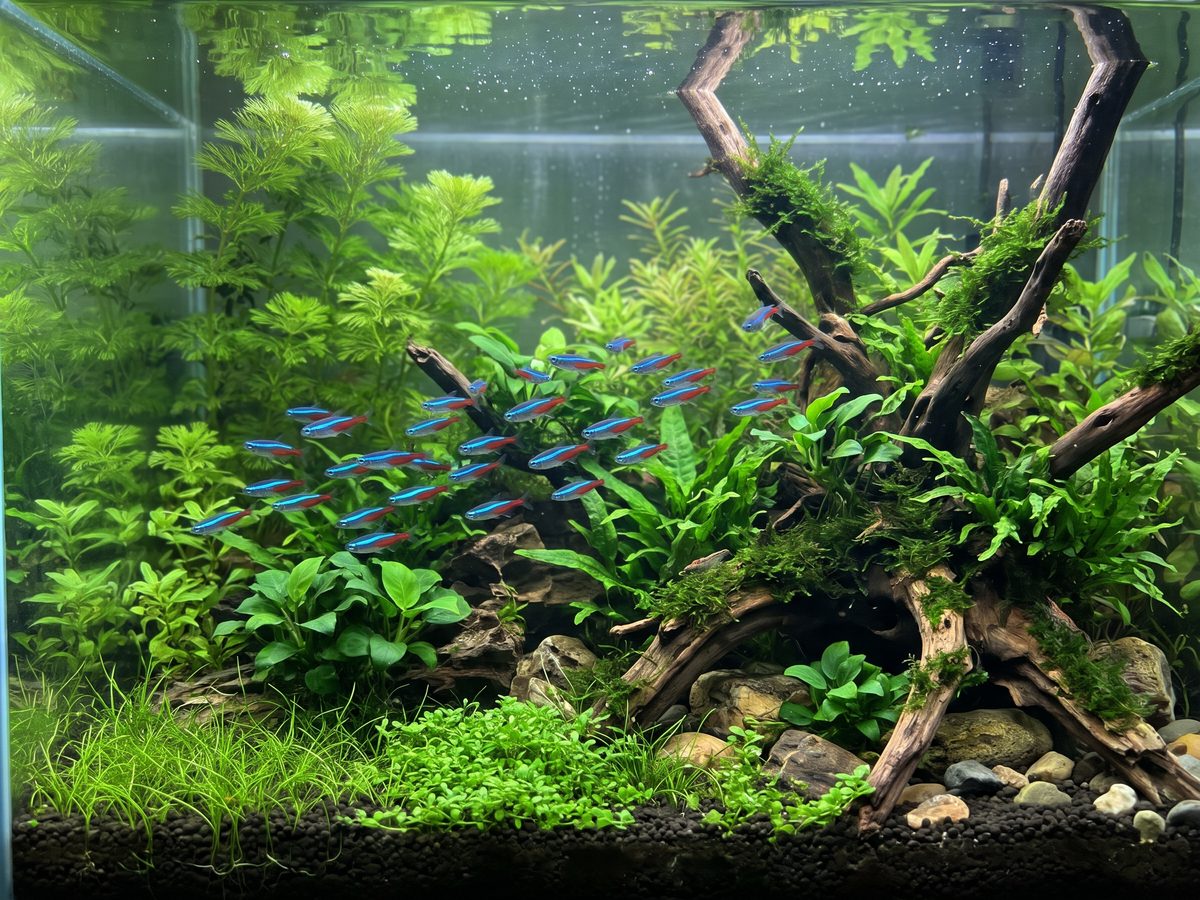
Building a Tank From Scratch
Each button opens a search in your own country's Amazon store. As an Amazon Associate we earn from qualifying purchases.
A tank of around 20 gallons (76 liters) or more is more forgiving for a first attempt than a small nano tank. Add a filter rated for the tank, a heater for tropical fish and a liquid test kit, then cycle the tank before buying fish.
Getting Started
Tanks and Equipment
Aquariums and Stands
Tank kits by size, rimless and nano tanks, sturdy stands.
Filters and Pumps
Choosing a filter for your tank and fish, and cleaning it safely.
Heaters and Lighting
Adjustable heaters, LED lights, plant lights and timers.
Heater Sizing
How many watts, where to place it, and backup plans.
Substrate and Decor
Gravel, sand, plant soil, driftwood, plants and hides.
Planted and Nano Tanks
Plant substrate, lighting hours and small-tank stocking.
Water, Food and Everyday Care
Species and Stocking
Community Tropical Tanks
Temperament, swimming level and school size.
Betta Tanks Done Right
Why a bowl falls short, and what a betta needs.
Goldfish Tanks Done Right
Big fish, lots of waste: space and filtration.
Livebearers
Guppies, platies, mollies and endlers, and all those fry.
Corydoras and Catfish
More than a cleanup crew: groups and soft sand.
Freshwater Shrimp and Snails
Copper caution, hardy species and snail numbers.
Angelfish
Adult size, tall tanks and pairs that turn territorial.
African Cichlids
Aggression, stocking and hard rift-lake water.
Tetras and Pencilfish
Small, colorful shoalers that need a crowd.
Rasboras
Calm Asian shoalers, from harlequins to chilis.
Danios and White Clouds
Lively, hardy and often happy unheated.
Guppies
Bright, busy and very good at making babies.
Gouramis
Gentle air-breathers for planted tanks.
Loaches
Playful diggers that need soft sand.
Plecos and Algae Eaters
Bristlenose, otos and the common pleco problem.
Coldwater, Ponds and Saltwater
Frequently Asked Questions
What new aquarium keepers ask most often.
What's the first thing to buy for a new aquarium?
The tank and stand, since everything else fits around them. Around 20 gallons (76 liters) or more is forgiving for a first tank. Then a filter rated for the tank, a heater for tropical fish, a test kit and a water conditioner. Fish come last, after the tank has cycled.
Does tap water need treating?
Yes. Most tap water contains chlorine or chloramine, which harm fish and the bacteria in the filter. Add a water conditioner every time you fill the tank or change water.
Does a small tank need a filter?
Yes. The filter houses the bacteria that break down ammonia and nitrite. A sponge filter or small internal filter suits a nano tank.
How long before I can add fish?
Usually several weeks, until the tank has cycled and tests show ammonia and nitrite back at zero. See cycling a tank.
Related Reading
- Reptiles and amphibians: including aquatic turtles and frogs.
- Moving house with pets: including fish tanks.
- Pet tools and calculators: quick sums for pet owners.