Persian Cat Care: The Daily Eye and Coat Routine
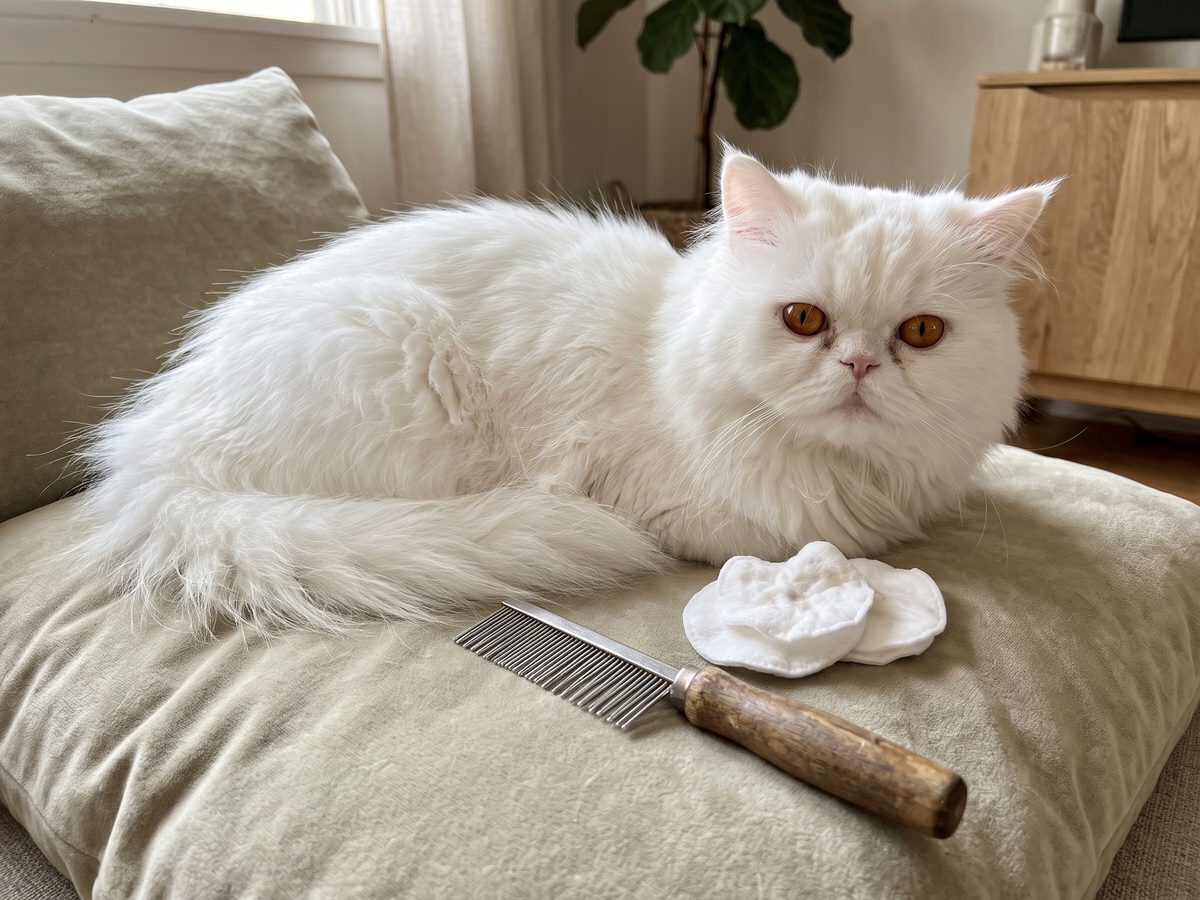
A Persian's care splits cleanly into daily and less-frequent tasks, laid out below.
| Task | How often | Why it matters |
|---|---|---|
| Wipe eye area | Daily | Prevents tear-stain buildup and skin irritation |
| Comb full coat | Daily | Stops small tangles from becoming mats |
| Bath | Every few weeks | Removes oil buildup a coat this dense holds onto |
| Professional groom | Every couple of months | Full trim, sanitary areas, deep dematting if needed |
Daily Eye-Area Care
A Persian's flattened face changes how tears drain, so many Persians have tears running down the face, staining the fur reddish-brown over time.
Wiping the area every day, with a soft damp cloth or a tear-stain wipe made for exactly this job, using a fresh section for each eye, clears the moisture before it has time to stain or irritate the surrounding skin. Keeping the fur immediately under the eyes trimmed short, something a groomer or a careful owner can manage with blunt-tipped scissors, also reduces how much fur is available to hold moisture against the skin. A sudden increase in tearing, thick discharge or squinting needs a vet, not more wiping.
The Coat: Why Daily Combing Matters
Skipping a day of combing on most cat breeds barely registers, but a Persian's dense, fine-textured coat can knot into a real tangle within twenty-four hours if left alone, particularly around the legs, tummy, and the area just behind each ear where friction runs highest. A metal comb, worked clear down through every layer instead of skimming the surface, catches what's forming before it tightens into something that pulls at the skin and causes real discomfort.
Owners who let combing slip during a busy stretch of the week often come back to a coat needing far more time to sort out than daily upkeep would have taken. A mat that's already tight against the skin belongs with a groomer who has the right tools, not scissors at home, where scissors risk nicking skin hidden beneath a dense mat. A non-pedigree domestic longhair carries a lighter version of this combing math, without the flat-faced Persian's added eye-area routine.
A Flat Face: Comfort and Welfare
A Persian's shortened muzzle is a structural trait of the breed. Many Persians live comfortably with a few gear and routine adjustments, but welfare groups have raised concerns about very flat faces, which can affect breathing, eyes, teeth and eating.
A wide, shallow bowl suits a flat face better than a narrow, deep one that forces whiskers against the sides and makes food harder to reach with a shortened jaw. Some Persians, particularly those bred toward an extreme flat-face look, breathe noisily or tire quickly in play, which is worth discussing with your vet. If you are choosing a kitten, a breeder who favors a more moderate face, with open nostrils, is making a choice that shapes the cat's comfort for life.
Stocking a Persian's Daily-Care Shelf
A tear-stain wipe or gentle daily cleanser handles the eye-area routine this breed needs every single day, and a quality metal comb built for a dense, long coat earns daily use right alongside it. A wide, shallow ceramic or stainless bowl suits a flat face better than a standard bowl shape, and a leave-in detangling spray makes the daily comb-through noticeably gentler on both the coat and the cat's patience. None of this gear helps with sore eyes or breathing trouble; those call for a vet, not a longer shelf of products.
Frequently Asked Questions
Tear stains and the daily combing commitment are what most new Persian owners ask about.
Why do Persians get so much tear staining compared with other cats?
The flat facial structure shortens and narrows the tear ducts, so tears often run down the face instead of draining away. Regular wiping manages the staining; a sudden increase or any discharge is a reason to see your vet.
Can tear stains be removed permanently with a product?
No single product removes the underlying cause, since the anatomy behind the staining doesn't change. A tear-stain wipe or cleanser manages existing staining and prevents buildup with consistent daily use, but stopping the routine typically brings the staining right back within days.
Is daily combing worth the effort, or would twice a week be enough?
Twice weekly works for some Persians with a less dense coat, but most benefit from daily combing since this coat mats quicker than nearly any other breed's, and skipping just a day or two can let a small tangle set in around the legs or belly. Daily combing also just takes a few minutes once it's a habit, versus a much longer session needed to work out a mat that's already formed.
Do flat-faced cats have more trouble eating or breathing than other cats?
Some Persians, particularly those with a more extreme flat-face structure, do show more audible breathing or need a wider, shallower food bowl to eat comfortably. Gear and routine help with comfort, but they don't change the structure, and a cat struggling to breathe needs a vet promptly.
How should the area around a Persian's eyes be wiped safely?
A soft, damp cloth or a purpose-made tear-stain wipe, used gently and wiped away from the eye, never toward it, clears debris without risking contact with the eye itself. A separate section of cloth for each eye avoids carrying dirt from one eye to the other.
Should a Persian be professionally groomed, or is home care enough?
Home combing handles routine upkeep, but many Persian owners still schedule a professional groom every couple of months for a full bath, blow-dry, and any sanitary trimming that's easier for a groomer to manage than for an owner working alone. Neither approach alone covers everything this coat needs long-term.
Are Himalayans cared for the same way as Persians?
Yes, largely. Himalayans share the same long coat and flat-face structure, so the daily combing and eye-area routine described here applies just as directly to a Himalayan as it does to a traditional Persian.
Related Reading
- Exotic Shorthair: the short-coated Persian.
- Cat grooming: combs and mat tools.
- Domestic longhair: a lighter coat routine.
This guide covers routine daily care, not your cat's health. A sudden change in tearing, thick or colored discharge, squinting or labored breathing needs a vet visit.