Dachshund Back Safety: Ramps, Lifting and Weight
Ramps Instead of Jumps
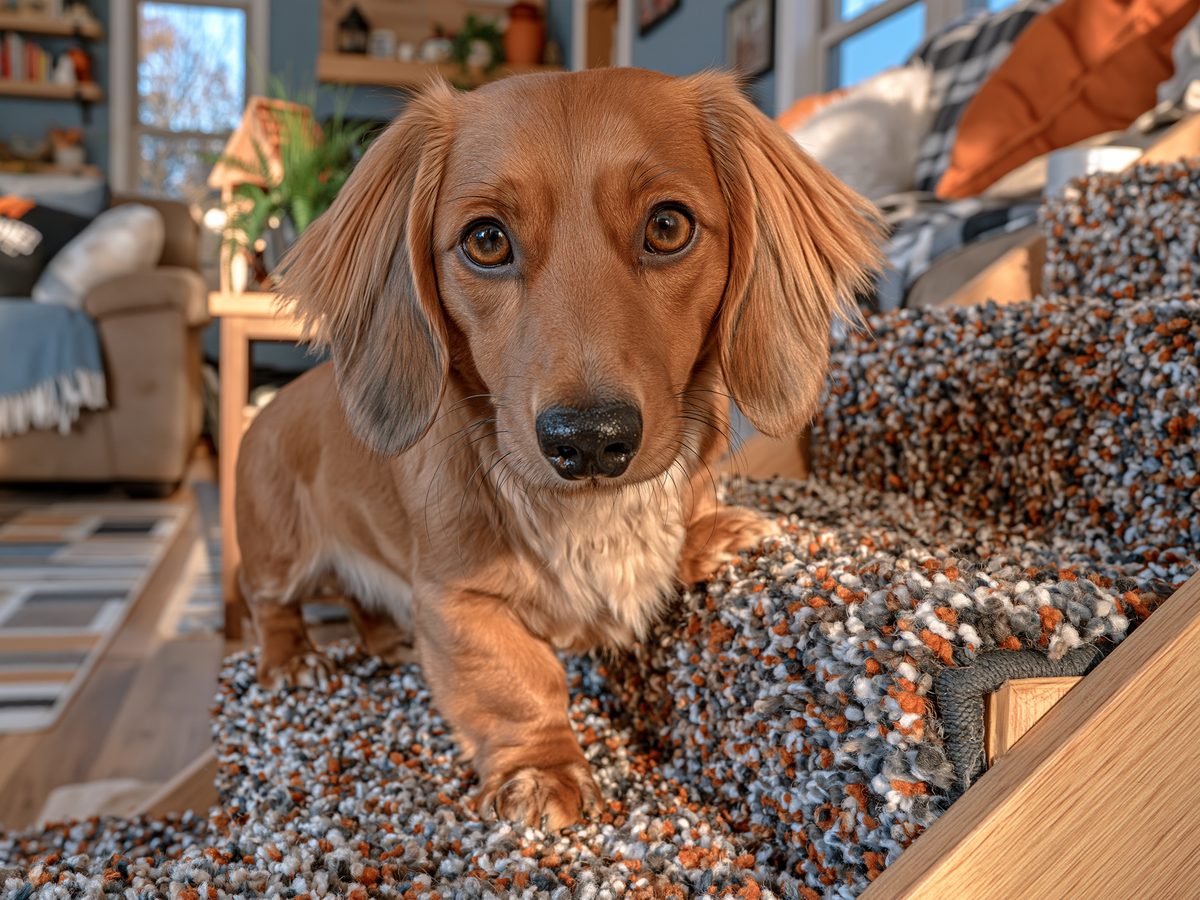
Jumping on and off sofas, beds and car seats puts repeated strain on a long back. Put a ramp or carpeted steps at every spot your dog likes to jump from, and block access where there isn't one, because a determined Dachshund will find the gap. Most learn to use a ramp in a few short sessions with treats.
Many Dachshunds manage a couple of low, wide steps, but long or steep staircases are best gated off or carried.
Lift With Both Hands
- Put one hand under the chest, just behind the front legs.
- Put the other hand under the hindquarters.
- Lift with the back level from nose to tail, and hold your dog close.
- Lower it the same way until all four paws are on the ground; don't let it jump the last bit.
Never lift a Dachshund by the front legs alone or let the back end dangle. Show children and visitors how before they pick your dog up, or better still, teach them to sit on the floor for cuddles.
A Harness That Fits a Long, Low Body
A harness that clips at the chest spreads leash pressure across the shoulders instead of the neck. Step-in styles often fit a Dachshund's shape more easily than over-the-head ones. Fit matters more than brand: it shouldn't gap at the chest or rub behind the front legs. See collar vs harness vs front clip.
Keep Your Dachshund Lean
Extra weight adds constant strain along the back, and Dachshunds love their food. Measure meals, count treats, and check monthly: you should feel the ribs easily under a thin layer and see a waist from above. Ask your vet to check body condition at every visit. Regular, steady walks keep the supporting muscles strong.
A Back-Friendly Setup
Each button opens a search in your own country's Amazon store. As an Amazon Associate we earn from qualifying purchases.
A folding ramp for the sofa or bed, and another for the car, cover the most common jumps. Carpeted steps suit tight corners. A step-in chest harness replaces the collar for walks, and a low-entry bed means one less jump each day. Kitchen scales help keep portions lean.
Warning Signs: See a Vet the Same Day
If your Dachshund wobbles, drags a back leg, knuckles over on its paws, cries when touched or picked up, won't move, or suddenly can't use its back legs, contact a vet straight away. Keep your dog still and quiet, and carry it supported in a crate or on a flat surface on the way. Don't wait to see if it improves.
Ask a breeder what health checks the parents have had; in the UK, The Royal Kennel Club lists eye testing and a DNA test for a form of progressive retinal atrophy for Miniature Smooth-haired Dachshunds.
Pain relief and any treatment: see your vet or a pet supply store with trained staff. Never give a dog human painkillers.
Frequently Asked Questions
Long dogs, common questions.
Can my Dachshund use stairs?
A couple of low, wide steps are usually fine. Gate off long or steep staircases and use ramps where you can.
Does my Dachshund need a special harness?
A well-fitted harness that clips at the chest is a good choice for daily walks, because it keeps pressure off the neck. Step-in styles often fit best.
How much does weight matter?
A lot. Extra weight adds strain to the back every day. Keeping your dog lean is one of the few things you fully control.
Can young Dachshunds have back problems?
Yes. Back problems can happen at any adult age, not only in old dogs, so start the habits early.
My Dachshund yelped once but seems fine. Should I call the vet?
It's worth a call. Keep your dog quiet and watch closely for wobbling, reluctance to move or loss of appetite over the next day or two.
Related Reading
- Corgi: another long-backed breed.
- Supportive dog beds: low-entry and memory-foam beds.
- Dog beds and furniture: ramps and steps.
These habits lower everyday strain; they can't remove the breed's risk. If anything about your Dachshund's back or legs worries you, call your vet.