Dog Health Supplies: The Everyday Care Kit
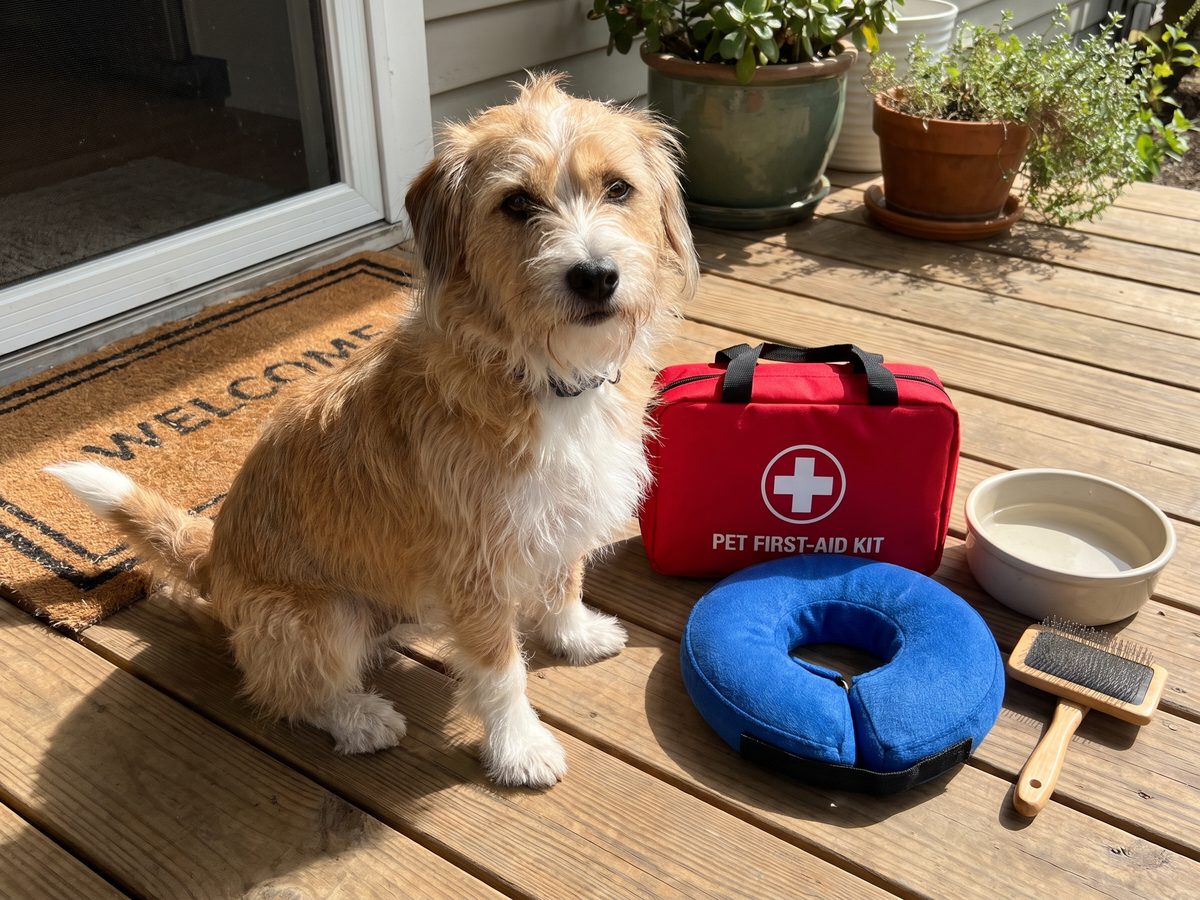
This page is about preventive care: the routine jobs you do at home between check-ups. It doesn't cover treating a sick or injured dog, and we don't link to medicines, supplements, flea, tick or worming products.
Medicines, supplements, worming and flea or tick treatments: see your vet or a pet supply store with trained staff. They can tell you what suits your dog and where you live.
Each button opens a search in your own country's Amazon store. As an Amazon Associate we earn from qualifying purchases.
Teeth: Brush Little and Often
Brushing is the gold standard for keeping teeth clean. A finger brush is an easy start for a dog that isn't used to having its mouth handled; move to a soft dog toothbrush once your dog is comfortable. Always use toothpaste made for dogs, never human toothpaste. Short, frequent sessions beat an occasional big scrub. See dental chews vs brushing, and ask your vet to check teeth at every visit.
Nails, Paws and Ears
Long nails change how a dog stands and walks, so trim them regularly if walks don't wear them down. A grinder suits dogs that dislike the clip. Ask your vet to show you how to clean your dog's ears and how often, then use a cleaner made for dogs. Paw balm helps on rough or salted winter pavements. Our guides to trimming nails and cleaning ears safely go step by step.
First-Aid Kit and Tick Tools
A first-aid kit holds you over until you reach the vet; it doesn't replace one. Stock it with bandages, gauze, tape, blunt scissors and a tick removal tool, and keep your vet's number and the nearest emergency clinic on the lid. Our dog first-aid kit page lists what to pack.
Recovery After a Vet Procedure
After neutering or other surgery, your vet may ask you to stop your dog licking a wound. A plastic cone is the classic; a soft or inflatable collar, or a recovery suit, suits some dogs better. Ask your vet which they prefer for your dog, and check the fit before the day. A pressure wrap is a non-medicine option some owners try for noisy nights.
Weight and Body Condition
Keeping a dog lean is one of the kindest things you can do for it. Weigh a small dog by stepping on the scales holding it, then without it. Measuring meals with kitchen scales stops portions creeping up. Your vet can show you how to judge body condition by feeling the ribs and looking at the waist.
Frequently Asked Questions
Short answers, with your vet as the long one.
Why don't you link to supplements or flea treatments?
What a dog needs depends on its health, age, size and where it lives, and some products can be harmful if the wrong one is used. We'd rather you got advice from your vet or a pet supply store with trained staff.
Can I use human toothpaste on my dog?
No. Some human toothpastes contain xylitol, which is toxic to dogs, and dogs swallow toothpaste rather than spitting it out. Use a toothpaste made for dogs.
What should go in a dog first-aid kit?
Bandages, gauze, tape, blunt scissors, a tick removal tool, a towel and your vet's phone number are a good start. A kit helps you get to the vet; it doesn't replace a visit.
How do I know if my dog is a healthy weight?
You should be able to feel the ribs easily without pressing hard and see a waist from above. Ask your vet to check body condition at every visit and show you how.
Related Reading
- Dental chews vs brushing: what each can do.
- Dog grooming supplies: brushes, baths and drying.
- Flea and tick prevention: a plan with your vet.
If your dog is hurt, in pain, vomiting repeatedly or just not right, call your vet or an emergency clinic. Supplies at home are for routine care, not for treating illness.