Pet Birds
Friendly, practical guides to keeping pet birds well: choosing a species, cages and aviaries, a pellet-and-vegetable diet, toys and flying time, and keeping birds safe at home. Bird flu and biosecurity are covered too.
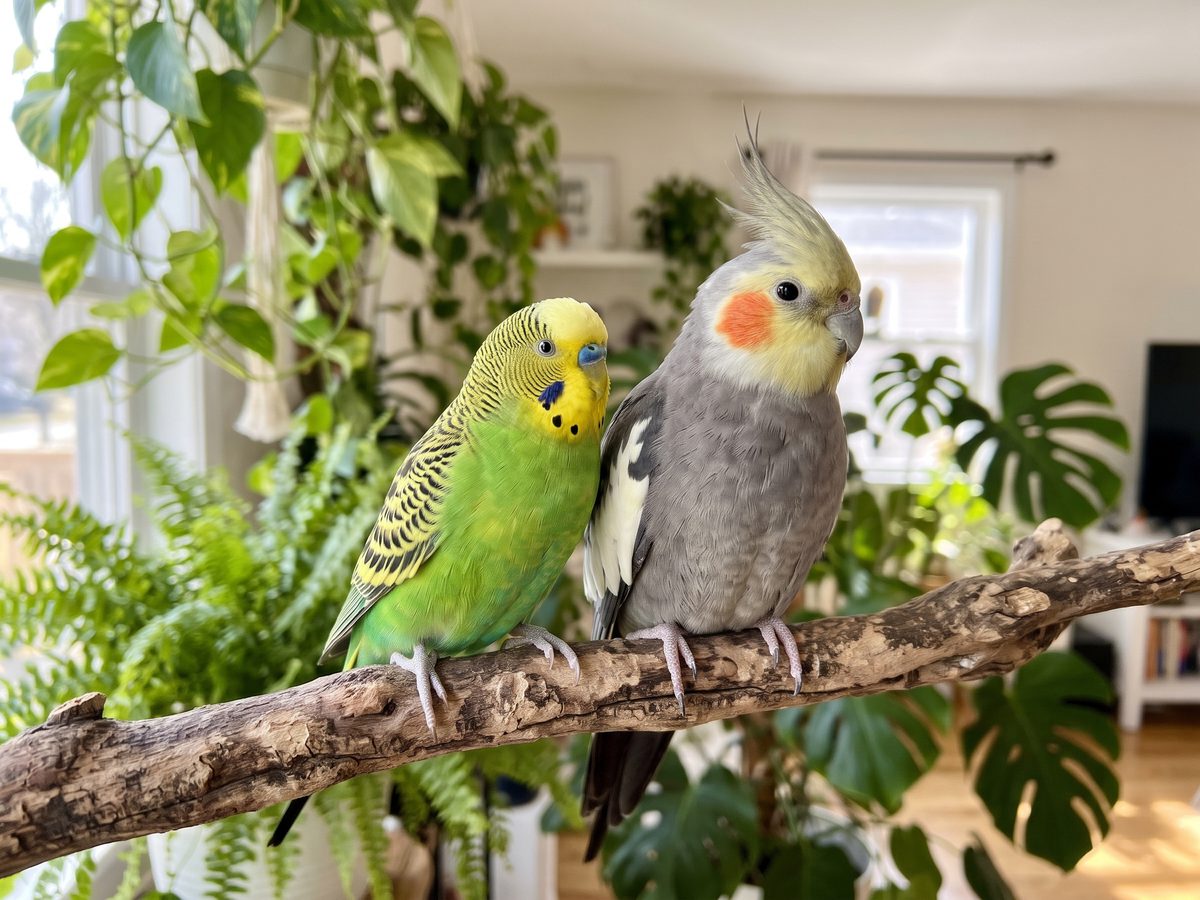
Setting Up for a New Bird
Each button opens a search in your own country's Amazon store. As an Amazon Associate we earn from qualifying purchases.
Check bar spacing for your species first, then choose the widest cage you can fit. Natural perches, a pellet suited to your bird and a few toys to rotate complete the start.
Choosing a Species
Lifespan, noise and how much company each bird needs.
Choosing a Pet Bird
Lifespans, noise and daily time, compared by species.
Budgerigars
The easiest start, still a real commitment.
Cockatiels
Whistles, crest language and night frights.
Conures
Green-cheek vs sun conure, and the noise gap.
Lovebirds
One bird or a pair, bites and nesting.
Parrotlets
A big parrot personality in a tiny bird.
Canaries and Finches
Watch-and-listen birds; finches need company.
Doves
Calm, quiet and ground-feeding.
Zebra Finches
Busy, chatty flock birds for watching, not handling.
Fancy and Racing Pigeons
Lofts, grain and grit, settling birds and the rules.
Large Parrots: Think First
Decades-long commitments with big voices. Read these before you buy.
Cages, Aviaries and Enrichment
Bird Cages and Stands
Minimum sizes and bar spacing by species.
Outdoor Aviaries
Size, shelter, shade and keeping predators out.
Bird Toys and Enrichment
Shredders, foragers, swings and a weekly rotation.
Foraging and Feather Plucking
Keeping busy beaks busy, and why the vet comes first.
Wing Clipping vs Flighted
The case for flight, what a trim does, and bird-proofing.
Food and Diet
Health and Safety
Bird Health and Hygiene
Everyday care, clean cages and when to call the vet.
Household Dangers for Birds
Non-stick fumes, sprays, open water and other pets.
Bird Flu and Pet Birds
Biosecurity, housing orders and reporting.
Traveling With Birds
Carriers, car trips, holidays and moving abroad.
Plants and Pet Birds
Risky houseplants, avocado, and what to do if your bird nibbles.
Frequently Asked Questions
Questions people ask before getting a bird.
What is the best first bird?
Budgies and cockatiels are popular first birds: friendly, not too loud and easier to house than big parrots. Canaries, finches and doves suit people who prefer watching to handling.
Should I keep one bird or two?
Most pet birds are social. A pair or a small group of a sociable species usually copes far better with busy days than a single bird that depends on you.
How long do pet birds live?
From about 5–10 years for finches and budgies to 20 years for cockatiels and lovebirds, and decades for large parrots. See choosing a pet bird.
Do birds need time out of the cage?
Yes. The RSPCA suggests several hours of free flight a day in a safe room, or a large aviary.
Related Reading
- How to find a vet: including avian vets.
- Poultry: backyard hens, ducks and geese.
- Large parrots: think hard before you buy.