When Does a Maine Coon Stop Growing?
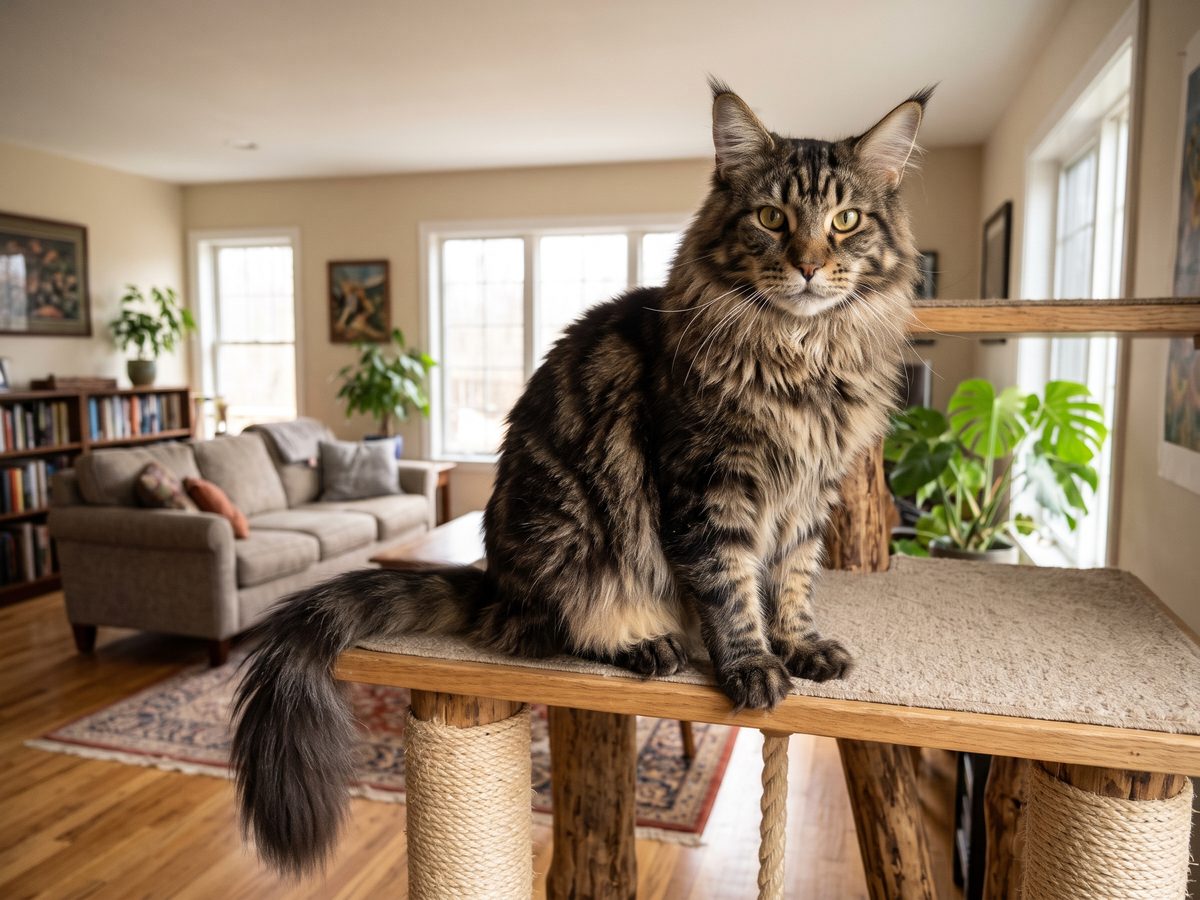
Sizing up gear early avoids a mid-growth replacement purchase; here's roughly how needs shift with age.
| Age | What's happening | Gear consideration |
|---|---|---|
| Kitten (under 1 year) | Rapid early growth, already often larger than an adult of another breed | Standard kitten gear, sized up sooner than usual |
| Young adult (1–2 years) | Frame filling out, weight climbing steadily | Switch to large-breed bowls, tree, and box |
| Maturing (2–4 years) | Continued filling out toward full adult size | Confirm gear still fits comfortably |
| Full adult (4+ years) | Growth largely complete | Routine HCM screening ongoing |
A Growth Timeline That Runs Years, Not Months
Where many cat breeds reach full adult size within the first year, a Maine Coon keeps building frame, muscle, and weight on a much longer curve, often not settling into its final proportions until somewhere around four years old. This slow-and-steady pattern means a cat that already looks impressively large at one year old may still have real growing left to do, which catches new owners off guard when gear bought for a "full-grown" cat turns out undersized within another year.
Tracking weight and body condition with your vet across this extended window, instead of assuming growth has finished once a cat looks adult-sized, gives a clearer picture of where a specific cat actually sits on the curve.
Oversized Bowls, Trees, and Boxes
Standard cat gear is sized around an average adult of about 8–10 lb (3.5–4.5 kg), and a Maine Coon routinely exceeds that by a wide margin, which shows up fastest in a food bowl too shallow for a broad face or whiskers dragging the sides with every bite.
A cat tree rated for the breed's weight and built with a wider base resists tipping better than a lightweight tower designed for a smaller cat's frame, and platforms roomy enough for the whole body to stretch out on matter a great deal more for this breed than for a standard-sized tree's usual buyer. A litter box marketed as large or for multi-cat use gives enough turning and digging room that a Coon isn't left balancing on the rim or hanging a tail over the edge during use.
Grooming the Long Coat
A Maine Coon's coat is shaggy and semi-long, without the dense, fine texture of a Persian's, which makes it more matting-resistant than it might look at first glance, though it still needs regular attention to stay that way. Working a slicker brush and a wide-tooth comb through the ruff, britches, and belly a few times weekly, the spots where mats tend to start first, keeps the coat manageable without a heavy time commitment.
Our cat trees and scratchers guide walks through the gear side of furnishing a home around a growing Coon, and this site's Norwegian Forest Cat guide covers a separate big-longhair breed some owners assume is the same animal under a different name. A coat that keeps matting despite steady brushing, or develops bald patches, deserves a look from a vet, not just more brushing.
HCM: The Heart Screening to Ask About
Hypertrophic cardiomyopathy (HCM) is a heart muscle condition seen in Maine Coons, and an owner can't spot it early at home. Breeders can DNA-test for one known gene variant in the breed, and vets screen with a heart scan (echocardiogram). A clear DNA test lowers the risk but doesn't rule HCM out, so ask your vet about a screening plan through adult life.
Breathing fast or with an open mouth at rest, or collapse, is an emergency: call a vet straight away.
Furnishing a Home for a Growing Coon
A large-capacity stainless bowl set, a jumbo litter box, and a wide-base cat tree rated for a heavier cat cover the three gear categories that most often turn out undersized for this breed. A slicker brush paired with a wide-tooth comb handles the semi-long coat's brushing needs without demanding daily attention.
None of this gear substitutes for the cardiac screening only a vet provides, but sizing the physical setup correctly from the start spares everyone a replacement purchase once a kitten outgrows everything built for a standard-sized cat.
Frequently Asked Questions
Sizing gear correctly and understanding HCM screening are what most new Maine Coon owners want clarified.
Is a Maine Coon just a big domestic shorthair with more fur?
Size and coat length set the visible difference, but this breed's slower growth curve and generally sturdier frame set it apart functionally too, not just in appearance. A vet familiar with the breed can offer more useful guidance on growth and weight than comparing against a shorthair's much shorter timeline.
Does the long coat need professional grooming, or is home brushing enough?
Most Maine Coons do fine on home brushing alone as long as it happens a few times each week without skipping, since the coat's semi-long structure resists matting better than a fine, dense long coat like a Persian's does. A professional groom becomes useful mainly once mats have already set in, or for a full seasonal blow-out trim some owners prefer.
Is HCM basically another name for a heart murmur?
Not exactly. A murmur is a sound a vet hears through a stethoscope that can point toward HCM among other causes, while HCM itself is a thickening of the heart muscle confirmed through imaging such as an echocardiogram. Some cats with HCM have no murmur at all, one reason screening looks past listening alone.
How large a litter box does a Maine Coon actually need?
Bigger than what fits most cats comfortably. A box rated for a large cat or even one marketed for multi-cat households gives a Maine Coon room to turn and dig without a paw or tail constantly hanging over the edge. A box that's visibly too small often shows up as a cat perching on the rim instead of standing fully inside it.
Do Maine Coons eat noticeably more than an average-sized cat?
Generally yes, given their larger body size, though the right amount still depends on the individual cat's weight, activity level, and life stage, not a flat breed-wide rule. A vet can set a feeding amount suited to a specific cat instead of guessing up from a standard bag's portion chart.
At what age should HCM screening start?
Many vets recommend starting cardiac screening in early adulthood and repeating it periodically over the cat's life, since HCM can develop or progress well beyond the first screening. A vet familiar with the breed's known risk can recommend a schedule suited to an individual cat instead of a single check treated as the final word.
Related Reading
- Norwegian Forest Cat: another big longhair.
- Litter boxes: sizes for a big cat.
- Cat trees and scratchers: furniture that holds a heavyweight.
This guide explains typical growth and grooming patterns, not your cat's health. Labored breathing, collapse or sudden weakness in the back legs needs an emergency vet visit, and your vet can advise when heart screening should begin.