Horse Grooming Kit: Brushes, Clippers and Care
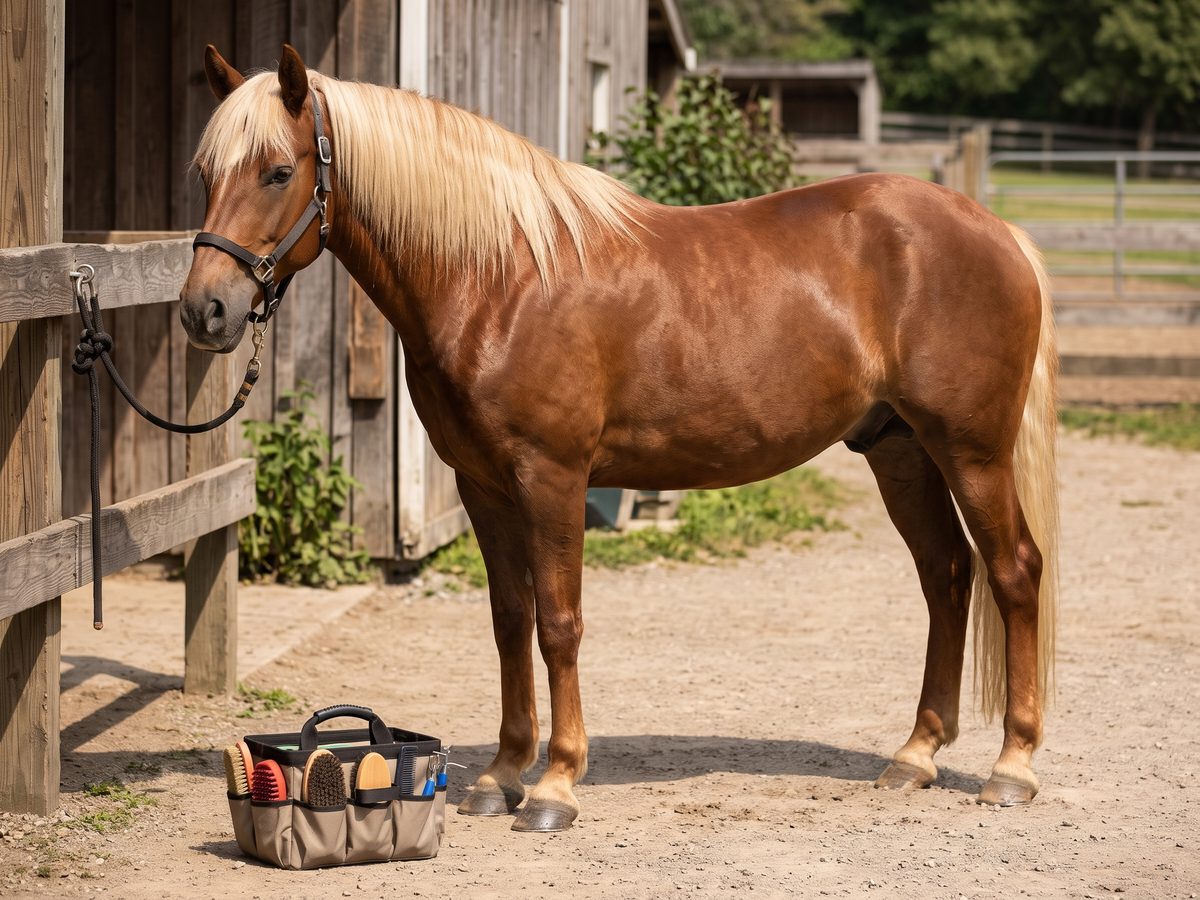
Grooming puts your hands on every part of your horse. That is how you notice a small cut, some heat in a leg or a lump that wasn't there yesterday. If you find something that doesn't clear up, or your horse's skin looks sore, ask your vet instead of reaching for a stronger product.
Curry Combs and Brushes
Each button opens a search in your own country's Amazon store. As an Amazon Associate we earn from qualifying purchases.
Work in order. A rubber curry comb, used in small circles, lifts dirt and loose hair. A stiff dandy brush flicks off dried mud (go gently on clipped or thin-skinned horses). A soft body brush takes out dust and brings up the shine, and a face brush or soft cloth does the head. A tidy grooming box keeps it all together and easy to clean.
Mane and Tail Care
Tail hair grows slowly and breaks easily. Hold the tail and work from the bottom up with a wide-toothed mane and tail brush, or separate it with your fingers, and use a detangling spray when it is knotted. A mane comb and a pulling comb are for tidying, and plaiting (braiding) bands for show days. A tail bag can protect a long tail on a horse that lives out.
Bathing, Now and Then
Most horses need a full bath only now and then, for a show or a hot day after work. Use a shampoo made for horses, rinse thoroughly, and scrape off the water with a sweat scraper. Gray and white horses may need a whitening shampoo for stains. Dry your horse before turning out in cold weather, under a cooler if needed.
Clippers
Horses in work with a thick winter coat are often clipped so they sweat less and dry faster. Full-size clippers do body clips; small, quiet trimmers suit bridle paths and nervous horses. Sharp, oiled blades are kinder and quicker. Introduce clipping slowly, and remember a clipped horse needs a warmer blanket (rug): see the blanket weight guide. Native ponies living out usually keep their coats.
Washing Blankets and Wraps
Sweat and grease build up in blankets, saddle pads and wraps, and dirty fabric against the skin can rub. Brush off mud first, then wash with a detergent suited to horse fabrics (many waterproof blankets need a non-biological wash), and reproof when the water stops beading. A wash bag keeps wraps and boots from tangling. Two sets of wraps let one dry while you use the other.
Frequently Asked Questions
Baths, tails and skin: the grooming questions that come up most.
How often should a horse have a full bath?
Only now and then, for a show, a sale or a hot day after work. Daily brushing keeps most horses clean, and frequent washing can dry out the skin.
Should I clip my horse in winter?
It depends on the work it does and where it lives. A horse in regular work may sweat less and dry faster when clipped, but it will then need blankets. Many native ponies that live out are better left with their full coat.
Do I have to trim a tail straight across?
No, that is a style choice. A natural tail is just as healthy, as long as you detangle it gently and often enough to stop knots breaking the hair.
When should I call the vet about my horse's skin?
If you find bald patches, scabs, sore or broken skin, or anything that doesn't clear up with normal grooming, ask your vet to take a look before you try another product.
Related Reading
- Blanket weight guide: what to put on a clipped horse.
- Blankets, boots and stable gear: the rest of the tack room.
- Hoof care and the farrier: picking out feet, and what to look for.