Dog Training Supplies: Kind, Reward-Based Gear
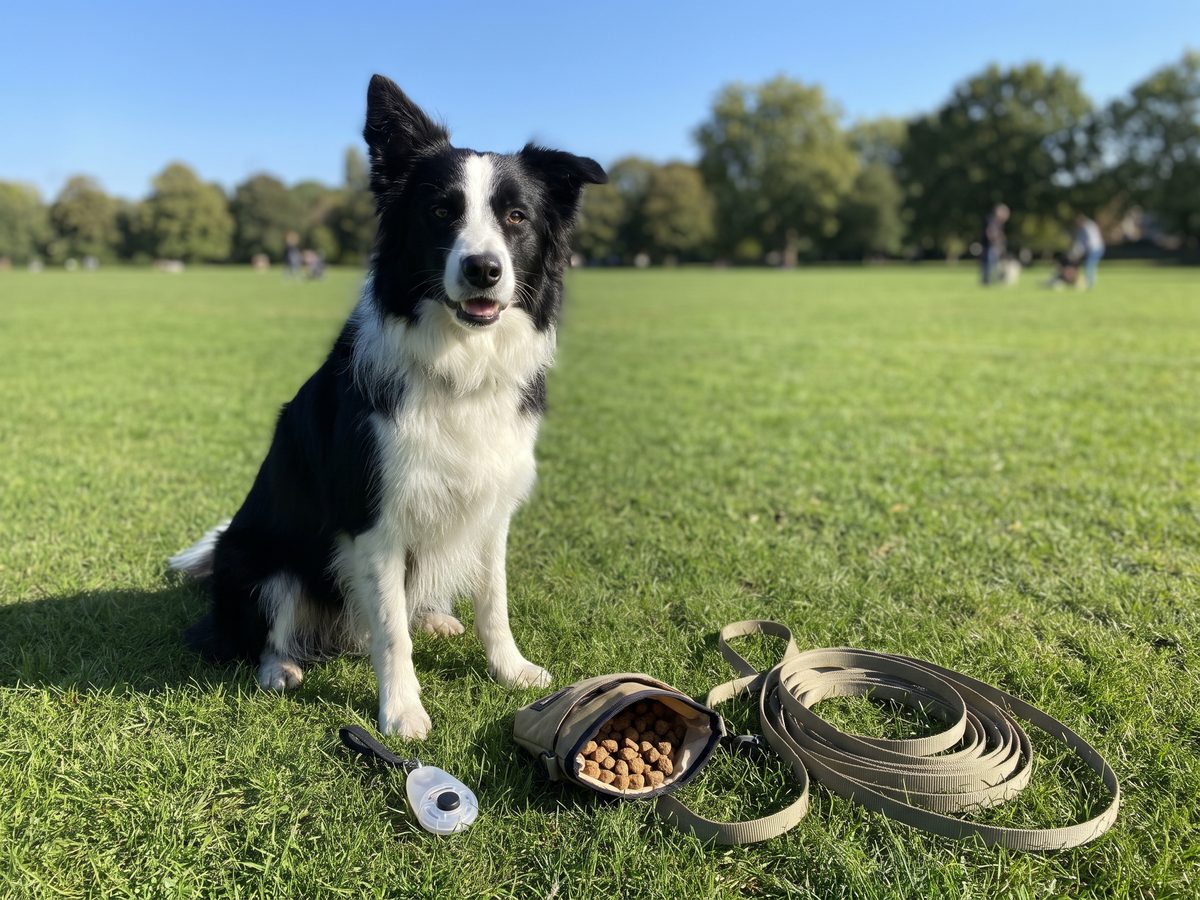
Gear supports training; it doesn't do it for you. Short, regular, fun sessions with rewards are what change behavior. Not sure where to start? See when to hire a trainer.
As an Amazon Associate we earn from qualifying purchases.
Clickers
A click marks the exact moment your dog does the right thing, followed by a treat. Charge it first: click, treat, a few dozen times. A wrist strap keeps it handy.
Treat Pouches and Training Treats
A pouch that opens with one hand makes rewards instant. Use small, soft treats your dog loves, and count them as part of the day's food.
Potty Training Bells and Pads
A door bell gives a puppy a way to ask to go out. Pads can help in high-rise homes or for very young puppies, but most dogs are best taught to go outside from the start; see puppy pads.
Place Mats and Cots
A mat or raised cot gives your dog a clear "go here and relax" spot, useful at the door, at mealtimes and in cafés. Take it with you so the settle travels.
Basket Muzzles
A well-fitted basket muzzle lets a dog pant, drink and take treats. Teach it slowly with treats until your dog pushes its nose in happily; see muzzle training. Some countries require muzzles for certain dogs in public; rules differ by country.
Long Lines
A 15–30 foot (4.5–9 m) line gives freedom for recall practice while staying attached. Clip it to a harness and wear gloves with a big dog. See recall training.
Frequently Asked Questions
Treats at the ready.
Do I need a clicker?
No, a short marker word like "yes" works too. A clicker is just very precise and consistent.
Why don't you sell shock or prong collars?
They work through discomfort or pain and can make fear worse. Reward-based training works without them.
Won't my dog get fat on training treats?
Use tiny pieces, count them in the day's food, and use part of each meal for training.
Related Reading
- Recall training: the long-line method.
- Loose-leash walking: calmer walks.
- Toilet training a puppy: the routine.
If a behavior problem appears suddenly, ask your vet to rule out pain or illness before you start training.