Norwegian Forest Cats: Weatherproof Coat, Born Climber
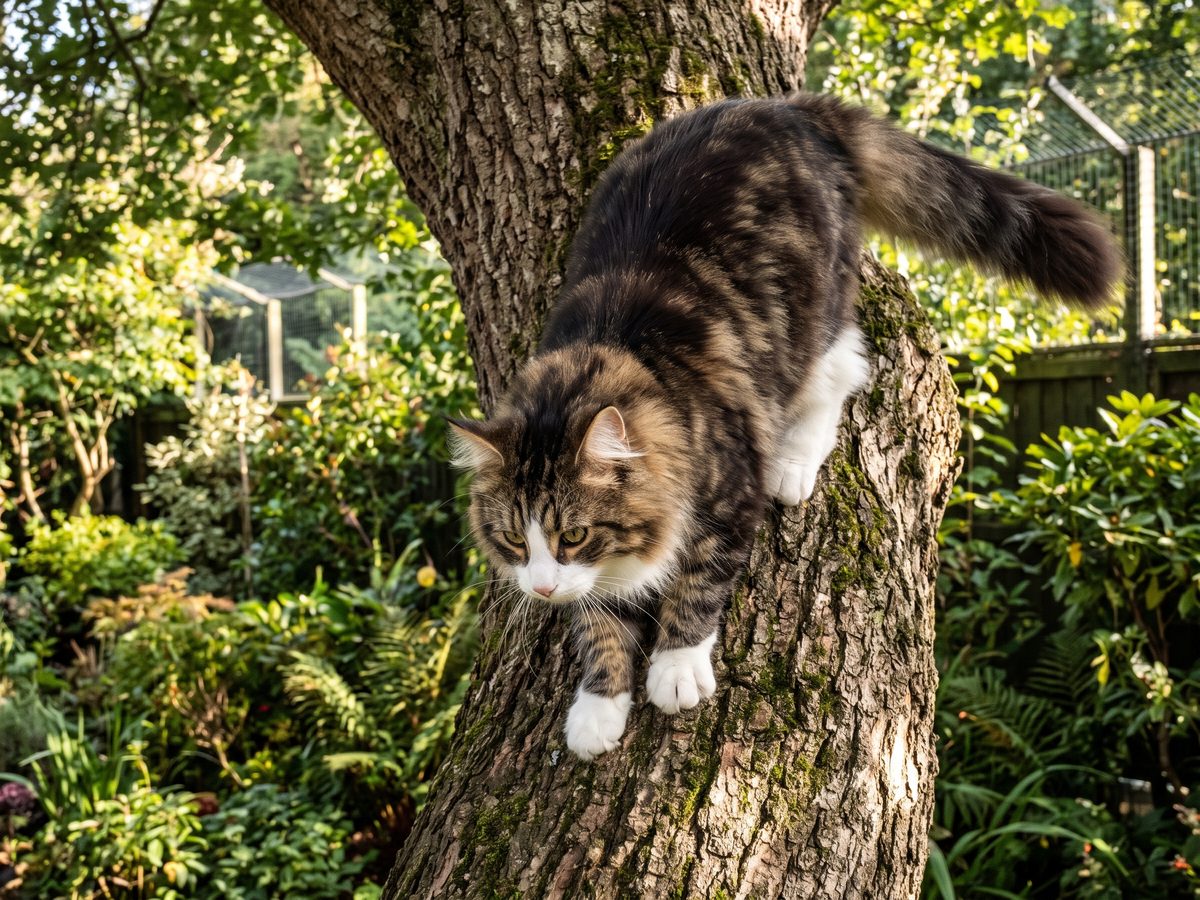
Big, slow-growing and built to climb: the table below lays out the working traits behind the look.
| Coat | Growth | Climbing drive | Energy | Lifespan | Good with |
|---|---|---|---|---|---|
| Water-resistant double coat, dense guard hairs | Four to five years to full size | Strong, working-cat instinct | Moderate to high | About 12–16 years | Households with sturdy climbing furniture |
A Big Longhair Cousin, Not a Maine Coon by Another Name
Both breeds share a large frame, a slow growth curve, and a long, plush coat, which invites the comparison, but a Norwegian Forest Cat developed independently in Scandinavia with its own coat structure, head shape and history; it doesn't share direct ancestry with the Maine Coon.
Our Maine Coon care guide covers that breed's growth timeline and gear needs in depth. It's useful side reading given how much overlaps, but the two remain distinct breeds.
A Coat Built to Shed Water, Not Just Look Impressive
A dense, oil-rich undercoat paired with long, coarse guard hairs traces directly back to this breed's outdoor working history in a wet, cold climate, and that structure sheds light moisture instead of absorbing it.
It isn't waterproof against a real soaking, but the practical upshot for most owners is a coat that dries faster and resists everyday dampness better than expected. Regular brushing along the ruff, under the arms, and down the belly still matters, since the coat's oil content cuts down on matting without ruling it out.
A Growth Curve Measured in Years
Most cats settle into adult size within a year; a Norwegian Forest Cat typically keeps building frame and weight for four to five years, one of the longer growth timelines in the cat world. Reaching an impressively large size by the second birthday doesn't mean the process is finished. Plenty of cats keep filling out for a good while after that milestone. Regular weigh-ins at the vet over these extra years show what's happening with the frame and the fat far more clearly than any visual guess from across the room could.
A Climber First, a Lap Cat Second
Scaling trees and rough terrain runs deep in this breed's working background, and that shows up at home as a real drive to climb, not a passing preference for a perch. Strong, curved claws built for gripping bark translate readily to curtains, bookshelves, and cabinet tops when nothing more appropriate is on offer, and a household that underestimates this drive often finds out the hard way which surfaces double as practice trees.
Sturdy, tall furniture rated for this breed's weight (the kind covered in our cat trees and scratchers guide) won't tip under a determined ascent the way lighter towers do.
Climbing Infrastructure That Holds a Heavyweight
A tall, floor-to-near-ceiling cat tree built with a heavy-duty base gives this breed's climbing drive a legitimate outlet sturdier than any bookshelf, and wall-mounted steps extend the vertical route even further through a room without requiring extra floor space most households can't spare.
A wide-tooth comb and a slicker brush make quick work of the ruff and belly friction points, and a stainless steel food bowl set stands up to daily use from a cat this size far longer than a lightweight plastic one. A large water fountain keeps plenty of fresh water in front of a big cat.
Frequently Asked Questions
The Maine Coon comparison and this breed's real climbing habits are what most searches on this page are after.
Is a Norwegian Forest Cat basically a Maine Coon with a different name?
No. The two developed independently in different countries and differ in coat structure, head shape, and heritage despite a broadly similar large, longhaired look. Both share a slow growth curve and a big-cat build, which explains the resemblance without either being a renamed version of the other.
What makes this breed's coat water-resistant?
A dense, oily undercoat paired with long, coarse guard hairs sheds moisture instead of absorbing it, a trait that traces back to the breed's outdoor working history in a wet, cold climate. It doesn't make the coat waterproof in a heavy soaking, but light moisture beads off far more readily than on a typical shorthair.
How long does a Norwegian Forest Cat take to reach full size?
Typically four or five years pass before a cat settles into final size, well past the single year that finishes growth for most other cat breeds. Looking fully grown at two years old is common for this breed, and it doesn't mean the frame has stopped filling out.
Does the water-resistant coat need less brushing than a typical longhair?
Not much. The coat's oil content resists matting somewhat better than a fine, dense longhair coat, but a session still belongs in the routine, focused on the ruff, under the arms, and along the belly where friction runs highest. Skipping it for a stretch still risks the same tangles any long coat develops.
Why does my Norwegian Forest Cat keep climbing curtains and furniture?
This breed carries a strong climbing instinct rooted in its working history scaling trees and rough terrain, not just a preference for height like many cats show. A sturdy, tall cat tree gives that instinct a legitimate outlet before curtains and bookshelves become the substitute.
Are Norwegian Forest Cats prone to any particular health conditions?
Ask a breeder about heart screening for HCM, which is seen in the breed, and the DNA test for glycogen storage disease type IV, a rare inherited condition. Neither shows itself early to an owner; your vet can advise on screening.
Is this a good breed for a cold-climate household?
The coat's heritage suits cold weather well, but an indoor cat's day-to-day comfort rests on the home's own heating far more than on any inherited coat history. This trait matters more as an interesting piece of history than a practical reason to choose the breed for a specific climate.
Related Reading
- Maine Coon: the American big longhair.
- Siberian: another cold-climate coat.
- Cat trees and scratchers: climbing gear for big cats.
This guide describes typical coat and growth patterns only; health screening is your vet's job. A Norwegian Forest Cat that struggles to breathe, goes suddenly listless, or gives up climbing it used to enjoy needs to see a vet promptly, not get chalked up to a mood or a slow day.