Siamese and Oriental Cats: Vocal, Lean and Full of Opinions
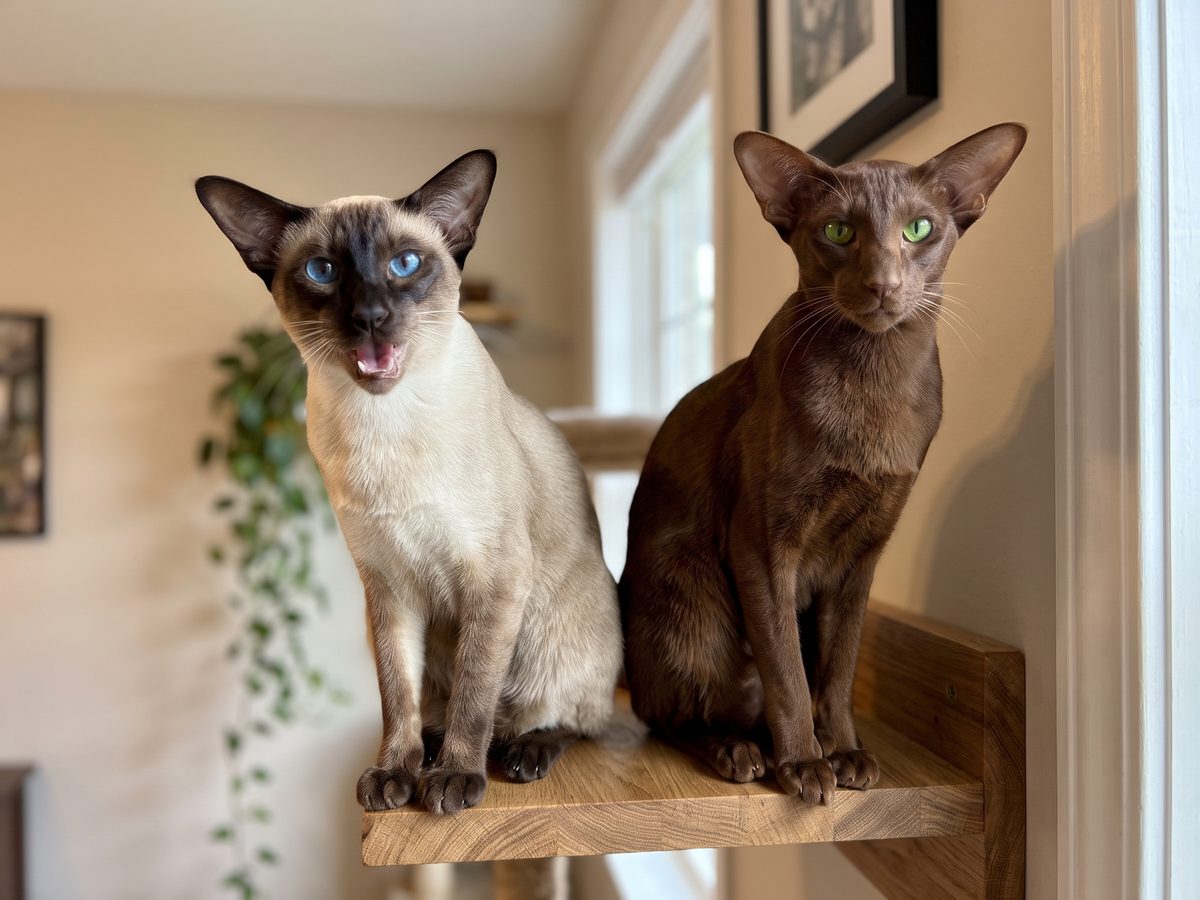
Loud, lean and clingy by design: the table below explains why before the sections do.
| Vocal level | Body type | Energy | Coat | Lifespan | Good with |
|---|---|---|---|---|---|
| High, frequent and carrying | Long, lean, tubular; naturally slim | High, needs daily structured play | Short, low-shedding, minimal grooming | About 12–16 years | Attentive households, not long solo hours |
Who Thrives With a Siamese or Oriental
An actively communicative, people-focused cat is the plain description here, and this breed suits someone who doesn't mind a loud, near-constant conversation from morning to night. Real daily interactive play needs to be part of the arrangement too, since this breed's contentment depends heavily on having somewhere to put its energy and intelligence. A quiet apartment with thin walls, a household away for long solo stretches, or anyone hoping a lean body signals room for extra treats are the three real mismatches. Each one runs directly against what this breed needs.
That Famous Voice
A Siamese or Oriental's voice is loud, low and used often: to announce a person's return home, demand a meal or simply narrate the day. It shows up from kittenhood. Neighbors sharing a thin wall, a light sleeper or anyone who values quiet mornings should weigh this carefully, since training rarely reduces this breed's chattiness by much.
Rewarding quiet moments, instead of only answering loud demands, can shape which behavior gets reinforced over time, but expecting a naturally talkative breed to go silent misreads what this cat fundamentally is.
The Lean Body Is Normal: Don't Overfeed to "Fix" It
A long, tubular, visibly slender frame is the breed standard here. It does not indicate poor nutrition or an underlying problem, and it's worth resisting the instinct to add extra food because the cat looks thinner than a rounder breed's ideal weight. Ribs that are easy to feel under light pressure but not sharply visible, paired with good muscle tone along the spine and legs, describe a healthy body condition for this specific frame. A vet familiar with the breed's typical build offers a far more reliable read on whether an individual cat's weight is appropriate than comparing it against a rounder-bodied breed's silhouette.
Matching a Serious Play Drive
This breed's intelligence and energy need somewhere real to go, and a toy left on the floor without any interactive component tends to get ignored fast by a cat built for a real chase. Structured daily sessions working through a full stalk-chase-pounce sequence suit this breed's drive far better than passive toys alone, and this site's play and the hunt sequence guide covers building exactly that kind of session.
Clicker work is a second outlet: our clicker training for cats guide gives that intelligence a second outlet beyond physical chase games alone.
Eye Screening and Warmth-Seeking
Progressive retinal atrophy (PRA), an inherited eye condition, is seen in these breeds, and breeders can DNA-test for it. Ask any breeder for health-test results, and ask your vet what to screen for as your cat ages.
This breed also loves warmth, often claiming the warmest spot in a room or a person's lap the moment it's free. Plan for it with a heated bed or a sunny perch. Our Burmese & Tonkinese care guide covers a closely related breed pair with a notably softer, less frequent voice, useful for anyone drawn to this general lineage but wary of the volume.
Gear for a Vocal, Athletic Cat
An interactive wand toy earns daily use on this page unlike almost anywhere else on the site, since structured chase play is what settles a Siamese or Oriental. A puzzle feeder adds mental work to mealtime for a breed that thinks constantly, and a heated pad or a sunny window perch caters to this breed's strong warmth-seeking habit. A soft-sided mesh carrier with good visibility on every side suits a cat that dislikes being shut away from whatever's happening better than a solid plastic box does.
Frequently Asked Questions
Volume, body shape, and play drive drive nearly every question new owners have about this breed.
Are Siamese cats really as vocal as people say?
Yes. Few breed traits are as well known: a loud, low, carrying voice used often to demand attention, food or simply company. If you live with thin walls or love quiet mornings, factor this in before bringing one home.
Is a Siamese supposed to look this thin?
Yes, a long, lean, tubular body is the breed standard. It does not mean poor health or underfeeding. Ribs that are easy to feel with light pressure but not visibly protruding, combined with good muscle tone, describe a healthy weight for this body type.
Should I feed a Siamese more because it looks skinny?
No. Overfeeding to compensate for a naturally lean frame just adds fat to a build the breed was never meant to carry. A vet can confirm whether an individual cat's weight and body condition falls within a healthy range for its frame.
Why does my Siamese follow me from room to room?
This breed tends to bond tightly with its people and dislikes being left out of whatever's happening, which shows up as near-constant shadowing. It's a real attachment style, not neediness to correct.
Do Oriental Shorthairs have the same vocal and clingy traits as Siamese?
Largely yes. Orientals share close ancestry with Siamese and carry a similar vocal, people-focused temperament, just spread across many more coat colors and patterns. Anyone drawn to the personality but not the classic pointed coloring often finds an Oriental a good match.
How much active play does this breed actually need?
More than a casual wand-toy session once in a while. This is a high-drive breed that does best with daily structured play covering real stalk-chase-pounce movement, not just batting at a toy left on the floor. An under-stimulated individual tends to get louder and more demanding, not quieter.
Are Siamese and Orientals prone to any particular health conditions?
Progressive retinal atrophy (PRA), an inherited eye condition, is seen in these breeds, and breeders can DNA-test for it. Ask your vet what else to screen for.
Related Reading
- Balinese: the long-haired Siamese.
- Burmese and Tonkinese: the softer-voiced relatives.
- Clicker training: a job for a clever cat.
This guide describes typical temperament and body type, not your cat's health. Bumping into familiar objects or noticeable weight loss is worth a vet visit, not a shrug about the breed's usual look.