Cat Carriers & Travel
Most cats travel far less often than dogs do, and that rarity helps explain why the carrier gets linked in a cat's mind with something unpleasant, a vet visit or a stressful move, instead of settling in as a familiar part of daily life.
A hard-sided carrier suits air travel and a car ride to the vet, a backpack carrier turns travel into something closer to an outing a cat can watch from, and a stroller extends that same idea to a walk outside without the cat touching the ground at all. Identification gear deserves equal attention alongside the carrier, since an escaped or lost cat depends on a collar, a chip, or both to make it home again.
This page sorts travel gear by purpose: hard-sided and airline carriers, backpack carriers with window views, strollers, breakaway and AirTag collars for identification and tracking, microchip cat flaps for supervised outdoor access, and a note on getting a fearful cat comfortable with a carrier before travel day arrives.
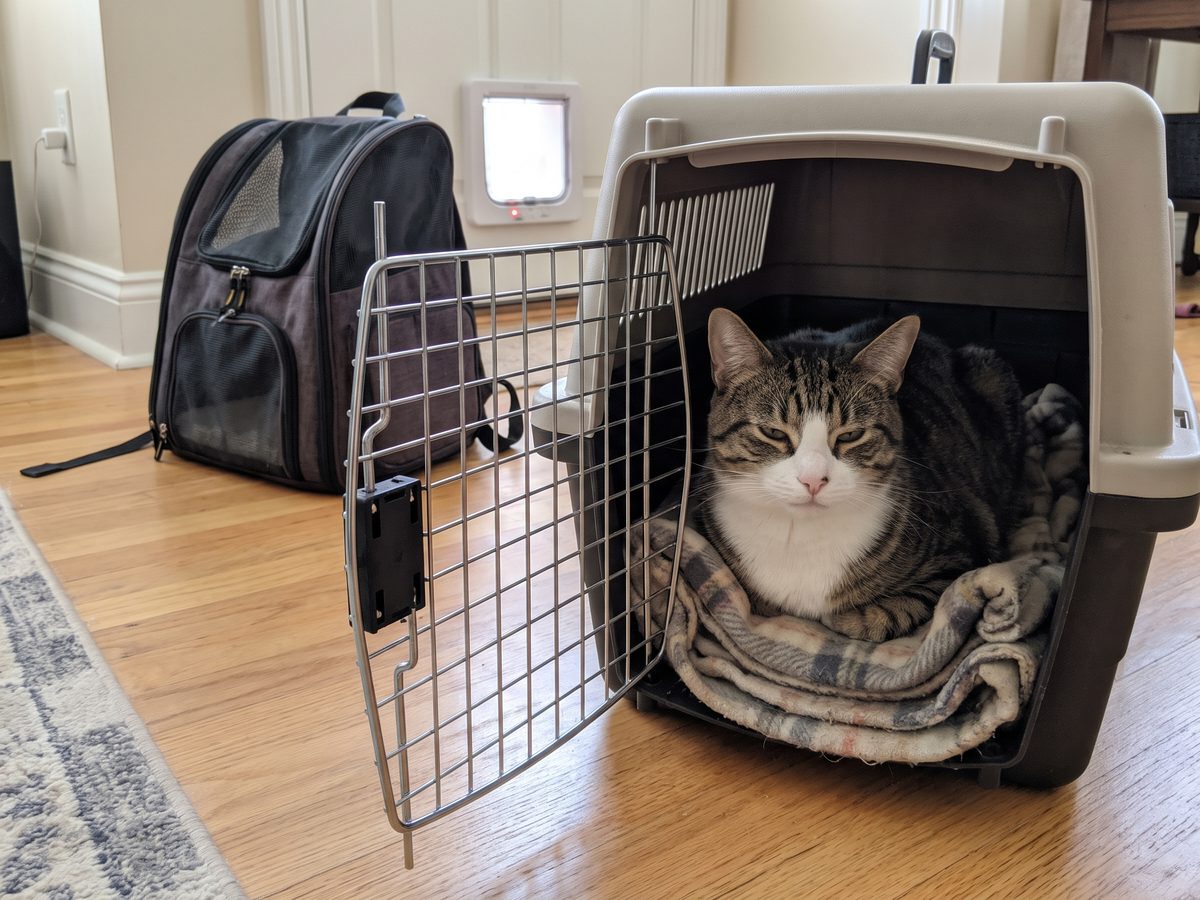
Hard-Sided & Airline Carriers
A hard-sided carrier gives a cat a secure, enclosed space that holds its shape under a car seat or an airplane seat in front, unlike a soft-sided bag that can collapse under weight. If your cat rides in the car often, look for a carrier that has been independently crash-tested, not just one with a sturdy shell.
Airline size and weight limits vary by carrier and sometimes by aircraft even within one airline, so double-checking the exact under-seat dimensions ahead of time heads off an unwelcome surprise right at check-in. Good ventilation on multiple sides, not just the front, keeps airflow reaching a cat tucked well back inside a covered carrier.
Backpack Carriers & Window-View Bubbles
An expandable backpack carrier holds a cat against an owner's back with a clear bubble window that lets the cat watch its surroundings during a hike, an errand, or a car trip, which suits a curious cat better than an enclosed carrier with no view at all. Ventilation holes around the bubble and mesh panels on the sides keep airflow moving even with the main window closed, and an expandable base gives a cat a bit more room to shift position once settled.
Weight capacity varies notably between models, so checking a backpack's rated limit against a cat's actual weight avoids strain on the straps or seams. A cat introduced to the backpack gradually, instead of zipped in cold, adjusts far faster.
Strollers for Cat Outings
A pet stroller gives a cat outdoor air and scenery without direct ground contact, which suits an older cat, a cat recovering from a procedure, or a multi-cat household wanting to bring more than one cat along in a single wheeled unit.
Mesh sides and a zippered top keep a cat contained while still allowing a full view out, and locking wheels matter for stability on uneven sidewalks or grass. A stroller works best introduced gradually indoors first, letting a cat get used to the motion and the enclosed feeling before its first real outdoor trip. Weight capacity and interior height both need checking against a cat's actual size before buying, since a cramped interior discourages use fast.
Breakaway & AirTag Collars
A breakaway collar releases under pressure specifically so it can't catch on a branch, a fence gap, or furniture and choke a climbing or exploring cat, which makes it the safer everyday choice over a standard buckle collar even for an indoor-only cat. A small pouch or dedicated holder built into some collars lets an owner attach an AirTag or a similar tracker, layering GPS-style location tracking onto the visual identification a plain collar already gives.
ID tags with a current phone number let a neighbor make contact the moment a cat turns up, faster than a microchip scan at a shelter could manage. Checking collar fit regularly matters more for a growing kitten than for an adult cat whose neck size has stopped changing.
Microchip Cat Flaps & Doors
A microchip cat flap reads a cat's existing identification chip and unlocks only for registered pets, keeping a neighborhood cat or a raccoon from wandering in through a plain flap that opens for anything that pushes it. This suits a household letting one or more cats move between indoors and a secured outdoor space, such as a catio or an enclosed yard, without needing to physically open a door each time. Programming more than one cat's chip into the same flap works on most models, useful for a multi-cat household where each cat needs independent access.
Placement away from direct weather exposure and a secure mounting into the door itself both matter for a flap that stays reliable across years of regular pet traffic.
Getting Your Cat Used to the Carrier
Keeping a carrier sitting out as a regular piece of household furniture, instead of one that only ever appears right before a stressful trip, stops it from signaling bad news the moment a cat spots it. Placing treats, a favorite blanket, or occasional meals inside the open carrier over several weeks builds a positive association well ahead of the day it's needed for travel.
Practicing short closed-door sessions indoors, gradually working up to a brief car ride around the block, prepares a cat for the real trip far better than the first closed door happening on travel day itself. Starting slow and staying patient covers most of what matters.
Related Reading
- Harness training a cat: step by step, before the first walk.
- Catios and window boxes: safe outdoor time at home.
- The cat care kit: grooming, dental and recovery gear.
- Browse all Cats pages
Frequently Asked Questions
My cat panics the moment the carrier comes out. Is that fixable?
Yes, in most cases, though it takes patience, not a quick fix. Keeping the carrier out as a normal piece of furniture, with treats or meals placed inside it occasionally, gradually removes the association between the carrier's appearance and an unpleasant trip, though a particularly fearful cat may need a slower approach spread across several weeks.
Do cats need a breakaway collar if they're strictly indoors?
A breakaway collar with ID tags helps even an indoor-only cat get identified quickly if it slips out an open door, which happens more often than most owners expect. The breakaway clasp releases under pressure specifically so the collar can't catch on something and choke a climbing or exploring cat.
Is a microchip enough, or does a cat still need a collar with tags?
A microchip is permanent and can't fall off, but it requires a scanner and a registered database lookup, which means whoever finds a cat needs to bring it somewhere with a scanner on hand. A visible collar with a phone number lets a neighbor make contact immediately, so the two work best together, not as an either-or choice.