Choosing Cat Litter: Clay, Crystal, Corn, Pine, Walnut and Paper
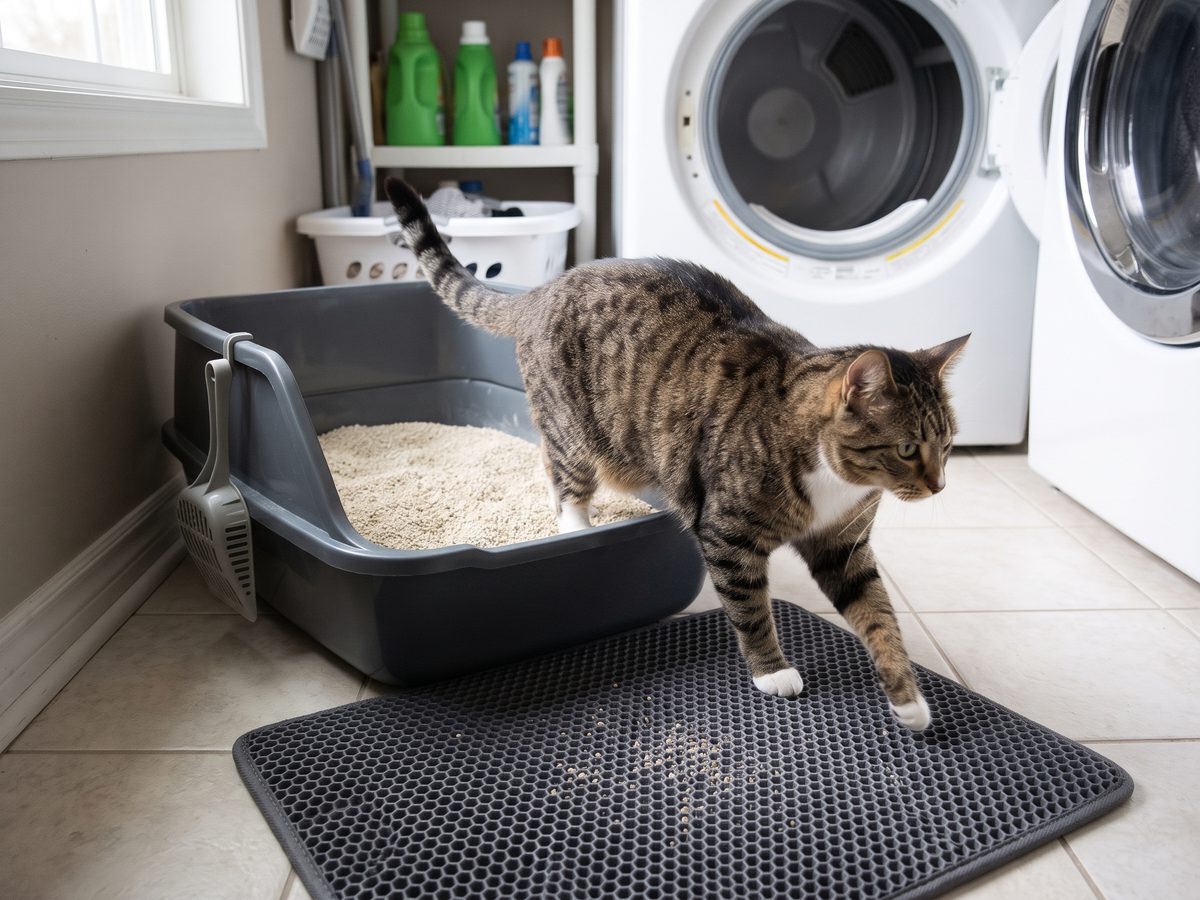
Clumping Clay and Crystal: The Two Most Popular Choices
Clumping clay, usually bentonite, forms a solid clump around waste that lifts out cleanly with a scoop, and its low cost keeps it the default in many homes. The trade-off is dust: even a "low-dust" formula gives off some fine particles when poured or dug through. It's also heavy to carry and doesn't break down the way plant litters do.
Silica crystal litter works differently. It soaks liquid into the granules instead of clumping, so a well-kept tray can go longer between full changes. It's lighter to carry and much less dusty, but it costs more per bag, and some cats used to clay need a slow introduction before they accept the feel underfoot. Solid waste still needs scooping daily whichever you choose.
Corn, Pine, Walnut and Paper: The Plant-Based Options
Corn and wheat litters clump a little like clay and are made from farm byproducts. They're lighter and less dusty, though odor control usually needs more frequent scooping to match clay. Pine litter comes as compressed pellets that break down into sawdust when wet, giving off a natural pine smell, and the bigger pellets track less.
Walnut shell litter is sold on strong odor control; its dark color makes waste harder to spot when scooping. Paper litter, often recycled, is the lowest-dust choice and a common recommendation after surgery, since it won't stick to a wound the way fine particles can. Cats have firm texture preferences, so buy a small bag first.
Litter for Multi-Cat Homes
Multi-cat formulas usually add stronger odor control and a firmer clump that holds up to more visits. Low dust matters more in a multi-cat home too, since more boxes and more scooping mean more particles in the air.
The usual guideline is one box per cat plus a spare, spread across different rooms instead of lined up side by side. Some cats won't share a box even when the litter is identical, so box count and placement matter as much as the litter. See our litter box guide for box types.
Litter to Try
Each button opens a search in your own country's Amazon store. As an Amazon Associate we earn from qualifying purchases.
Start with an unscented clumping clay if you're not sure; many cats dislike strong scents. Crystal suits a dust-sensitive home, corn and pine suit owners who want a plant-based litter, and paper is the gentle choice for kittens and cats recovering from surgery. A trial-size bag and a litter mat save money and mess while you find the one your cat likes.
Dust, Breathing and When to Ask Your Vet
Every litter makes some dust when it's poured, scooped or dug through; the difference is how much. Crystal, paper and pine pellets all make much less fine dust than ordinary clumping clay, which can matter in a home where a person or a cat has sensitive airways.
Pour litter gently instead of from a height, and keep the box somewhere ventilated, not a closed closet. If your cat coughs, wheezes or breathes with effort, see your vet before assuming a litter change will fix it, and if your vet has diagnosed a breathing problem, ask which litter they suggest.
Switching Litter Without a Boycott
Cats can be particular about litter texture, depth and smell, and swapping the whole box in one go is a classic reason a cat starts going somewhere else. Mix a scoopful of the new litter into the familiar one, then increase the share over about ten days.
If your cat seems unsure, put the new litter in a second box next to the old one so it has a choice. If a switch leads to accidents that don't settle within a few days, go back to the old litter and check with your vet before trying a third type. Our guide to litter box avoidance goes further.
Frequently Asked Questions
The questions we hear most, answered briefly.
Is clumping clay litter safe for kittens?
Some vets suggest a non-clumping litter until a kitten stops tasting or chewing litter, since clumping clay swells when wet. Once a kitten is using the box without eating the litter, many owners switch to clumping clay. Ask your vet if you're unsure.
Which litter tracks the least around the house?
Bigger, denser pieces such as pine pellets, paper pellets and larger crystals cling to paws far less than fine clumping clay. A litter mat by the box catches most of what does escape.
Does crystal litter control odor better than clay?
Many owners find crystal controls smell for longer between full changes, though results vary by brand and home. Clumping clay controls odor well too, mostly because clumps get scooped out every day.
Is scented litter bad for cats?
It isn't harmful in itself, but a cat's nose is far more sensitive than ours and some cats avoid a strongly scented box. If your cat starts avoiding the box after a switch, try unscented litter and check with your vet.
How often should litter be completely changed, not just scooped?
Clumping litters can often go a few weeks between full changes if scooped daily. Non-clumping litters, including many natural ones, usually need a full change about weekly, because the whole batch absorbs moisture and odor.
Is flushable litter safe to flush?
Some corn and wheat litters are labeled flushable in small amounts, but many water authorities advise against flushing cat waste at all, and septic systems can struggle with it. Check local guidance, or bag it for the trash.
Related Reading
- Litter boxes and automation: open, covered, top-entry and self-cleaning boxes.
- Why cats stop using the box: health check first, then the setup.
- Multi-cat harmony: how many boxes and where.
This page compares litter materials in general terms. If your cat is coughing, wheezing, breathing with effort or suddenly avoiding the box, talk to your vet before changing products.