Learning to Ride: Lessons, Riding Hats and Body Protectors
Finding a Good Riding School
- Look for approval. In the UK, the British Horse Society and the Association of British Riding Schools approve riding schools; in the US, ask about instructor certification (for example through the Certified Horsemanship Association); other countries have their own national bodies.
- Visit first. Look for calm, well-kept horses, safe fencing and a tidy yard, and watch a lesson.
- Ask questions: lesson sizes, how riders are matched to horses, whether hats can be borrowed, and whether there are stable management lessons.
Most beginners start with private or small-group lessons in an arena. Stable management courses teach the care side, which matters as much as the riding if you hope to own a horse one day. See should you own a horse?
What to Wear for Your First Lessons
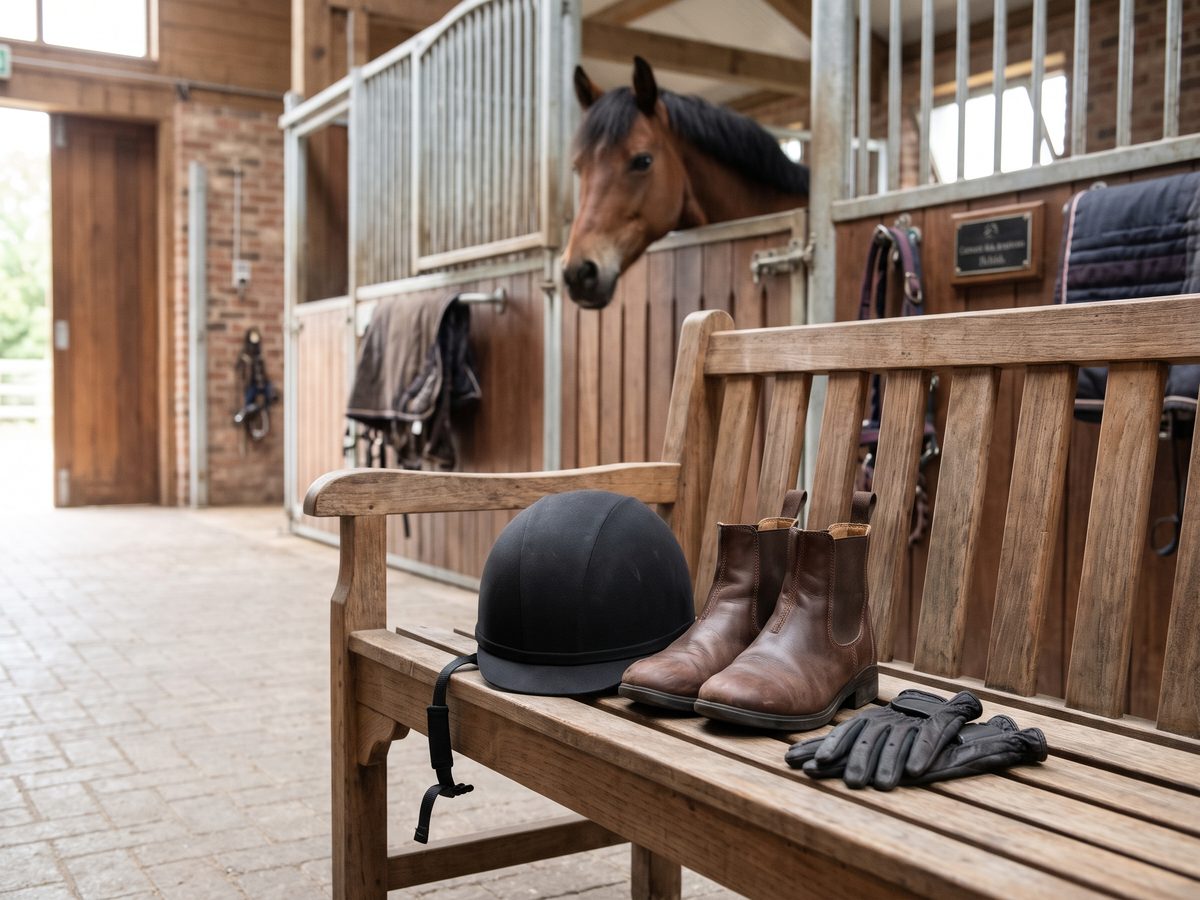
- A riding hat that meets a current standard and fits (many schools lend these at first).
- Boots with a small, defined heel and a smooth sole, so your foot can't slide through the stirrup. Short riding boots or jodhpur boots are ideal.
- Comfortable, stretchy trousers without thick seams on the inside leg, or jodhpurs.
- Gloves for grip, and layers you can take off without removing your hat.
Avoid dangling jewelry, scarves and loose, flapping clothes.
Riding Hat Standards
Riding hats are tested to safety standards. Look for the standard on the label and, where required, a quality mark showing the hat was independently checked. Common standards that equestrian bodies list include:
- UK and Europe: PAS 015 and VG1, with a BSI Kitemark or Inspec mark.
- United States: ASTM F1163, with the SEI certification mark; some hats also carry Snell certification.
- Australia and New Zealand: AS/NZS 3838, with an SAI Global mark.
Competition rules differ by governing body and change often, so check the current rule book before an event. Older standards are dropped from lists over time.
- Fit: snug all round without pressure points, sitting level just above the eyebrows, with the harness fastened. Have it fitted by trained staff in a tack shop.
- Replace after a fall or a hard knock, even if you can't see damage, and follow the maker's advice on age.
- Never buy secondhand: you can't know its history.
Body Protectors and Air Vests
A body protector is a padded vest that helps protect the chest, back and ribs. In the UK, the BETA body protector standard (currently BETA 2018) is widely required for cross-country and recommended for jumping, young horses and less experienced riders; in the US, look for ASTM F1937 with the SEI mark. Air vests inflate in a fall and are usually worn over a body protector, not instead of one, depending on the rules of your sport.
Fit matters: have a protector fitted by trained staff so it covers the right areas and doesn't restrict movement.
Starter Kit for New Riders
Each button opens a search in your own country's Amazon store. As an Amazon Associate we earn from qualifying purchases.
A riding hat is the most important buy, and it should be fitted in person where you can; check the standard on the label against your riding school's or sport's rules. Short boots with a heel, riding gloves and stretchy jodhpurs make lessons more comfortable, and a body protector is worth it once you start jumping.
Hats and the Law
Some places have laws on riding hats. In Great Britain, the Highway Code says children under 14 must wear a riding helmet that complies with the regulations when riding on the road, and advises the same for everyone else. Rules differ by country, and in the US by state, so check your national or state rules, and your riding school's and sport's rules, which are often stricter.
Frequently Asked Questions
Hats, boots and first lessons.
What riding hat standard should I look for?
Common standards include PAS 015 and VG1 in the UK and Europe, ASTM F1163 with the SEI mark in the US, and AS/NZS 3838 in Australia and New Zealand. Check what your riding school or sport requires.
How often should I replace my riding hat?
After any fall or hard knock, even if it looks fine, and as the maker advises for age. Never buy a secondhand hat.
Do I need a body protector?
It is often required for cross-country and recommended for jumping and riding young horses. Many beginners wear one for extra confidence. Check your sport's rules.
Can I ride in sneakers?
It isn't safe. Without a heel, a foot can slide through the stirrup. Wear boots with a small, defined heel and a smooth sole.
Is there a law about wearing a riding hat?
In some places. In Great Britain, children under 14 must wear a riding helmet on the road. Rules differ elsewhere, so check locally.
Related Reading
- Horses and road safety: riding out, and passing horses as a driver.
- Should you own a horse?: the next step after lessons.
- Buying a horse: what to look for when you're ready.
Riding is a risk sport. Ride with qualified instruction, wear a hat that meets a current standard every time, and get any fall or injury checked by a doctor.