Feeding Horses Forage First: Hay, Grass and How Much
Why Forage Comes First
A horse's gut is designed for a steady trickle of fiber. In the wild, horses graze for most of the day and night. Long gaps without anything to chew don't suit them, and big bucket feeds of grain are a poor match for their digestion.
So the diet starts with grass, hay or haylage, and everything else is there to fill gaps. Many native ponies, cobs and horses in light work need little beyond good forage, salt and a small vitamin and mineral top-up.
How Much Forage?
University of Minnesota Extension advises feeding 1.5 to 2.5 percent of body weight in forage a day. For a 1,000-lb (450-kg) horse that is roughly 15 to 25 lb (7 to 11 kg); for a 500-lb (230-kg) pony, about 8 to 12 lb (3.5 to 5.5 kg). Grazing counts toward the total, which is why a horse on good grass may need little or no hay in summer.
- Lower end: good-doers, native ponies and horses that need to lose weight, under your vet's guidance. Don't cut forage drastically on your own.
- Higher end: horses in hard work, thin horses and horses in cold weather, when chewing hay helps them stay warm.
To know your horse's weight, use a weigh tape or ask your vet; see body condition scoring.
Choosing and Weighing Hay
Good hay smells sweet, looks green to golden, and is free of dust, mold, weeds and rubbish. Grass hays (such as timothy, meadow or mixed grass) suit most horses; alfalfa (lucerne) is richer and is often fed as part of a ration. Haylage is wetter and is fed by weight, so you need more of it to match the dry hay it replaces.
- Weigh it. A hanging scale and a haynet tell you what a "flake" or "slice" really weighs. They vary a lot.
- Look inside each bale as you feed it, and reject anything moldy, dusty or weedy, especially if you spot ragwort (see poisonous plants).
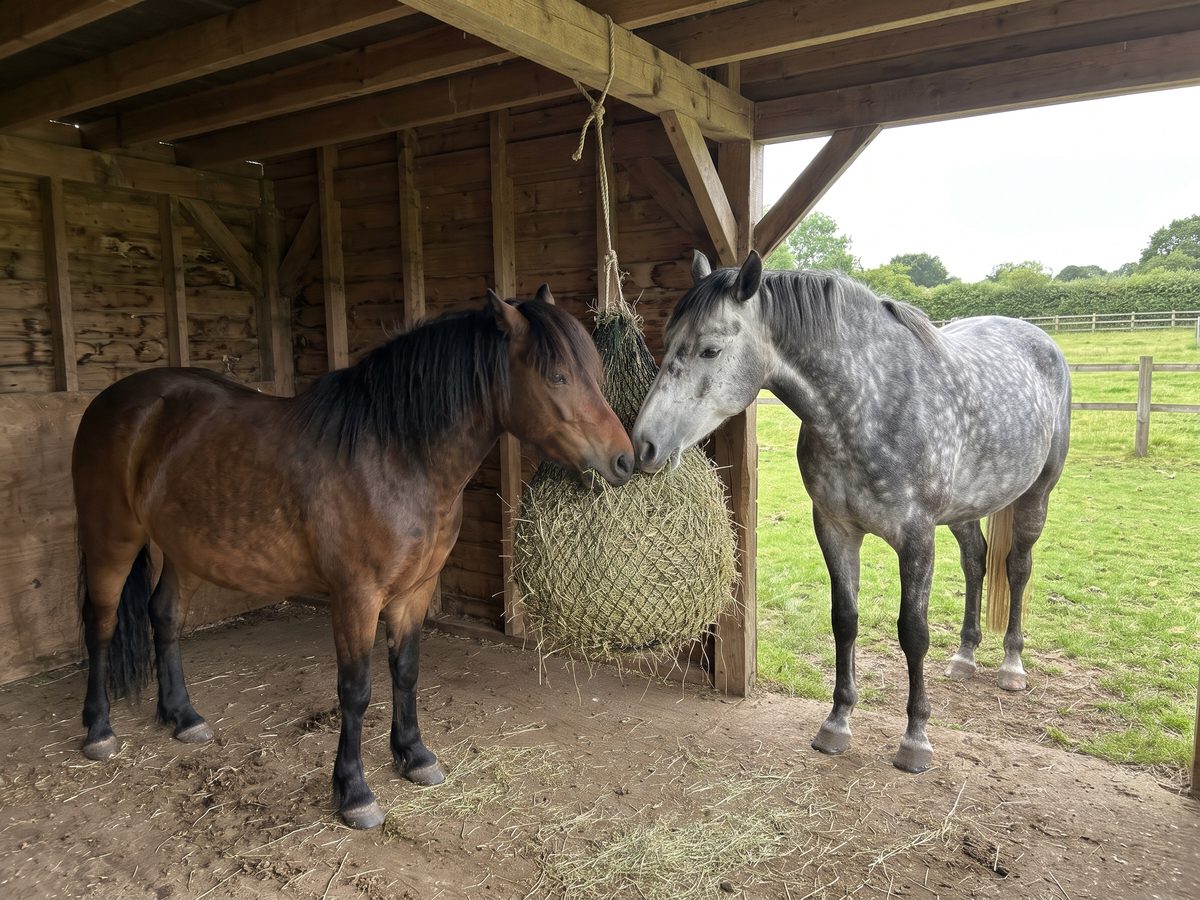
- Make it last. A small-hole haynet slows eating, which helps a good-doer on a weighed ration.
- Ask about analysis. A hay analysis shows energy, protein and sugar, which helps your vet or a nutritionist plan the diet for horses with special needs.
Water and Salt
Water matters as much as hay. University of Minnesota Extension says most 1,000-lb (450-kg) horses drink 10 to 12 gallons (38 to 45 liters, using US gallons) a day, and more in heat, work and when eating dry hay. Keep it clean, fresh and unfrozen. Give salt free choice, as a plain lick or loose salt.
When a Bucket Feed Helps
Forage alone may not cover every vitamin and mineral, and some horses need more energy than forage gives.
- Good-doers on forage: a ration balancer, a small daily serving, or a mineral lick.
- Hard workers or thin horses: a high-fiber or complete feed, or added oil, chosen with your vet or a nutritionist.
- Older horses with worn teeth: soaked feeds that replace hay; see senior horse feeding.
Our reading a feed label guide explains the bag.
Forage-First Feeding Kit
Each button opens a search in your own country's Amazon store. As an Amazon Associate we earn from qualifying purchases.
A hanging scale and haynets let you weigh the day's hay. Small-hole nets or hay bags make it last longer. Bagged chopped forage or hay cubes help when hay runs short, and a salt lick in a holder covers daily salt. A weigh tape shows whether the ration is right over the following weeks.
Changing the Diet Safely
- Change gradually. Extension guidance is to swap only a small part of the old hay or feed for the new each time, over a week or more.
- Introduce spring grass slowly, starting with short turnout times.
- Feed little and often. Several small feeds suit a horse better than one big one.
- Keep routines steady, and keep feed bins shut: a horse that breaks into the feed room needs a vet call.
Frequently Asked Questions
The hay maths, and what else goes in the bucket.
How much hay does a horse eat a day?
University of Minnesota Extension advises 1.5 to 2.5 percent of body weight in forage a day, including grass. That is about 15 to 25 lb (7 to 11 kg) for a 1,000-lb (450-kg) horse.
Can a horse live on grass alone?
In the growing season, many can, especially good-doers, though they still need salt and often a vitamin and mineral top-up. Over winter, or on poor grass, most need hay as well.
Does my horse need a bucket feed?
Not always. Many native ponies and horses in light work do well on forage, salt and a balancer. Horses in hard work, thin horses and older horses may need more. Ask your vet or a nutritionist.
Is haylage the same as hay?
It is grass preserved wetter, so a pound or kilo of haylage contains less dry food than the same weight of hay. Feed it by weight, change over gradually, and use it soon after opening.
How do I know if I'm feeding the right amount?
Watch your horse's body condition and weigh-tape readings over a few weeks. If it is gaining or losing more than you want, adjust gradually, with your vet's advice.
Can I feed my horse kitchen scraps or garden waste?
No. Lawn clippings and garden waste can be dangerous, and in some countries feeding catering waste to farmed animals is illegal; rules differ by country. Stick to feeds sold for horses and a few horse-safe treats.
Related Reading
- Horse feed and treats: balancers, feeds, salt and slow feeders.
- Grazing and pasture management: grass as part of the ration.
- Horse teeth and dental care: good teeth, good chewing.
If your horse has special dietary needs, or its weight changes without an obvious reason, plan its diet with your vet or an equine nutritionist.