Cat Grooming
Cats groom themselves constantly, which leads a lot of owners to assume grooming tools are optional in a way they aren't for a dog. That assumption breaks down fastest around shedding season and around long-haired breeds, where self-grooming alone can't keep pace with loose fur before it lands on furniture or gets swallowed toward a future hairball. A deshedding tool, a slicker brush, nail clippers or caps, wipes for a quick touch-up, waterless shampoo, and mat-care tools for a long-haired cat each solve a different piece of the grooming puzzle.
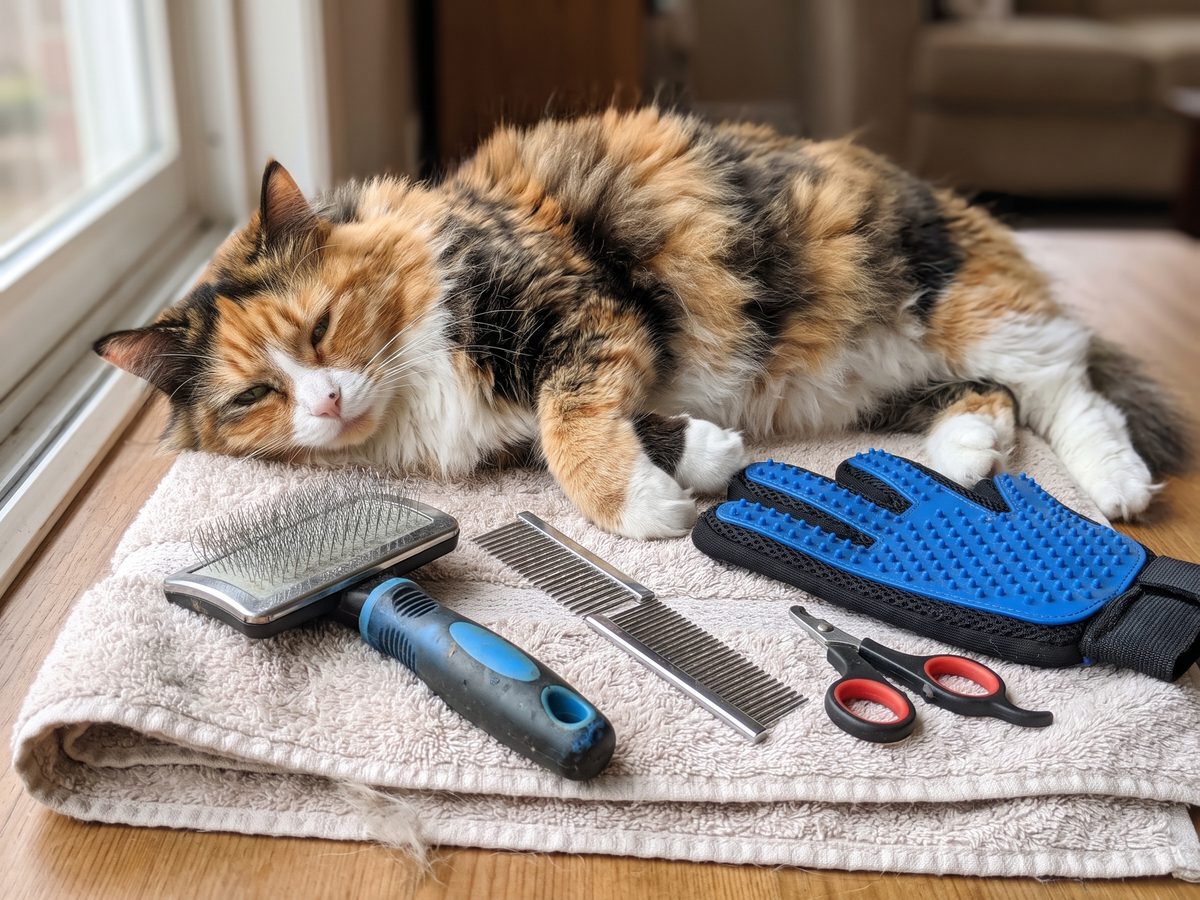
This page sorts grooming gear by what it's actually for: pulling out loose undercoat, everyday surface brushing, nail maintenance two different ways, quick cleanup between baths, waterless washing, and the specific challenge of a mat that's already formed in long hair. Each button underneath a section opens current Amazon results for that specific tool.
Deshedding Tools
A deshedding tool uses fine, closely spaced teeth to reach down into the undercoat and pull out loose fur before it sheds naturally onto furniture or gets swallowed during self-grooming. FURminator makes a widely used cat-specific deshedding tool sized and angled differently from its dog version, aimed at a cat's thinner skin and different coat structure.
Brought out a couple of times weekly during heavy shedding periods, a deshedding tool noticeably cuts down on both loose hair around the house and the volume of fur a cat swallows, which connects directly to fewer hairballs over time. Pressing too hard or working the same spot repeatedly can irritate skin, so a light, even pass matters more than forceful brushing.
Slicker & Everyday Brushes
A slicker brush uses fine, slightly bent wire bristles to smooth the coat's surface and catch loose fur during a quick pass most days or every second day, working as a lighter everyday complement to a deshedding tool's deeper undercoat work. Hertzko sells a self-cleaning slicker design that retracts the bristles with one button press, clearing collected fur without pulling it out by hand between strokes.
A rubber curry-style brush suits a short-haired cat that tolerates brushing poorly, since the soft nubs feel more like petting than grooming to a sensitive cat. Building a short daily brushing habit, even just a couple of minutes, keeps mats from taking hold at all, far better than an occasional long session.
Nail Clippers & Nail Caps
Cat-specific nail clippers use a smaller, curved blade shaped for a claw's natural curve, unlike a straight human clipper that can crush the claw instead of cutting it cleanly. Trimming just the sharp tip, well clear of the pink quick visible inside a light-colored claw, avoids the bleeding and pain that comes from cutting too close.
Nail caps take a different approach entirely, gluing a small vinyl sheath over each trimmed claw to blunt scratching damage without affecting a cat's normal claw retraction, and fresh ones typically go on somewhere between a month and six weeks apart as claws grow and caps shed naturally. A scratching post alongside either method gives a cat the outlet it needs; neither trimming nor capping replaces it. Declawing is never an acceptable alternative.
Grooming Wipes
A pet-safe grooming wipe handles the small, frequent cleanup jobs a full bath doesn't need to be called in for: paws after a litter box visit, a chin that's picked up food residue, or a coat that's gotten dusty without needing a real wash.
Unscented, pH-balanced formulas suit a cat with sensitive skin better than a heavily fragranced wipe, since strong scents can irritate skin or simply put a cat off being wiped down at all. Dander-reducing wipes specifically target the allergen proteins in cat saliva and skin flakes, which may help cut down on airborne allergens in a household where someone reacts to cats. Keeping a pack near the litter box turns quick cleanup into a two-second habit instead of a dreaded chore.
Waterless Shampoo & Grooming Gloves
A waterless shampoo, sold as a foam or spray, works into the coat and gets toweled or brushed out without a full bath, which suits most cats far better than dunking them in the sink ever will. A grooming glove slips onto the hand like a mitt and lets an owner pet a cat while collecting loose fur at the same time, which works well for a cat that tolerates petting but resists a brush outright.
Neither replaces an actual bath for a really dirty or greasy coat, but for routine upkeep on a cat that already grooms itself reasonably well, either option covers most of what's needed with far less stress than water involves. Introducing either tool slowly, during a calm moment, helps a reluctant cat accept it.
Long-Hair Mat Care
A long-haired cat, including Maine Coons and Persians, mats far more easily around the armpits, belly, and behind the ears than in areas that get more natural friction, which is why those spots deserve extra attention during regular brushing. A mat splitter or dematting comb, with rounded, blunt-tipped teeth built to work through tangles without cutting hair, handles a small, loose mat without needing scissors anywhere near the skin.
A mat cinched tight down at the skin, unlike one sitting loosely in the coat, is uncomfortable for a cat and often needs a professional groomer's clippers, not a home fix. Regular brushing several times a week, instead of occasional long sessions, prevents most mats from forming at all in a long-haired cat.
Related Reading
- Hairball control: why brushing comes first.
- Cat trees and scratchers: the outlet claws need.
- Persian cat care: the daily-comb breed.
- Browse all Cats pages
Frequently Asked Questions
Do indoor cats need regular brushing?
Yes, an indoor cat often sheds year-round, not only in seasonal bursts the way an outdoor cat's coat tends to, and regular brushing reduces both loose fur around the house and the amount a cat swallows during self-grooming. A short-haired cat needs less frequent brushing than a long-haired one, but neither needs none at all.
How do nail caps work, and do they hurt?
A nail cap is a small vinyl sheath glued over a trimmed claw that blunts scratching without affecting the claw's ability to retract normally. Application itself doesn't hurt when done correctly, and caps fall off naturally as the claw grows, so plan on a fresh set somewhere between a month and six weeks later.
A mat won't brush out. What now?
A small, loose mat sometimes works free with a mat splitter or a wide-tooth comb worked in gently from the edges, but a mat pulled tight against the skin can hurt a cat and is better handled by a groomer or veterinarian with clippers. Never use scissors close to the skin, since a squirming cat makes an accidental cut easy.