Cat Treats: Crunchy, Lickable, Freeze-Dried and Dental
Complete vs Complementary, on the Label
Cat food labels say whether a product is complete (it can be the whole diet) or complementary, also worded as "for intermittent or supplemental feeding". Almost every treat, lickable purées included, is complementary. That's fine, because treats aren't meant to replace food, but it means their calories belong in the day's total.
A common guideline keeps treats to about 10% of daily calories. The calorie count is on the pack; compare it with what your cat needs, and trim meals a little on generous treat days. Our feeding guide shows how to work out a starting portion.
The Main Treat Types
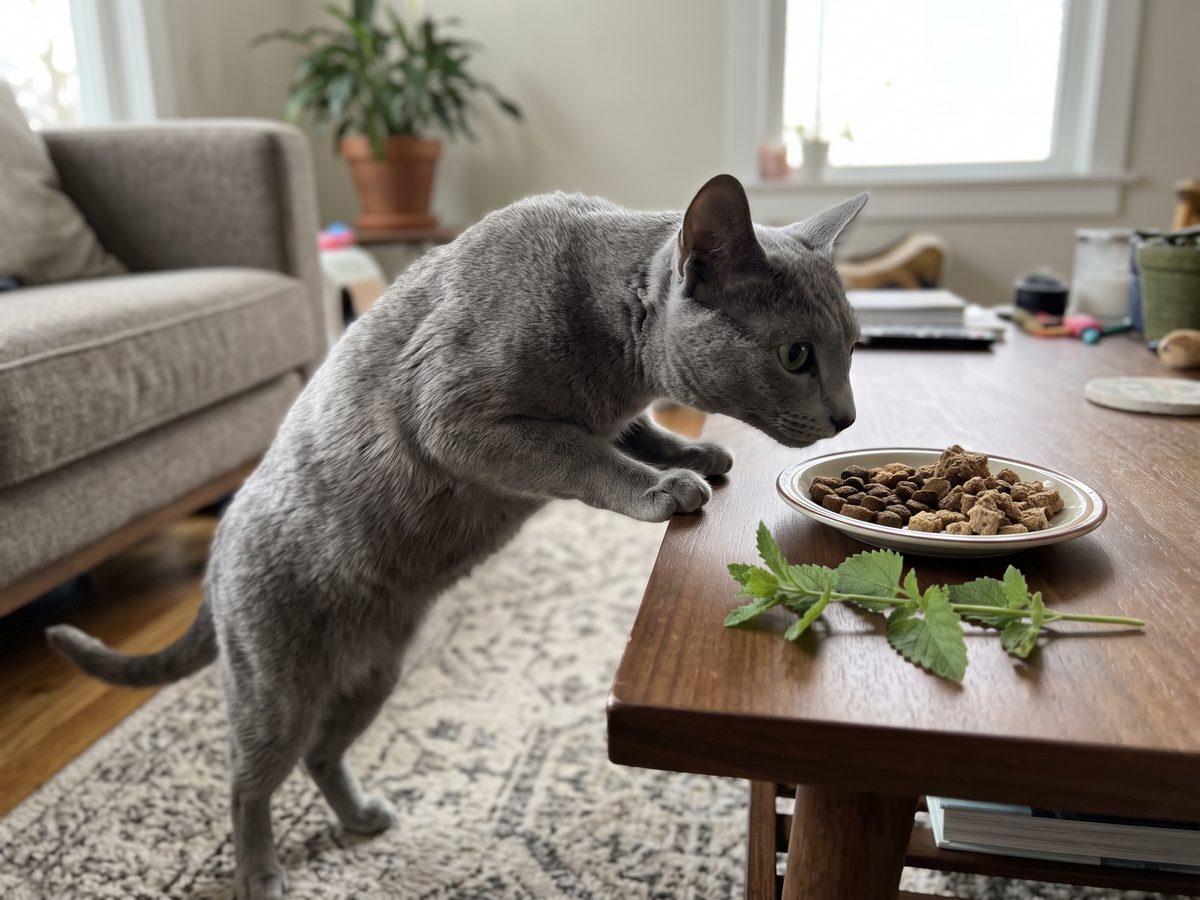
Crunchy treats are small, shelf-stable pieces in a pouch that rattles loudly enough to summon a cat from another room. They make good training rewards because you can break them smaller. They're calorie-dense for their size, so count them out instead of pouring a handful.
Lickable purée tubes, popularized by INABA's Churu, are a soft meat purée squeezed from a foil packet onto a plate or your fingers. Many owners love the hand-feeding moment. Calories vary between flavors and brands, so read the label, and if your cat is on a special diet for a health problem, ask your vet whether and how often.
Freeze-dried meat is often a single ingredient such as chicken or salmon, dried without heat. It's a high-value reward and crumbles easily for training. Keep an open bag sealed so it doesn't go chewy in humid weather. Dental treats have a textured shape that scrapes a little plaque as the cat chews; they help most as a reward after brushing.
Treats to Try
Each button opens a search in your own country's Amazon store. As an Amazon Associate we earn from qualifying purchases.
Keep one crunchy treat for training, one lickable treat for bonding and pill time, and a freeze-dried pack for the moments that need a big reward. A lick mat slows a purée down into a longer, calmer snack, and dental treats make a good thank-you after brushing.
Catnip and Silvervine
Catnip and silvervine are plants, not food. A sprinkle on a toy or scratcher sets off rolling, rubbing and bursts of play in many cats, but not all: the response is inherited, and researchers testing pet cats found about two in three responded to catnip and more responded to silvervine. If catnip leaves your cat cold, silvervine is worth a try.
Both come dried, as sprays or in toys. The scent fades, so refresh old toys or buy small amounts. Our cat toys guide covers kicker toys and refillable catnip toys.
Treats at Pill Time
Giving medicines: see your vet or a pet supply store with trained staff. Ask before you crush, split or hide any tablet in food, because some must be given whole or on an empty stomach.
If your vet says a tablet can be given with food, a soft treat or a dab of purée gives it somewhere to hide. Some cats lick around a hidden pill and leave it behind, so try a pill pocket treat or give the pill and follow it straight away with the purée as a reward.
It helps if your cat already loves the treat, so offer it as a plain treat for a while before you ever need it at pill time. If your cat still refuses, ask your vet about other ways to give the medicine instead of forcing it.
The Daily Treat Ritual
In many homes a lickable treat has become a daily ritual, and a predictable, happy moment with your cat has real value. The catch is that something repeated every day adds up. Treat the tube as one scheduled moment instead of an unlimited extra, and the habit stays affectionate without changing your cat's waistline over a season or two.
Frequently Asked Questions
Treat questions, answered without a lecture.
How many treats is too many in a day?
A common guideline keeps treats to about a tenth of daily calories, with a complete food supplying the rest. Check the calorie count on the pack against your cat's needs instead of guessing by the handful.
Are lickable purée tubes safe to give every day?
For most healthy cats, yes, as long as the tube counts toward the day's calories. If your cat is on a special diet or has a health problem, ask your vet first, since content varies by product.
Are lickable treats nutritionally complete?
No. Most are labeled complementary or for intermittent feeding, so they sit alongside a complete diet, not instead of it.
Can daily treats cause weight gain?
Yes, if their calories aren't counted. A purée tube is easy to give without measuring, which makes it a sneaky source of extra calories.
Are treats safe for kittens?
Check the pack: some treats are for adult cats only. Kittens need most of their calories from a complete kitten food, so keep treats small.
Why doesn't my cat react to catnip?
The response is inherited, and plenty of cats simply don't have it. Kittens usually don't respond until they're a few months old. Try silvervine, which some catnip-immune cats enjoy.
Related Reading
- How much to feed a cat: fitting treats into the day.
- Clicker training for cats: what to do with all those rewards.
- Cat food guide: the complete foods treats sit alongside.
This page is general information about treats, not a diet plan. If your cat has a health problem that affects diet, ask your vet how treats fit in, and mention any unexplained weight change or a cat refusing meals in favor of treats.