Beagle: Temperament, Care and the Famous Nose
Who a Beagle Suits (and Who It Doesn't)
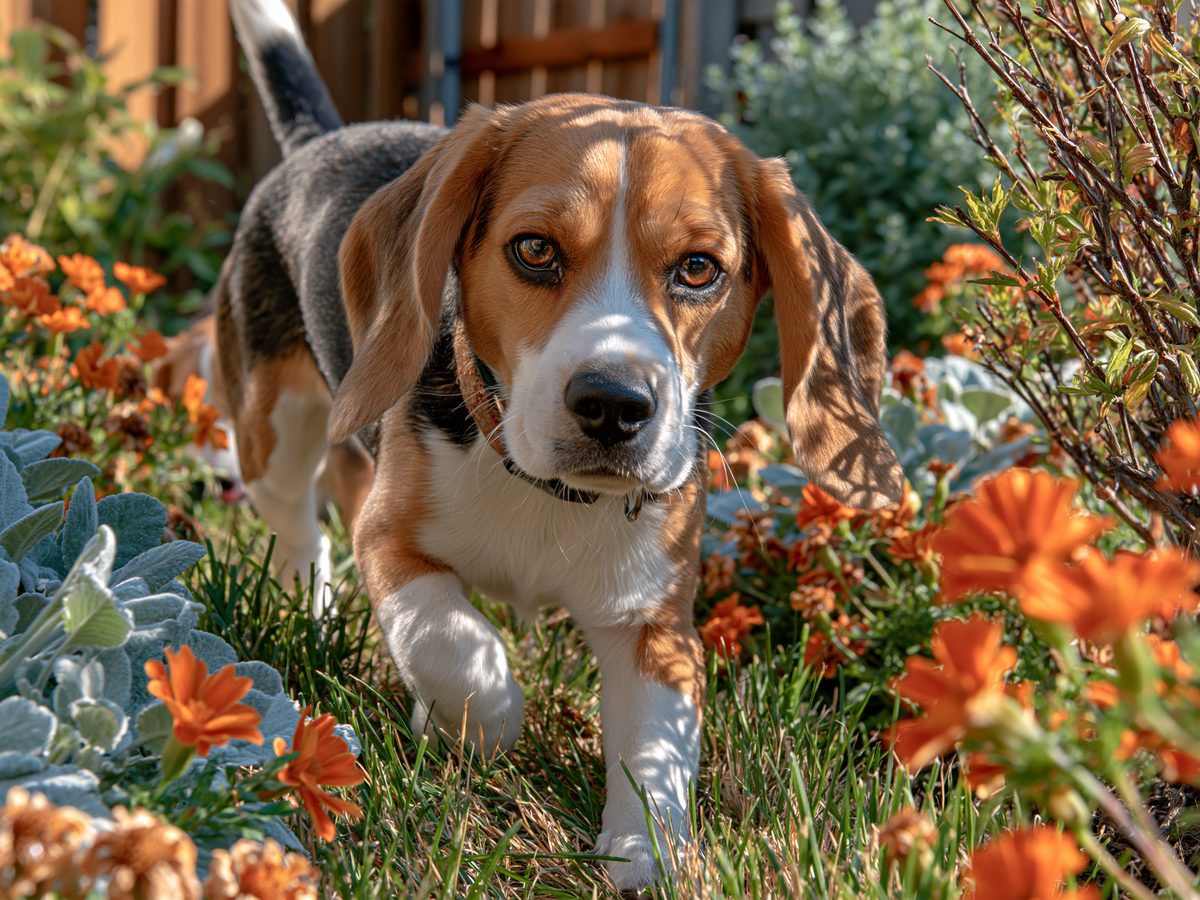
Beagles are friendly, merry and easy to love. They enjoy company, human or canine, and most get along well with children and other dogs.
They are a harder fit for close-quarters living with sound-sensitive neighbors, for long days home alone, and for anyone who wants a dog that hangs on every word. A Beagle will listen, just as soon as it has finished reading the news on that lamppost.
Built for the Pack and the Trail
Beagles were bred to hunt rabbits and hares in packs, following scent for hours and telling the hunters where they were with their voice. That history explains almost everything about life with one today.
- The nose leads. A good smell can outrank food, toys and you.
- The voice carries. Many Beagles bay when they find a scent, when they're excited, or when they're left alone too long.
- The pack matters. A Beagle is happiest with company and can get lonely and loud without it.
Exercise, Recall and Escape-Proofing
Plan on daily walks where sniffing is the point, not a delay. Scent games at home, such as hiding treats or using a snuffle mat, tire a Beagle out faster than you might expect.
Recall is the big training project. Practice with a long line in quiet places first, and treat open, unfenced country as leash territory. Our recall training guide covers the long-line method step by step, and loose-leash walking helps with a dog whose nose wants to be somewhere else.
At home, check the bottom of the fence as carefully as the top. A Beagle on a scent is more likely to dig under or squeeze through a gap than to climb over. Reward-based training works best with this breed: food is a powerful motivator, so use it, and keep sessions short and fun.
Coat, Ears and Grooming
The short, dense coat is easy care: a weekly going-over with a rubber grooming mitt or bristle brush keeps shedding down. Bath only when needed.
Those long, soft ears are part of the look, and they need a look too. Check them weekly and ask your vet to show you how to keep them clean, or see cleaning dog ears safely. Trim nails regularly if walks don't wear them down.
Gear for a Nose-First Dog
Each button opens a search in your own country's Amazon store. As an Amazon Associate we earn from qualifying purchases.
A long training line is the most useful thing you can buy for recall practice. A secure, well-fitted harness gives a keen puller something better than a collar to lean into. A snuffle mat and a slow-feed bowl turn mealtimes into the sniffing work Beagles love and slow down a fast eater. A rubber grooming mitt handles the short coat, and a sturdy ID tag is worth having for the day someone leaves the gate open.
Health: What to Ask the Breeder and Your Vet
In the US, the National Beagle Club's health program asks breeders for a hip evaluation, an eye examination by a veterinary ophthalmologist, and a DNA test for MLS (Musladin-Lueke syndrome). Ask to see the results for both parents. In the UK, The Royal Kennel Club's health test finder lists results for registered dogs.
Weight is the everyday health issue. Beagles love food and rarely refuse a snack, so measure meals, count treats as part of the day's ration, and ask your vet to check body condition at every visit. Book a check-up soon after your dog comes home, and talk to your vet about vaccinations and a parasite prevention plan for where you live.
Worming, flea and tick products: see your vet or a pet supply store with trained staff. They can tell you what suits your dog and where you live.
Finding a Puppy or a Rescue Beagle
Meet the puppy with its mother, ask for the parents' health results, and expect a good breeder to ask you plenty of questions too. Beagles also turn up in rescues, including breed-specific ones; your national kennel club or breed club can point you to them. Our rescue vs breeder guide walks through both routes.
Frequently Asked Questions
The voice, the nose and the fence top the list.
Do all Beagles bay and howl?
Most do to some degree. The bay was bred in so hunters could follow the pack, so plan for a dog with a voice. Enough exercise, company and things to sniff keep boredom howling down, but a silent Beagle is the exception.
Can a Beagle be trusted off the leash?
In a securely fenced area, usually yes. In open country, a strong scent can switch off even good recall, so most owners use a long line and keep free running for fenced spaces.
How big does a Beagle get?
The American Kennel Club recognizes two sizes: up to 13 inches (33 cm) and from 13 to 15 inches (33 to 38 cm) at the shoulder. The UK standard allows up to about 16 inches (40 cm). Larger Beagles typically weigh 20 to 30 lb (9 to 14 kg).
Is a Beagle a good apartment dog?
It can work with daily walks, sniffing games and a plan for the voice, but thin walls and a bored Beagle are a hard mix. Talk to your neighbors, and to your landlord about pets, before you commit.
Are Beagles good with children and other dogs?
Generally, yes. Beagles were bred to work in packs and most enjoy company. Supervise them with small pets such as rabbits and guinea pigs, because the hunting instinct is real.
Why does my Beagle always seem hungry?
Food motivation is part of the breed's charm and its biggest weight risk. Measure meals, count treats as part of the day's food, and ask your vet to check body condition at every visit.
Related Reading
- Recall training: the long-line method, step by step.
- Dog enrichment ideas: sniffing games for rainy days.
- Dog training supplies: lines, treat pouches and clickers.
Breed traits are tendencies, not promises for the dog in front of you. If anything about your Beagle's health or behavior worries you, call your vet.