Horse Grazing and Pasture Management: Healthy Grass, Happy Horses
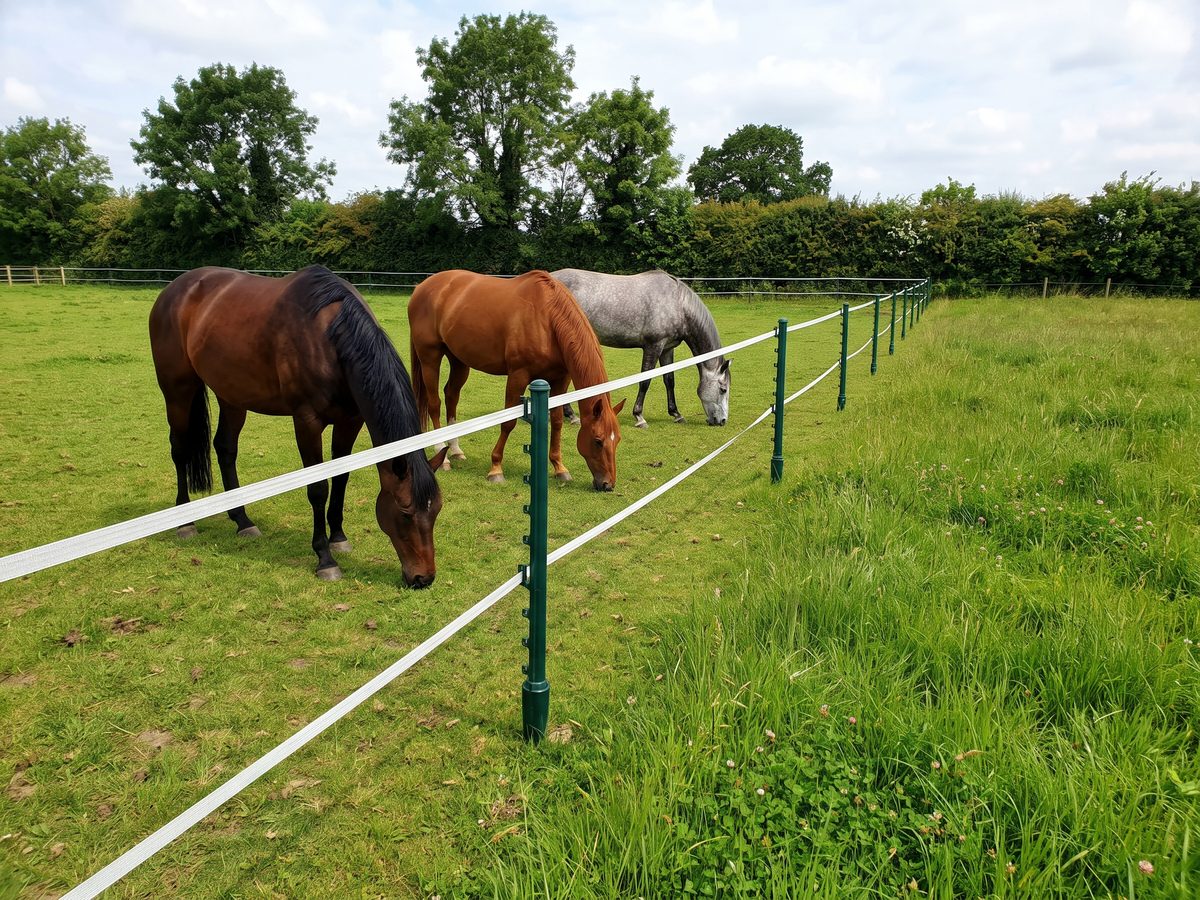
How Much Land Does a Horse Need?
There is no single answer. A rule of thumb often quoted in the UK, attributed to the British Horse Society, is about 1 to 1.5 acres (0.4 to 0.6 hectares) per horse on good permanent grazing that is well managed. Poor soil, wet ground, a dry climate, bigger horses or a year-round grazing plan all push that up. Where land is short, feeding hay and using a hard-standing area or track reduces the pressure.
Too many horses on too little land leads to bare, muddy, weedy fields with more worm larvae on the grass. Too much rich grass, on the other hand, is a problem for ponies, cobs and donkeys that gain weight easily.
Rest, Rotate and Pick Up Droppings
- Split the land. Two or more paddocks let one rest and regrow while another is in use.
- Pick up droppings at least twice a week, daily on small or busy paddocks. It keeps more grass usable and helps your vet's worming plan (see modern worming).
- Top (mow) rested paddocks to even out rough patches and stop weeds seeding.
- Harrow to spread molehills and pull out dead grass, in dry weather.
- Protect wet ground. In winter, a gateway mat, a hard-standing area or moving the water trough saves fields from turning to mud.
For soil testing, fertilizer and reseeding, ask a local grassland or agricultural adviser. Some fertilizers and weed treatments mean keeping horses off the field for a while, so read the label.
Worming, weedkillers near horses and any treatments: see your vet or a pet supply store with trained staff. They can advise on what is safe for your horses and your land.
Too Much of a Good Thing: Rich Grass
Spring and early summer grass, and grass after rain following a dry spell, can be very rich. For many native ponies, cobs and other good-doers it brings fast weight gain, and with it a higher risk of laminitis. Ask your vet whether your horse needs its grazing limited.
Common ways owners limit grass, with their vet's advice:
- a smaller strip paddock moved a little each day;
- a track system around the edge of a field, which also keeps horses moving;
- part-time turnout, with weighed hay the rest of the time;
- a well-fitted grazing muzzle, used as your vet suggests and checked often.
Our body condition scoring guide helps you spot weight gain early.
Safe Fencing
Horses run, play and lean, so fences need to be visible, strong and free of things to catch on. Post and rail, horse-safe mesh and wide electric tape are common choices. Barbed wire and sheep netting with large holes are best avoided, because legs and hooves get caught in them.
Walk the fence line every day or two for breaks, loose wire, sharp edges and anything that has blown in. Keep gates secure and easy to open with one hand while leading a horse.
Field Kit
Each button opens a search in your own country's Amazon store. As an Amazon Associate we earn from qualifying purchases.
Electric fencing kit (energizer, wide tape, posts and insulators) lets you divide fields and make strip paddocks. A fence tester shows whether the current is getting through. A manure fork and barrow keep droppings down, and a grazing muzzle helps a good-doer if your vet recommends one. A large trough or water container keeps a field supplied.
Water, Shade and Shelter
Horses drink a lot: University of Minnesota Extension says most 1,000-lb (450-kg) horses drink 10 to 12 gallons (38 to 45 liters) a day, more in heat and work. Check troughs daily for cleanliness, ice and that floats work. Natural ponds and streams may be unsafe or run dry.
Trees, hedges or a field shelter give shade in summer and a windbreak in winter. More on shelter in stabling, turnout and field shelters.
Poisonous Plants and Your Daily Check
Walk the field regularly for poisonous plants and trees: ragwort, yew, sycamore seeds and seedlings, acorns and others, depending on where you live. In England, landowners must stop ragwort and some other weeds spreading to farmland next door; rules differ by country, so check with your national authority. Our poisonous plants and ragwort guide has the list and the law.
Frequently Asked Questions
Grass, mud and fences: what owners ask most.
How many acres do I need for one horse?
A UK rule of thumb is about 1 to 1.5 acres (0.4 to 0.6 hectares) per horse on good, well-managed grazing, but soil, climate and your horse change that. And one horse also needs a companion, so plan for two.
How often should I pick up droppings?
At least twice a week, and daily on small paddocks. It keeps more of the field grazeable and is one of the best things you can do about worms.
Is barbed wire safe for horses?
It is widely discouraged, because horses can be badly hurt if they run into it or get a leg caught. Post and rail, horse mesh or wide electric tape are safer.
Can horses graze all year?
Some can, on dry, well-drained land, but many fields need winter rest to recover, and horses may need hay as well. A hard-standing area helps on wet ground.
Does my pony need a grazing muzzle?
Only if your vet thinks it needs its grass limited. A muzzle must fit well, be checked daily and should not stay on all the time.
Related Reading
- Poisonous plants and ragwort: what to remove, and the law.
- Feeding horses forage first: grass, hay and how much.
- Smallholding setup: if horses share the land with other animals.
If your horse gains weight fast on grass, or you are worried about its feet, ask your vet before the next growing season.