What Does a Sphynx Cat Need That Other Cats Don't?
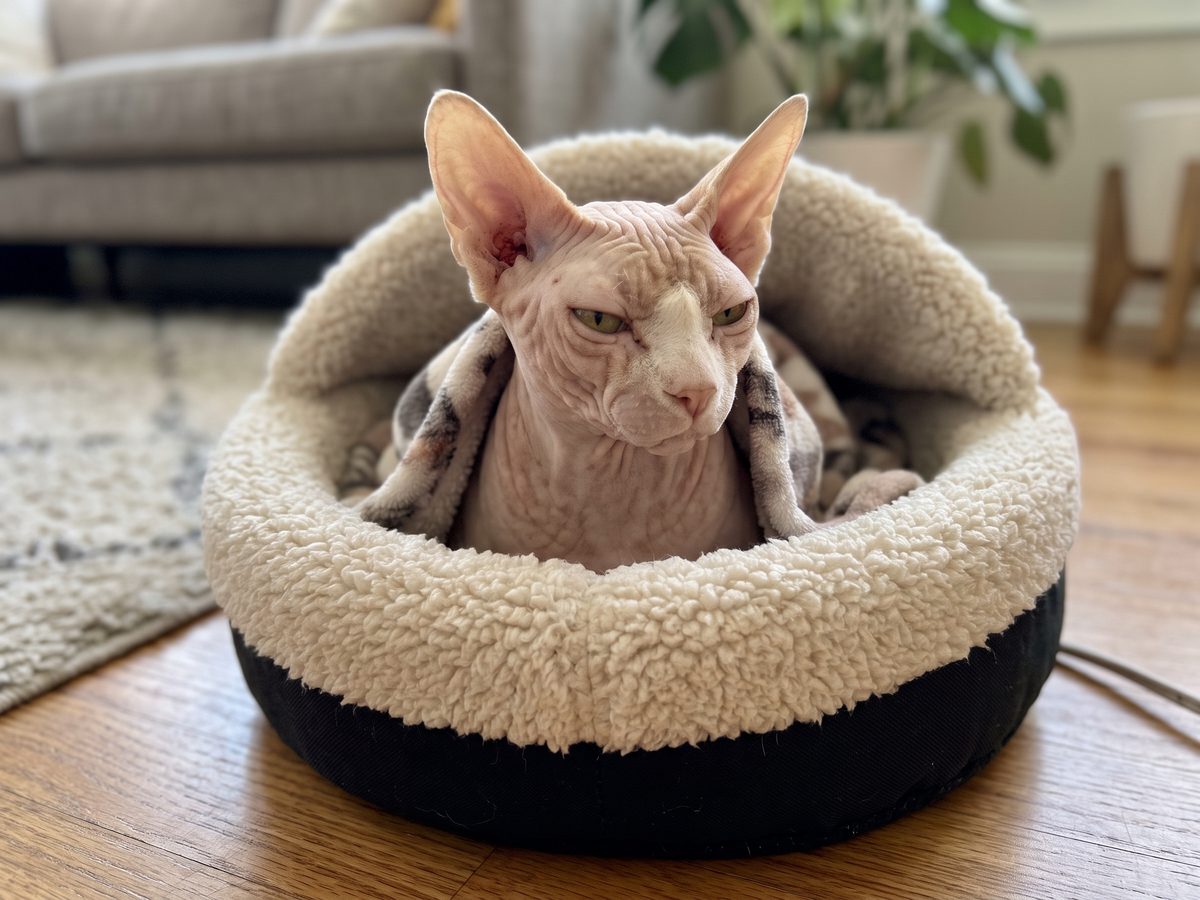
A weekly rhythm covers most of what a Sphynx needs that a coated cat's routine skips entirely.
- Bathe weekly with a cat-safe shampoo to clear oil before it builds up on bare skin.
- Dry thoroughly right after, since a damp, coatless cat chills faster than a coated one.
- Provide a heated bed or blanket in any room the cat spends real time in.
- Add a sweater in cooler weather or an air-conditioned home for extra warmth.
- Check ears weekly and clean with a vet-approved solution when wax has built up.
- Limit direct sun exposure, with shade for any supervised time outdoors.
Why Sphynx Skin Needs Regular Bathing
Fur on a typical cat absorbs and spreads the skin's natural oil, and grooming distributes it further across the body, keeping any one spot from building up too much. A Sphynx has none of that buffering, so oil collects directly on bare skin and, left unmanaged, turns the skin greasy, can clog pores and lead to spots.
A weekly bath with a gentle, cat-safe shampoo, followed by full drying with a towel or a low, warm hair dryer setting, keeps oil levels in check without over-stripping skin that still needs some natural oil to stay healthy. Skin that looks unusually greasy between baths, or develops persistent bumps or redness, is worth a vet's look, not just more baths. A Devon or Cornish Rex shares a lighter version of this same oil-management need, since its thin coat traps far less natural oil than a fully coated cat's fur does.
Warmth: Beds, Blankets and Sweaters
A Sphynx loses body heat noticeably faster than a coated cat, which shows up as a cat that seeks out sunny windowsills, warm laps, and heating vents with more determination than a typical housecat. A heated cat bed or pad gives steady, reliable warmth without depending on the household thermostat staying high enough for comfort, and a well-fitted cat sweater adds a real layer of warmth; on this breed it isn't just decoration.
Keeping the home on the warmer side, or at least ensuring one reliably warm spot exists somewhere in every room the cat spends time in, counts for far more on this breed than on a cat with a full coat. None of this is medical care; it's ordinary comfort management for a body built without the usual insulation.
Sun Caution, Indoors and Out
Bare skin sunburns the same way human skin does, and a Sphynx lounging in direct sun through a window for long stretches, or spending unsupervised time outdoors, faces a real risk most coated cats never encounter. Keep outdoor time short and shaded. Many human sunscreens contain ingredients that are harmful to cats if licked, so ask your vet before putting any sunscreen on your cat.
An enclosed catio with shaded sections offers outdoor time without the same level of exposure as an open yard. Skin that looks pink, flaky, or unusually sensitive to touch after sun exposure deserves the same attention a sunburn would get on a person, including a vet's input if it seems severe.
Ear Cleaning on a Steadier Schedule
Without fur nearby to catch stray wax and debris, a Sphynx's ears tend to show visible buildup more readily than a coated cat's, which is more a cosmetic and comfort issue than a sign something's wrong on its own.
A weekly check, wiping the visible inner ear with a cotton ball and an ear cleaner your vet recommends, keeps buildup from accumulating to the point of odor or irritation. Never probing beyond what's visible, the same outer-ear-only principle that applies across species, protects the eardrum from accidental injury during a routine cleaning. Ears that look red, smell strong, or seem to bother the cat despite regular cleaning call for a veterinary exam instead of a more aggressive at-home cleaning attempt.
Building a Sphynx-Specific Care Kit
A gentle, cat-safe shampoo formulated for sensitive or oily skin covers the weekly bath this breed depends on, and a heated cat bed or pad addresses the warmth gap left by having no coat at all. A well-fitted cat sweater extends that warmth into everyday wear around a cool house, and UV-filtering window film takes the edge off long sunbathing sessions indoors. Cotton balls and the ear cleaner your vet recommends finish off the kit, ready for the weekly ear check this breed's exposed ears call for.
Frequently Asked Questions
Bathing frequency and keeping a Sphynx warm are the two things new owners ask about most.
Why does a hairless cat need bathing when furry cats mostly don't?
Fur normally absorbs and spreads a cat's natural skin oil, and self-grooming distributes it further. Without fur to soak any of that up, oil collects directly on Sphynx skin and needs regular washing off instead of managing itself the way a coated cat's skin does.
Is a heated bed necessary, or is a regular blanket enough?
A regular blanket helps but a Sphynx loses heat faster than a coated cat does, so a heated bed or pad gives more consistent warmth, especially overnight or in a cooler room. Many owners use both together.
Can a Sphynx go outside at all?
Supervised, short outdoor time in shade is reasonable for some owners, but unsupervised or prolonged outdoor access carries real sunburn risk given the exposed skin. An enclosed catio offering shade options is a safer middle ground than open, unsupervised access to a yard.
How often should ears actually be cleaned on this breed?
Roughly weekly suits most Sphynx cats, though a cat producing wax quickly may need more frequent attention while one running cleaner can stretch the interval further. Watching how fast wax reappears after a cleaning is a more reliable guide than following a fixed schedule for every cat regardless of how it actually runs.
Are cat sweaters just for looks, or do they serve a real purpose here?
For this breed, a sweater does a real job, adding a layer of warmth a Sphynx's own body can't generate through fur the way a coated cat's does. Choosing one that fits snugly without restricting movement matters more than any pattern printed on it.
Does a Sphynx need sunscreen even indoors?
A cat lounging in a sunny window for long stretches can pick up some sun exposure even through glass, though it's milder than direct outdoor sun. Indoor sun-spot lounging is a lower risk than outdoor sun but still worth limiting during the brightest hours; UV-filtering window film helps. Ask your vet before using any sunscreen.
Is Sphynx skin more prone to acne or other skin issues?
Yes, oil buildup can cause spots and minor skin problems more readily than in a coated breed, since there's no fur intercepting the oil before it sits on the skin. Regular bathing helps manage this, and a vet should look at any persistent bumps, redness, or sores that don't improve with routine cleaning.
Related Reading
- Devon and Cornish Rex: thin-coated relatives.
- Indoor or outdoor?: sun and safety.
- Cat health basics: preventive care.
This guide covers routine skin, warmth and ear care. Persistent skin bumps, redness that doesn't clear, a strong ear odor or a sunburn all call for your vet, not more home care.