Horse Blankets, Boots and Stable Gear
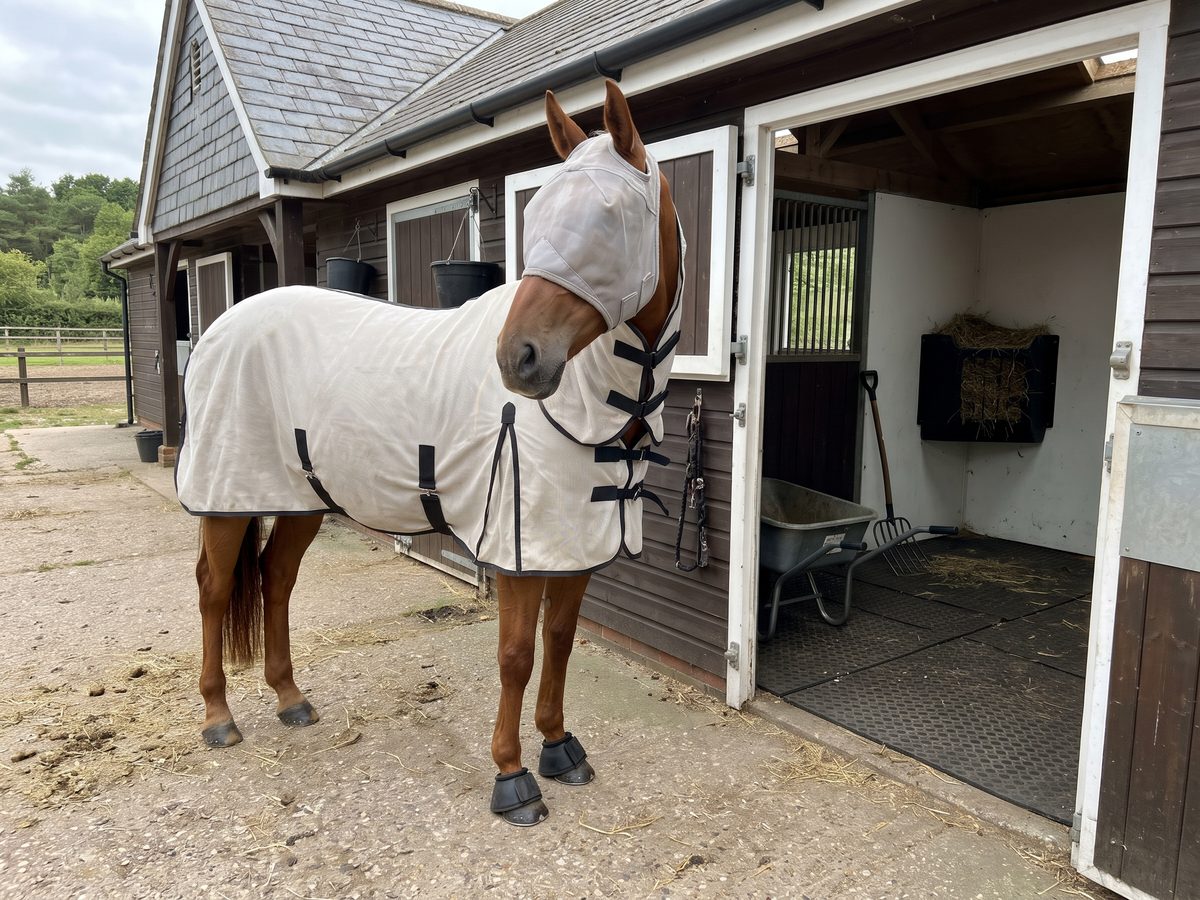
Americans say blanket; much of the rest of the English-speaking world says rug. Same thing. For which weight to choose, see our blanket weight guide.
Turnout Blankets (Rugs)
Each button opens a search in your own country's Amazon store. As an Amazon Associate we earn from qualifying purchases.
Two numbers matter. Denier is how tough the outer shell is: higher resists tears from fences and field mates. Fill, in grams, is how warm it is: a turnout sheet has none, a lightweight has a little, and medium and heavyweights more. Sizes run differently between makers, so measure your horse and use the maker's chart. A stable blanket is for indoors only.
Fly Masks and Fly Sheets
A fly mask with ears protects eyes and ears without blocking vision; a mesh fly sheet covers the body. Both only work if they fit: no gaps at the mask edges and no rubbing at the shoulders. Our summer fly control guide puts them alongside the muck heap and turnout times.
Bell Boots, Brushing Boots and Splint Boots
Bell boots (overreach boots) wrap the heel and coronary band of the front feet, where a hind foot can strike. Brushing or splint boots protect the inside of the lower leg from the opposite foot. Choose by the job and the horse's way of going, check the fit each time, and clean grit out of the linings so they don't rub. Some boots are for riding only, not turnout.
Standing Wraps and Exercise Bandages
Wraps put on unevenly or too tight can harm the tendons they are meant to protect. Ask your vet or an experienced horse person to show you how to apply them, over thick padding, with even pressure, and how long they may stay on. If you are unsure, travel boots and brushing boots are simpler and safer.
Stable Mats, Mucking Out and Hay
Rubber stable mats give a firmer, warmer floor and cut the bedding you need. A good fork and a muck tub or wheelbarrow make mucking out quicker. A slow-feed haynet, tied at a safe height, keeps hay clean and makes it last; a haynet that hangs too low when empty can catch a hoof.
Water That Doesn't Freeze
Horses drink less when water is icy, and a horse without water is a worry in any season. A heated bucket or a trough de-icer helps in hard winters. Plug them only into an outlet protected by a GFCI or RCD (residual current device), keep cords out of reach of teeth, and follow the maker's sizing for your trough. Where you have no power, break and lift out the ice at least twice a day.
Frequently Asked Questions
Fit and safety come up more than anything else.
What blanket weight does my horse need?
It depends on your horse's coat or clip, its age and condition, the weather and whether it has shelter. Our blanket weight guide walks through it, and the maker's guidance for that blanket helps too.
How do I measure my horse for a blanket?
Most makers measure from the center of the chest, along the side, to the point of the buttock, but some use other methods. Check the chart for the brand you are buying.
Are standing wraps safe?
They are when applied correctly, over good padding with even pressure, and checked often. Put on badly, they can damage tendons. Ask your vet or an experienced person to show you first.
Do heated water buckets need a special outlet?
Use an outlet protected by a GFCI (in North America) or an RCD (in the UK and many other countries), and keep cords where a horse can't chew them.
Related Reading
- Blanket weight guide: when, and how warm.
- Stabling, turnout and field shelters: where your horse lives.
- Horse grooming: washing and reproofing blankets.