Bringing Home a Kitten: Getting Ready and the First Weeks
Choosing a Kitten Safely
Rescues and shelters have kittens much of the year, and good ones will tell you about each kitten's health and temperament. If you choose a pedigree breeder, ask about health tests for the breed and expect to be asked questions in return. Our guide to rescue or breeder compares the two.
Always see the kitten with its mother (or its foster carer for a rescue kitten) in the place it was raised. Be wary of anyone who offers to meet you somewhere else, has many breeds available, or pushes you to pay quickly online. A healthy kitten is bright, curious and clean around the eyes, nose and rear. Ask what vaccinations and parasite treatments it has had, whether it is microchipped, and what food it eats.
Kittens shouldn't leave their mother before eight weeks, and many rescues and breeders wait until nine weeks or later. Those extra weeks with mother and littermates help a kitten learn to be a cat.
Kitten-Proofing Your Home
Kittens climb, chew and squeeze into impossible places. Before yours arrives, get down to kitten height and look around:
- Tie up blind and curtain cords and tuck away electrical cables, or cover them.
- Put away string, ribbon, hair ties, rubber bands, needles and thread; kittens love them and can swallow them.
- Keep toilet lids down, and check washing machines, dryers, dishwashers and recliners before you use them.
- Remove toxic plants, especially any lilies. See our lilies and toxic plants guide.
- Store medicines, cleaning products and human food safely, and screen open windows and balconies.
The Base Room
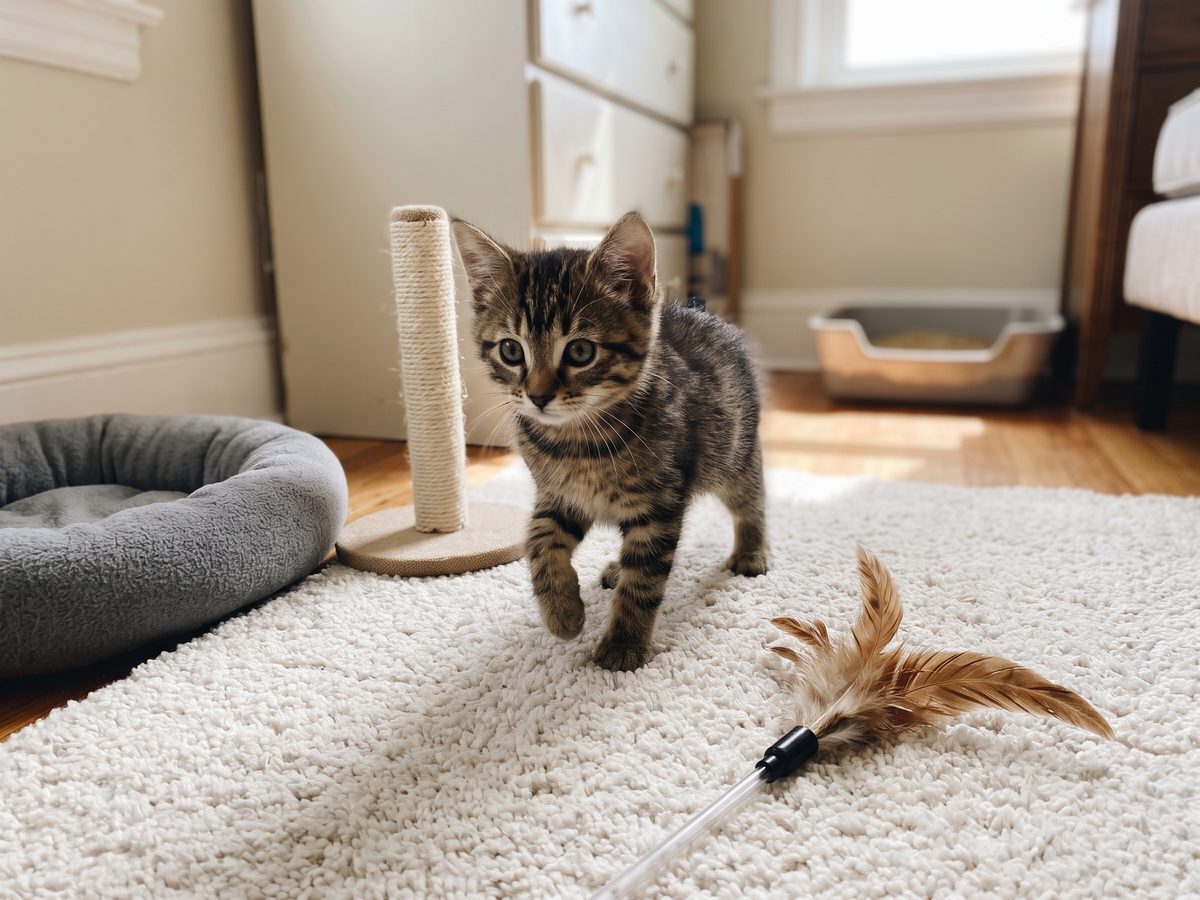
Start your kitten in one quiet room, such as a spare bedroom, with everything it needs: food and water, a low-sided litter box well away from the food, a warm bed, a covered hiding place, a scratching post and a few toys. A small, safe space lets a kitten settle before it takes on the whole house.
Let your kitten come out of the carrier in its own time and explore. Spend time sitting quietly in the room. Once it is eating, using the litter box and approaching you confidently, open up more of the house a room at a time.
Your Kitten Shopping List
Each button opens a search in your own country's Amazon store. As an Amazon Associate we earn from qualifying purchases.
Buy the same food the kitten has been eating, plus a low-entry litter box and the same type of litter. A secure carrier gets it home and to the vet. A sturdy scratching post and a wand toy give claws and teeth the right outlet from day one, and a covered bed gives a nervous kitten somewhere to hide.
The First Vet Visits
Vaccinations, worming and flea treatments for kittens: see your vet or a pet supply store with trained staff. Many products aren't suitable for young kittens, so let your vet set the plan.
Book a vet visit within about the first week. Your vet will give the kitten a full check, talk you through its vaccination course and a parasite prevention plan, check or fit a microchip, and discuss when to neuter. Bring any records you were given.
Kittens need a course of vaccinations a few weeks apart, so expect more than one visit. Keep your kitten indoors until your vet says its vaccinations are complete, and until it's neutered and microchipped. Our cat health basics and neutering guide explain more.
Food and Litter
Feed the same food the kitten was eating for at least the first week or two; a new home is enough change. If you want to switch, do it gradually over about a week. Kittens need food made for growth and small, frequent meals; the pack gives a starting amount by age and weight. Our kitten-to-adult food guide covers when to switch.
Fresh water should always be available. Cow's milk isn't needed and upsets many cats' stomachs. Most kittens arrive litter-trained; show yours the box after meals and naps and keep it spotless.
Handling, Play and Socializing
The first months are when a kitten learns what's normal. Handle it gently and often for short spells: stroking, picking it up with a hand under its chest and back legs, and looking at paws, ears and teeth, with a treat afterward. Leave the carrier out with a blanket inside so it becomes a den, not a warning.
Play with toys, never hands, so your kitten learns that teeth and claws go on toys. Several short play sessions a day, each ending with a "catch", suit a kitten's energy. Our play guide shows how.
Children and Other Pets
Teach children to sit on the floor and let the kitten come to them, to stroke gently, and to leave it alone when it is eating, sleeping or hiding. Supervise young children every time.
Introduce resident cats and dogs slowly, by scent first and then through a gate, over days or weeks. Our guides to introducing a second cat and cats and dogs take it step by step.
Frequently Asked Questions
What new kitten owners ask most.
What age should a kitten leave its mother?
At least eight weeks, and many rescues and breeders wait until nine weeks or older. The extra time with mother and littermates helps kittens learn to be well-adjusted cats.
When should my kitten first see a vet?
Within about the first week. Your vet will check it over, plan vaccinations and parasite prevention, check the microchip and talk about neutering.
When can my kitten go outside?
Not until your vet says its vaccinations are complete, and ideally once it is neutered and microchipped. Start with short, supervised visits, and keep it in at night.
Can I give my kitten milk?
It doesn't need it. Many cats can't digest cow's milk well. Fresh water and a complete kitten food are all it needs.
My new kitten is hiding. Is that normal?
Yes. A new home is a big change. Give it a quiet base room with a hiding place, sit with it calmly and let it come to you. Call your vet if it isn't eating or drinking.
Should I get two kittens?
Two kittens often keep each other busy and many rescues encourage pairs. It doubles the costs and vet visits, so plan for that before you decide.
Related Reading
- Rescue or breeder?: how to choose where your kitten comes from.
- Kitten to adult food: feeding a growing cat.
- Neutering your cat: when, why and recovery.
- Indoor or outdoor?: deciding how your cat will live.
Your vet is your best partner in your kitten's first year. Call them if your kitten stops eating, has diarrhea or vomiting, seems sleepy and floppy, or anything else worries you: kittens can go downhill quickly.