Bringing Home a Puppy: Choosing Well and the First Weeks
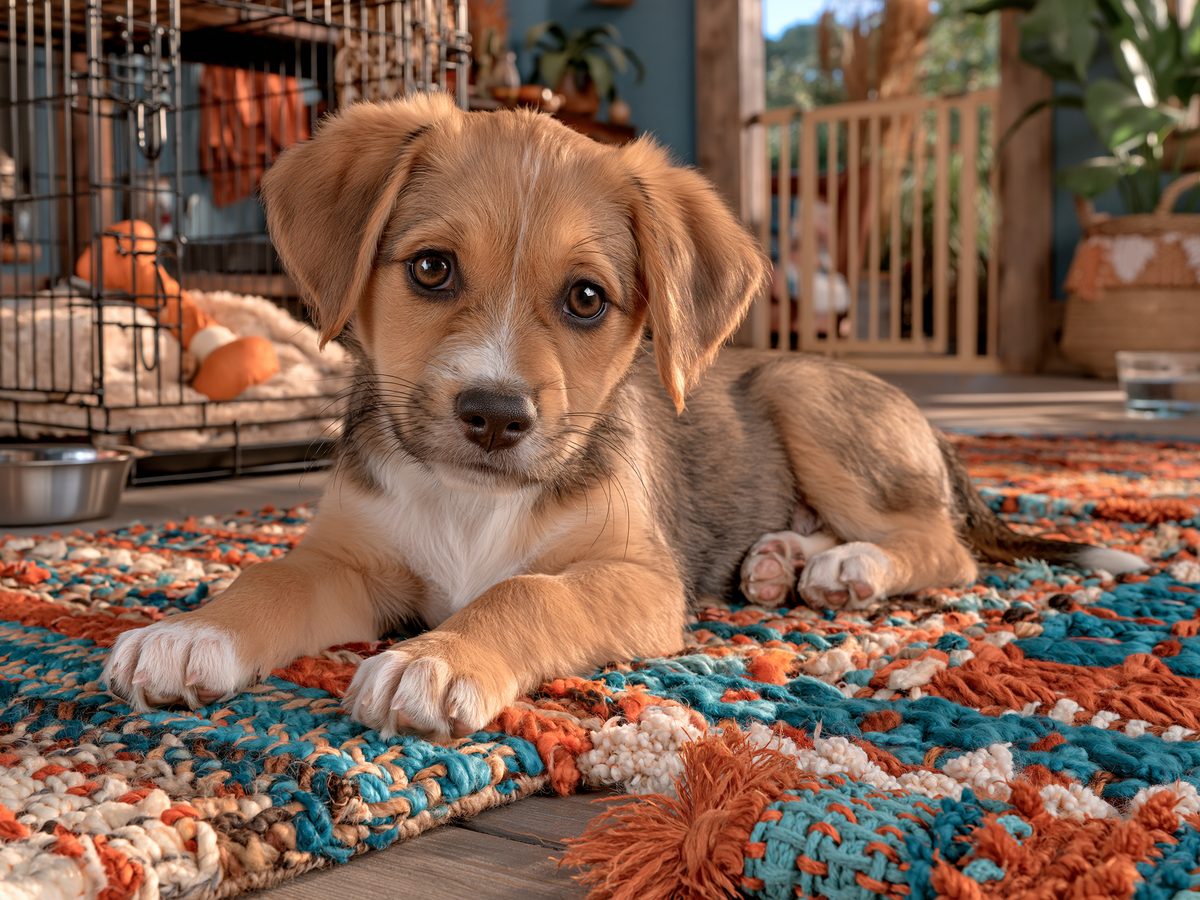
Choosing a Puppy
- Pick the breed or type for your life, not just its looks: size, exercise, grooming and lifespan. Our breed pages help.
- See the puppy with its mother where it was born, and ideally the father or his details.
- Ask for health test results for both parents, for the tests that breed's kennel club recommends.
- Expect questions back. A good breeder or rescue wants to know about your home and will take the puppy back if things go wrong.
- Consider a rescue. Puppies and young dogs come into rescues too; see rescue vs breeder.
Before Day One: Puppy-Proofing
- Choose one or two puppy-safe rooms with an easy-clean floor.
- Lift cables, shoes, medicines, cleaning products, plants and anything chewable out of reach.
- Fit baby gates on stairs and doors.
- Set up a crate or pen with a bed, water and a chew. See crate training.
- Ask the breeder or rescue what food the puppy eats and buy the same to start.
- Book a vet check for the first week and look into pet insurance.
The First Day and Night
Bring your puppy home when you'll be around for a few days. Take it straight to its toilet spot, then let it explore quietly. Keep visitors to a minimum. At night, many people put the crate beside the bed for the first weeks, so the puppy feels less alone; expect a toilet trip in the night for a young puppy. Some crying is normal at first.
The First Weeks: Routine Is Everything
- Toilet training at regular times; see toilet training a puppy.
- Plenty of sleep. Young puppies sleep much of the day; overtired puppies bite more.
- Gentle socialization with people, sounds and places; see puppy socialization.
- Short training games: name, sit, come, settle on a mat.
- Handling practice: paws, ears and mouth with treats; see cooperative care.
- Short spells alone from early on, so being alone is normal.
The New-Puppy Shopping List
Each button opens a search in your own country's Amazon store. As an Amazon Associate we earn from qualifying purchases.
A crate with a divider and a puppy pen give a safe base. Baby gates block stairs. Puppy food matched to the breeder's, teething toys, a soft harness and leash, an ID tag, and an enzyme cleaner for accidents cover the rest.
The First Vet Visit
Take your puppy for a check-up in its first week, with any paperwork from the breeder or rescue. Your vet will examine your puppy and talk to you about vaccinations, parasite prevention, neutering, diet and when it can safely go out in public. Check the microchip is registered in your name with your current details.
Vaccinations, worming and flea or tick treatments: see your vet or a pet supply store with trained staff. Your vet will set a plan for your puppy's age and where you live.
Frequently Asked Questions
New puppy, lots of questions. Here are the big ones.
What age should a puppy leave its mother?
Usually around eight weeks, and not younger. Some breeders keep small breeds a little longer. Rules on minimum sale ages differ by country.
Should my puppy sleep in my bedroom at first?
Many people put the crate beside the bed for the first weeks so the puppy feels less alone, then move it gradually. Do what works for your home.
When can my puppy go for walks?
Ask your vet. It depends on your puppy's vaccinations and local risks. You can carry your puppy out to see the world before then.
How do I spot a puppy farm?
No mother on show, meeting somewhere other than the home, many breeds for sale, missing paperwork and pressure to buy quickly are all warning signs.
How long does a puppy take to settle in?
Most settle into a routine within a few weeks. Keep things calm and predictable, and be patient with nights.
Related Reading
- Puppy socialization: the early weeks that matter most.
- Puppy biting and mouthing: what's normal.
- Puppy food: what to feed.
Book a vet check in your puppy's first week, and call sooner if it's sleepy, off its food, vomiting or has diarrhea.