Reptiles & Amphibians
Species guides with real temperatures, UVB and space figures, from leopard geckos and corn snakes to tree frogs and axolotls, plus heating, lighting, food, the law and what to do in a power cut.
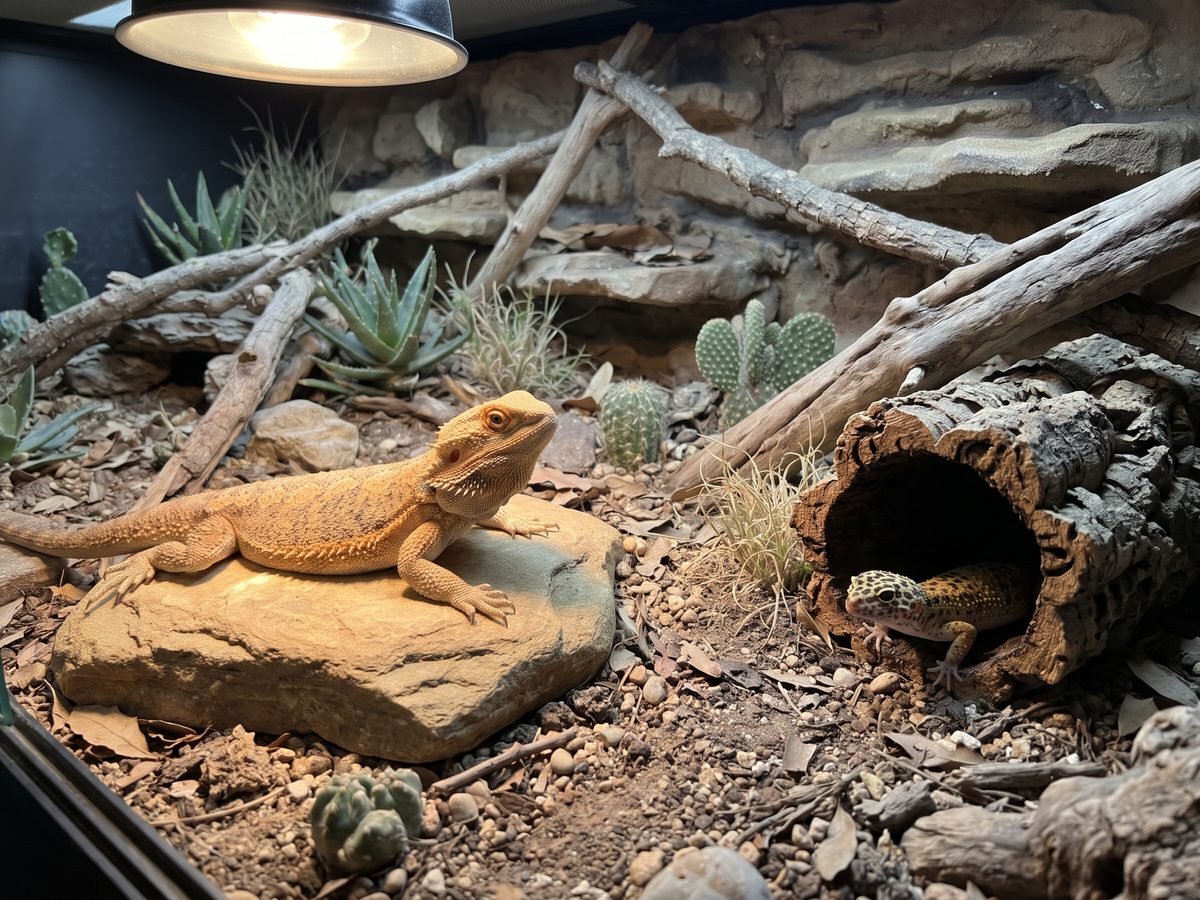
Setting Up a New Reptile Enclosure
Each button opens a search in your own country's Amazon store. As an Amazon Associate we earn from qualifying purchases.
Whatever species you choose, buy for the adult and test the setup before your animal comes home. Your species guide gives the exact sizes and temperatures.
Getting Started
Choosing a species, the rules, and being ready for the unexpected.
Lizards
Popular pet lizards, with setup figures from keeper care sheets.
African Fat-Tailed Geckos
A calm gecko that likes it humid
Bearded Dragon Setup
Big enclosure, strong UVB, hot basking spot
Blue-Tongued Skinks
Calm, curious omnivores that love to dig
Crested Geckos
Tall planted homes, room temperatures, complete diet
Leopard Gecko Setup
Low-level UVB, three hides and safe substrate
Veiled Chameleons
Think hard first: beautiful but demanding
Snakes
Popular, beginner-friendly snakes and how to keep them well.
Tortoises and Turtles
Long-lived shelled reptiles, and the paperwork some of them need.
Amphibians
Frogs, toads, newts and axolotls: cool, clean, dechlorinated water and gentle hands.
Heat, Light, Housing and Food
Equipment guides that apply across species.
Reptile Heating
Basking lamps, emitters, mats and thermostats
UVB Lighting Explained
T5 tubes, the UV index and Ferguson zones
Terrariums and Enclosures
Minimum sizes, glass vs PVC, and locks
Reptile Substrate and Decor
Bedding by species, hides and branches
Reptile Food and Supplements
Insects, complete diets, greens and calcium
No guides match that. Try a species name, or a word like UVB or heat.
Frequently Asked Questions
Questions new keepers ask most.
What's the easiest reptile for a beginner?
Leopard geckos, crested geckos and corn snakes are the classic choices. Our guide to choosing your first reptile compares them.
Do you give real temperatures and UVB figures?
Yes. Each species guide gives typical ranges from keeper care sheets and veterinary sources, in Fahrenheit and Celsius. Check with your vet or a specialist keeper for your own animal.
Do all reptiles need UVB?
Day-active baskers such as bearded dragons and tortoises need it, and many night-active species benefit from low-level UVB too. Our UVB guide explains the Ferguson zones.
Are amphibians harder to keep than reptiles?
Not always, but they need clean, dechlorinated water, cooler temperatures for many species, and as little handling as possible. White's tree frogs are a good first amphibian.
Do I need a license or paperwork?
Sometimes. Some tortoises need CITES paperwork to be sold, some species are banned where you live, and venomous species need licenses. See our reptile and amphibian law page.
Related Reading
- Unusual Companions: invertebrates, hermit crabs and the species we don't recommend.
- Fish and aquariums: water testing and filters for aquatic setups.
- Finding a vet: many practices don't see reptiles, so look early.