Cat Water Fountains, Bowls and Feeders
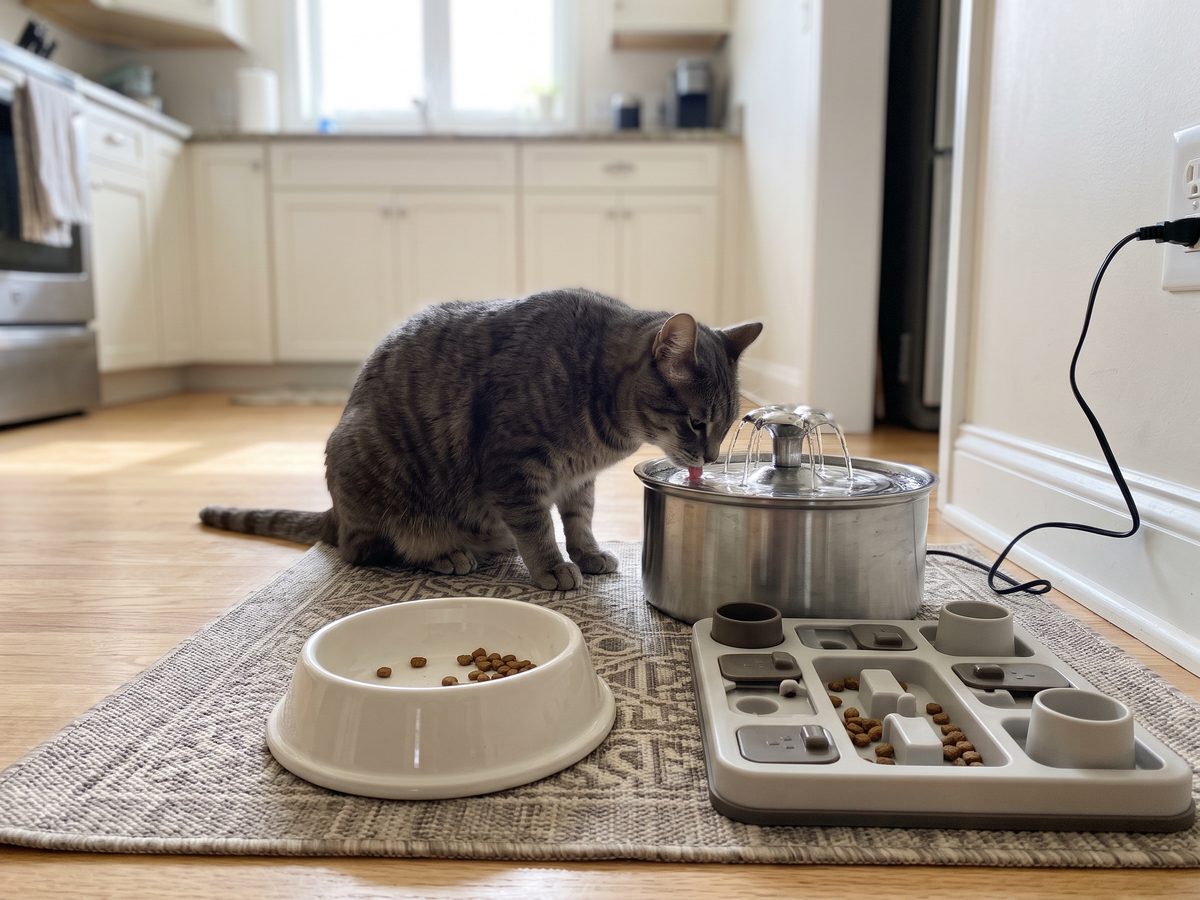
Does Moving Water Make a Cat Drink More?
Cats descend from desert hunters that got most of their water from prey, and many house cats walk past a full bowl without drinking much. More water is good for the bladder and kidneys, so it's worth making water appealing.
Some cats drink noticeably more once a fountain arrives; others carry on exactly as before and are happy with a bowl refreshed daily. You can't tell in advance, but a fountain costs little to try. Wet food is a second route that works for every cat, because it brings water with each meal. Our urinary health and hydration guide has more ideas.
Put water away from food bowls and litter boxes, somewhere quiet. A loud pump or a spot next to a noisy appliance can put off the very cat you're trying to tempt.
Cleaning and Filters
A fountain that isn't cleaned grows a slimy film and stops helping. Build a weekly teardown into your routine:
- Unplug the fountain and empty it.
- Take out the pump and rinse the impeller under running water, clearing trapped fur.
- Wash the reservoir, spout and trays with mild dish soap, keeping water away from electrical parts.
- Rinse everything well; cats notice soap.
- Reassemble, refill with fresh water and check the pump runs quietly.
Change the filter on the schedule printed on the pack, often every few weeks, and sooner if flow slows or you notice a smell. Hard water and several cats sharing one fountain mean more frequent changes. Keep a spare filter so you never run without one.
Fountains and Bowls
Each button opens a search in your own country's Amazon store. As an Amazon Associate we earn from qualifying purchases.
Stainless steel and ceramic fountains cost more than plastic but scrub clean without scratching, and a quiet pump matters for nervous cats. A larger fountain suits a multi-cat home. Pair it with spare filters, a wide, shallow food bowl and, for an older cat, a low stand.
Bowls: Shape and Material
A deep, narrow dish makes a cat's whiskers brush the sides with every bite, and some cats respond by scooping food out with a paw or leaving it. A wide, shallow bowl or a flat plate solves that. A low stand helps an older or stiff cat, but keep it modest: cats naturally eat close to the ground.
Plastic scratches over time, and the grooves are hard to clean. Stainless steel and ceramic stay smooth and stand up to scrubbing. Many owners and some vets link plastic bowls with spots on the chin; if your cat has chin irritation, switching material and washing bowls daily is a sensible first step, and your vet can take a look.
Puzzle Feeders and Automatic Feeders
A puzzle feeder makes a cat roll, nudge or paw food out, turning a meal into a short foraging task. It slows a cat that normally finishes in seconds and gives an indoor cat something to do. Start with an easy design and make it harder only once your cat has mastered it.
An automatic feeder releases measured meals on a timer, which keeps mealtimes steady when your hours aren't, and may stop a cat waking you at dawn. Check that it measures small cat portions accurately, and pick one with battery backup. In a multi-cat home, a microchip feeder that opens only for the right cat stops a food-loving cat from finishing a housemate's diet.
Frequently Asked Questions
Water and bowl questions, in short.
Does every cat drink more from a fountain?
No. Many cats like moving water, but some are just as happy with a bowl kept fresh and refilled daily. It's worth trying because the downside is small.
How often should I clean a cat water fountain?
A full clean of the pump, reservoir and trays about once a week suits most homes, more often with hard water or several cats. Change the filter on the schedule on its pack, or sooner if flow slows.
Is stainless steel better than plastic?
Stainless steel and ceramic resist scratching and scrub clean more easily than plastic, which develops grooves that hold bacteria. Some cats also seem to prefer the smooth surface against their chin.
Can a fountain run all the time?
Most are designed to run continuously. Keep the cord tidy and out of reach of a chewer, and check the water level so the pump never runs dry.
Will a fountain fix my cat's urinary problems?
No. A fountain supports everyday hydration, but a cat with a urinary problem needs your vet. A cat straining or passing little urine needs a vet straight away.
Do automatic feeders work for cats?
They can keep meals regular and portions measured. Choose one that handles small portions accurately and has battery backup, and keep an eye on how much your cat actually eats.
Related Reading
- Urinary health and hydration: more ways to get water into your cat.
- How much to feed a cat: portions to program into a feeder.
- Wet vs dry cat food: moisture, cost and teeth.
This page covers everyday feeding and water gear. A cat that suddenly drinks much more or much less, goes off its food, or strains in the litter box needs your vet, and straining with little or no urine is an emergency.