Indoor or Outdoor Cat? How to Decide Where You Live
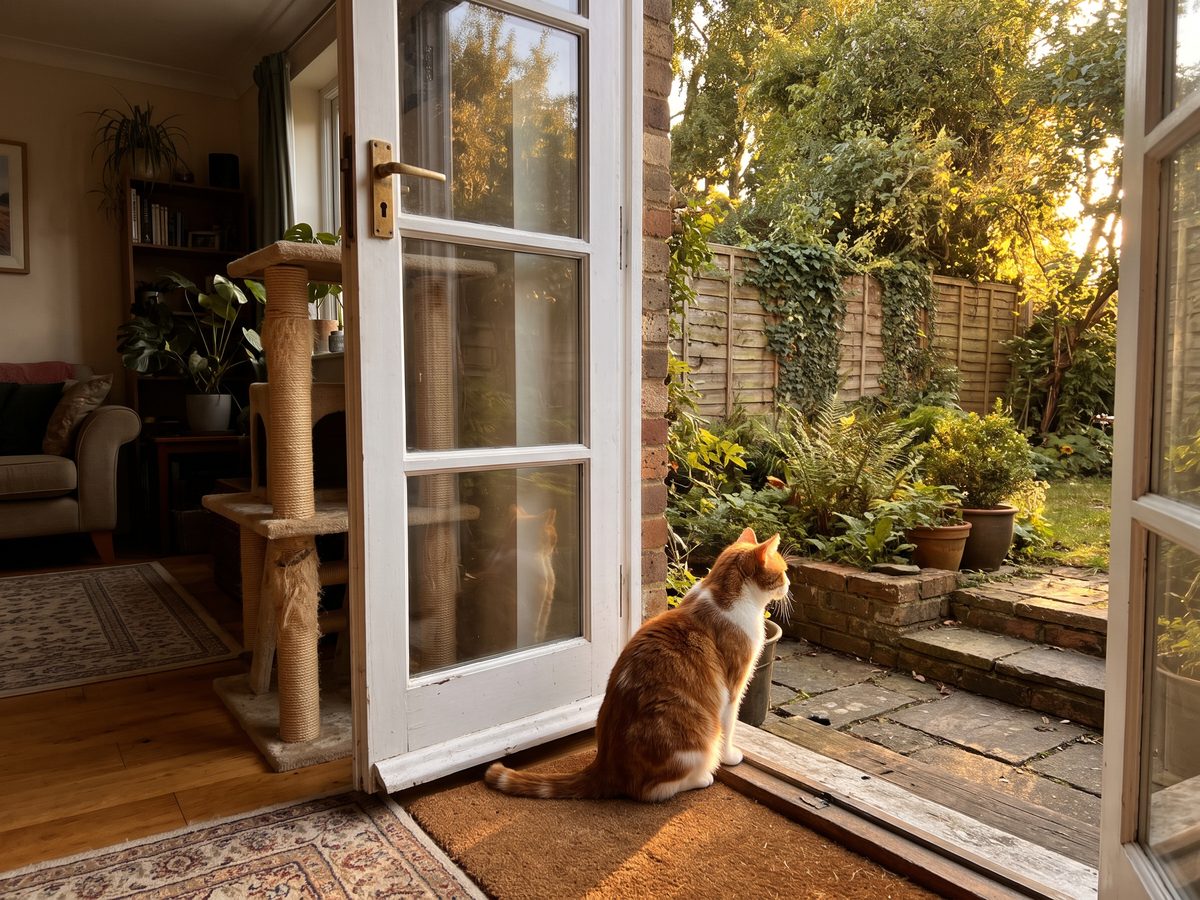
Two Good Answers, Different Places
Where you live shapes what's normal. Indoor-only cats are common in much of the US and in cities everywhere. In the UK and Ireland, most pet cats have some outdoor access. In parts of Australia, local rules require cats to be kept in, at least at night, to protect native wildlife.
The US-based Feline Veterinary Medical Association (formerly the American Association of Feline Practitioners) doesn't back one lifestyle for every cat. Its 2024 position says indoor and outdoor lives each have benefits and risks, and that your vet can help you meet your own cat's needs while keeping risks down. Whatever you choose, every cat should be microchipped.
Indoor Life: What It Asks of You
Keeping a cat indoors removes the dangers of roads, fights with other cats, predators and getting lost. The catch is that an indoor home has to provide everything outdoors would: places to climb and look out, hiding spots, daily play that lets the cat stalk and pounce, puzzle feeding, scratching posts and spotless litter boxes.
When those needs aren't met, indoor cats can become bored, overweight or stressed, and problems like scratching furniture, night-time chaos or peeing outside the box can follow. Our indoor cat enrichment guide lays out a routine that works.
Outdoor Access: The Benefits and the Risks
Vaccinations, flea, tick and worming treatments: see your vet or a pet supply store with trained staff. They can tell you what an outdoor cat needs where you live.
Outdoor time gives exercise, sunshine, smells and the chance to hunt, climb and patrol, and some cats, especially those used to it, are miserable shut in. The risks are real too: traffic is the big one, along with fights and the infections they spread, predators in some regions (such as coyotes in North America), poisons, getting shut in sheds and garages, and getting lost.
Cats also hunt birds, small mammals and reptiles. How much that matters depends on where you live: in some regions, especially islands and Australia, pet cats are a serious threat to native wildlife. Keeping cats in from dusk to dawn helps both the cat and local wildlife.
If your cat goes out, keep vaccinations and parasite prevention up to date on your vet's advice, neuter it (unneutered cats roam and fight more), make sure the microchip details are current, and keep it in at night.
The Middle Ways
Most cats are happiest with some outdoor experience, and there are ways to give it without full freedom:
- A catio or window box: an enclosed outdoor space, from a box on a windowsill to a walk-in run. See our catios guide.
- Cat-proof fencing: angled or rolling toppers that stop a cat climbing out of a yard or garden.
- Harness walks: slow to train, but many cats come to enjoy them. Our harness training guide takes it step by step.
- Timed access: out in daylight, in by dusk, often with a microchip cat flap you can set to lock at night.
Gear for Safer Outdoor Time
Each button opens a search in your own country's Amazon store. As an Amazon Associate we earn from qualifying purchases.
A window box or pop-up enclosure gives a taste of outdoors with no risk of wandering off, and a well-fitted harness opens up supervised walks. For cats that go out, a breakaway collar with an ID tag and a microchip cat flap that can lock at night make in-by-dark easy. Cat-proof fence toppers turn a yard or garden into safe territory.
Changing Your Cat's Lifestyle
Moving an outdoor cat indoors works best gradually, with lots of play, climbing and a catio or harness walks to replace what it's losing. Some cats used to roaming never settle fully indoors, and that's worth discussing with your vet or a qualified behaviorist.
Letting an indoor cat out for the first time? Make sure it's neutered, microchipped and vaccinated first, start with short supervised visits before a meal so it comes back hungry, and keep it in at night. After a house move, keep a cat indoors for a few weeks so it learns the new home first.
Frequently Asked Questions
The questions owners ask most, wherever they live.
Is it cruel to keep a cat indoors?
Not if the home meets its needs: daily play, places to climb and hide, scratching posts and clean litter boxes. Problems arise when an indoor cat has nothing to do. Some cats used to roaming find indoor life hard, so talk to your vet if yours is struggling.
Do outdoor cats live shorter lives?
Outdoor cats face risks indoor cats don't, such as traffic, fights and getting lost, so the risk of injury is higher. How much higher depends a lot on where you live. Keeping a cat in at night and away from busy roads reduces the risk.
Should my cat be in at night?
It's a good habit almost everywhere. Many road accidents and fights happen after dark, and night is when many wild animals are out. A microchip flap set to lock at dusk makes it easy.
Is a catio a good compromise?
Yes. A catio or window box gives fresh air, sun and things to watch with far fewer risks than free roaming. It also protects garden birds and wildlife.
Do I need to tell anyone if my cat goes outdoors?
Generally no, but some areas have rules about roaming cats, cat curfews or containment, especially in parts of Australia. Check with your local council or authority.
How long should I keep a cat in after moving house?
A few weeks is the usual advice, so it learns the new home as its base before it explores. Ask your vet if you're unsure for your cat.
Related Reading
- Catios and window boxes: outdoor space without the risks.
- Harness training a cat: the step-by-step plan.
- Microchip cat flaps: in-by-dark, made easy.
- Indoor cat enrichment: meeting every need indoors.
Your vet knows the risks where you live. Ask them about vaccinations and parasite prevention for your cat's lifestyle, and see them if an indoor cat seems stressed or an outdoor cat comes home hurt.