Litter Boxes: Open, Covered, Top-Entry and Self-Cleaning
Size and Placement Come First
A box that's too small for your cat's length pushes waste toward the edges or outside the box. A common rule of thumb is a box about one and a half times your cat's length from nose to the base of the tail, which is bigger than many boxes sold as "standard". Storage boxes with a doorway cut in one side make cheap, roomy alternatives.
Put boxes somewhere quiet and easy to reach, away from food and water and from noisy appliances, with a clear way out so a cat never feels cornered. In a multi-cat home, aim for one box per cat plus one, in different rooms. Our multi-cat harmony guide explains why.
Covered, Top-Entry and Sifting Boxes
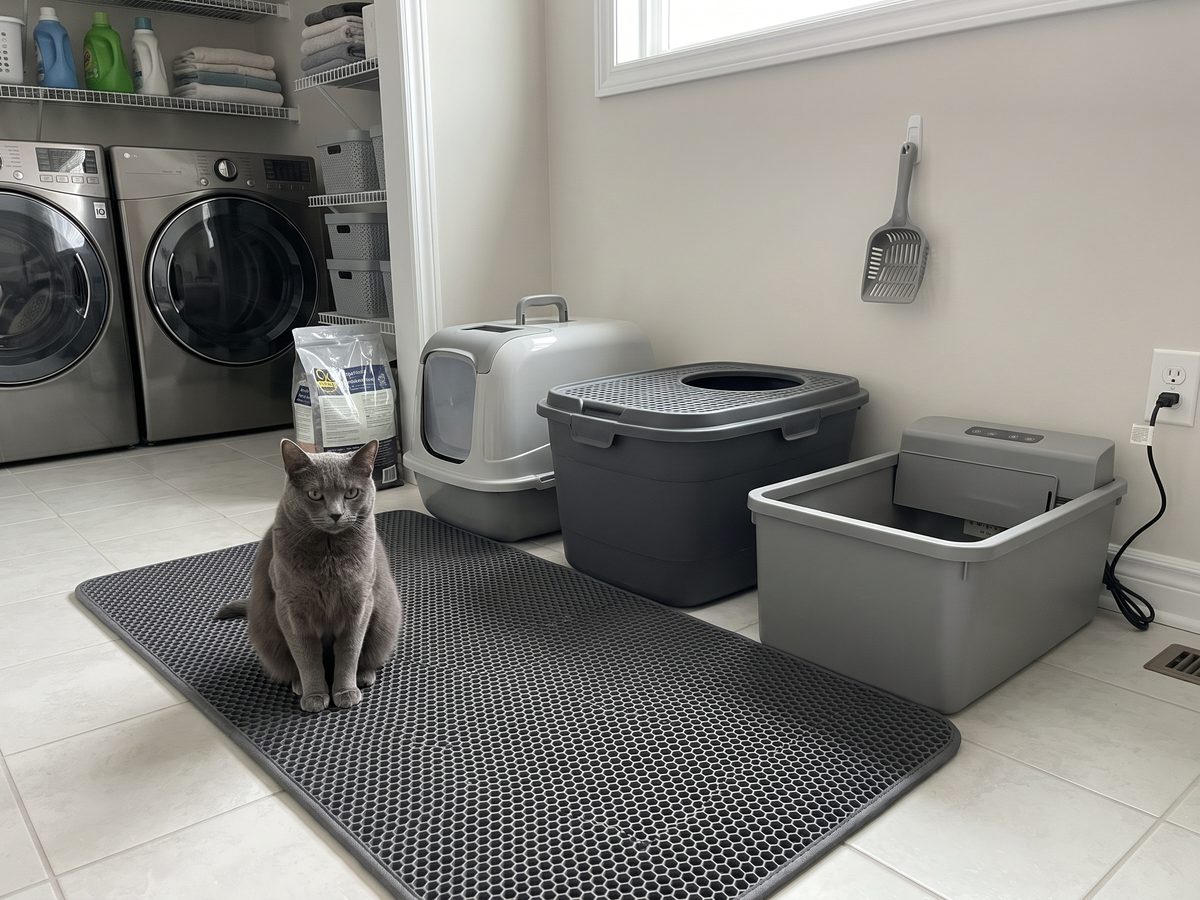
A covered box keeps kicked litter in and gives some cats privacy, but it also traps odor inside, so it needs scooping at least daily. Some cats dislike covers; if problems start after you add one, go back to open. A high-sided open box is a good middle ground for enthusiastic diggers.
A top-entry box makes the cat jump in and out through the lid, which knocks litter off paws and cuts tracking. It's a poor choice for kittens, seniors or any cat with stiff joints. A sifting box uses stacked trays: you lift the top tray and the clean litter falls through, leaving clumps behind. It works best with a firm-clumping litter; see our guide to choosing litter.
Boxes and Accessories
Each button opens a search in your own country's Amazon store. As an Amazon Associate we earn from qualifying purchases.
Start with the biggest open or high-sided box that fits your space; a low-entry box suits seniors and kittens. A sturdy metal scoop outlasts plastic, a textured mat catches litter on the way out, and an enclosure hides a box in a living room as long as the opening stays roomy. A carbon filter helps a covered box between scoops.
Self-Cleaning Boxes: Robot, Crystal Tray or Sifting
"Self-cleaning" covers quite different designs. A rotating robot (the Litter-Robot is the best-known) turns its globe after the cat leaves, sifting clumps into a sealed drawer; it needs clumping litter, an outlet and clearance to turn. A crystal-tray system (such as PetSafe ScoopFree) rakes waste across a disposable tray of silica crystals into a covered trough, and the trays are an ongoing cost. A manual sifting box has no motor at all.
Automatic boxes use a sensor to wait until the cat has left before cleaning, and most list a minimum cat weight. Keep kittens and very small cats on an ordinary box until they reach the maker's minimum. Some cats are frightened by the motor or the shape and never adapt, so keep a familiar box available while you introduce one.
None of these removes cleaning. Drawers and trays still need emptying, and the globe, rake and sensors need regular wiping. A single robot also doesn't replace the one-box-per-cat-plus-one rule: one confident cat can guard the only automatic box.
Cost Per Year, in Plain Words
A plain open box costs little and works with any litter; its real cost is the time you spend scooping, day after day. A robot costs much more up front, plus compatible litter, liners and the odd replacement part. A crystal-tray system usually costs less to buy but more to run, because the trays are the consumable. A manual sifting box is the cheapest to run but asks the most of you.
Compare the purchase price plus a year of supplies, not the sticker price alone. For one easygoing cat, a big open box and a bag of clumping litter is usually the cheapest choice; in a busy multi-cat home the time saved by automation counts for more.
Frequently Asked Questions
Quick answers on boxes, big and small, manual and automatic.
Do covered litter boxes trap odor?
Yes. Less smell escapes into the room, but more stays inside the box where your cat has to use it, so a covered box needs scooping at least daily.
Is a self-cleaning litter box safe for a kitten?
Not until the kitten reaches the minimum weight listed for that model, because the sensor needs enough weight to work safely. Keep an ordinary box in use until then, and supervise the first few uses.
Can several cats share one self-cleaning box?
They can, but it doesn't replace the rule of one box per cat plus one, in separate places. Without other boxes, one cat can end up guarding the only automatic box.
What litter does a self-cleaning box need?
Rotating robots need a clumping litter, and crystal-tray systems use their own silica trays. Check the maker's instructions before you switch litter.
Are self-cleaning boxes noisy?
Motorized models make some noise each time they cycle, which some cats ignore and others find startling. Manual sifting boxes are silent.
What if my cat refuses the new box?
Keep the old box available next to the new one and let your cat choose. A cat that stops using any box is a bigger problem than one that skips the gadget, and sudden avoidance is a reason to see your vet.
Related Reading
- Choosing cat litter: clay, crystal and plant litters compared.
- Why cats stop using the box: what to check, in order.
- Senior cat checklist: lower entries and easier access.
This page covers equipment, not health. A cat straining, avoiding the box or peeing outside it needs a vet check before you blame the box, and straining with little or no urine is an emergency.