Golden Retriever: Temperament, Coat and Everyday Care
Who a Golden Suits
Goldens are famously friendly, gentle and eager to please, which is why they are so often family dogs and assistance dogs. They want to be with their people and join in with everything.
They are a harder fit for long days alone, for very house-proud homes, or for anyone expecting a calm dog straight away. A young Golden is a big, bouncy, mouthy puppy for longer than many people expect, and a guard dog it is not: most would show a burglar where the biscuits are.
Exercise, Water and Training
Goldens were bred to retrieve birds from land and water, often in cold conditions. The Royal Kennel Club suggests more than two hours of exercise a day for an adult. Fetch, swimming where it is safe, and scent games suit them well.
They learn quickly with rewards and love having a job. Work early on not jumping up and loose-leash walking, and give that retrieving mouth plenty of approved things to carry, or it will choose your socks. See puppy biting and mouthing.
The Coat: Brush Often
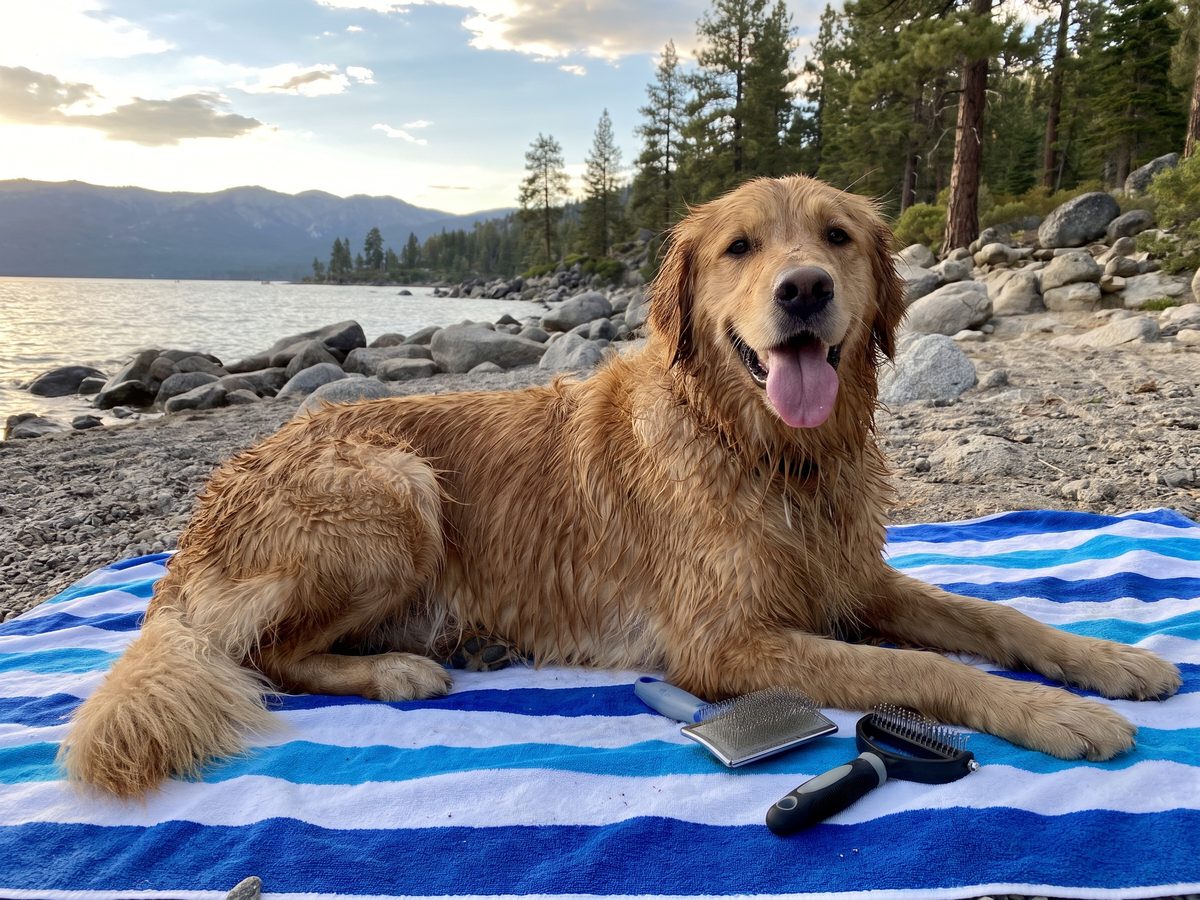
The coat has a water-resistant outer layer over a dense undercoat, with feathering on the legs, chest, belly and tail. It sheds all year and heavily in spring and fall (autumn).
- Several times a week: a slicker or pin brush, plus a comb through the feathering, behind the ears and on the "trousers", where mats start.
- Shedding season: add an undercoat rake to pull out loose fur.
- Trimming: a tidy of the feet and ears now and then. Don't shave a double coat.
Ears After Swimming
Floppy ears plus a love of water means damp ears. After a swim or bath, dry the outer ear gently with a towel. Ask your vet whether a dog ear cleaner would help your dog, and how to use it; our guide to cleaning dog ears safely covers the method. If an ear smells, looks red or your dog keeps shaking its head, see your vet.
Gear That Fits a Golden
Each button opens a search in your own country's Amazon store. As an Amazon Associate we earn from qualifying purchases.
A slicker brush, a metal comb and an undercoat rake handle the coat. A super-absorbent towel saves the house after swims. A floating fetch toy suits a dog born to retrieve, and a durable, washable bed copes with a big, often damp dog. A large-breed puppy food supports steady growth.
Health: What to Ask the Breeder and Your Vet
In the UK, The Royal Kennel Club lists hip and elbow scoring, eye testing (including gonioscopy) and a DNA test for one form of progressive retinal atrophy as good practice for breeders, with further DNA tests as best practice. In the US, ask for OFA hip, elbow and eye results. Ask to see results for both parents.
Goldens love food, so measure meals and keep your dog lean, which takes strain off growing and aging joints. Book a check-up soon after your dog comes home, and ask your vet about vaccinations, neutering timing and a parasite prevention plan. See joint care for dogs for the home side.
Worming, flea and tick products and joint supplements: see your vet or a pet supply store with trained staff. They can tell you what suits your dog.
Finding a Puppy or a Rescue
Meet the puppy with its mother, see the parents' health results, and expect a good breeder to ask about your home and time. Goldens also come into breed rescues; your national kennel club or breed club can point you to them. Our rescue vs breeder guide covers both routes.
Frequently Asked Questions
Fur, food and fetch top the list.
How often should I brush a Golden Retriever?
Several times a week, and daily when the coat is shedding heavily. Comb the feathering and behind the ears, where mats form first.
Are Golden Retrievers good with children?
Usually, yes. They are gentle and patient by nature, but a bouncy young Golden can knock over a small child, so supervise and teach calm greetings.
Do Goldens need their ears dried after swimming?
It's a good habit. Gently towel the outer ear after swims and baths, and see your vet if an ear smells, looks red or bothers your dog.
Can a Golden Retriever live in an apartment?
It can, with a lot of daily exercise and company. A young Golden needs more activity than many people expect.
Is hip dysplasia certain in this breed?
No. It's a known risk, which is why breeders score parents' hips and elbows. A lean body and sensible exercise while growing also help.
Do Golden Retrievers shed a lot?
Yes. Expect fur all year and plenty in spring and fall. Regular brushing keeps most of it off the furniture.
Related Reading
- Grooming double-coated dogs: brushes and shedding season.
- Labrador Retriever: the Golden's shorter-coated cousin.
- Dog grooming supplies: brushes, combs and towels.
Breed traits are tendencies, not promises. If your Golden is stiff, limping, or has a sore ear or eye, call your vet.