Andalusian (PRE) and Lusitano Horses: The Iberian Breeds
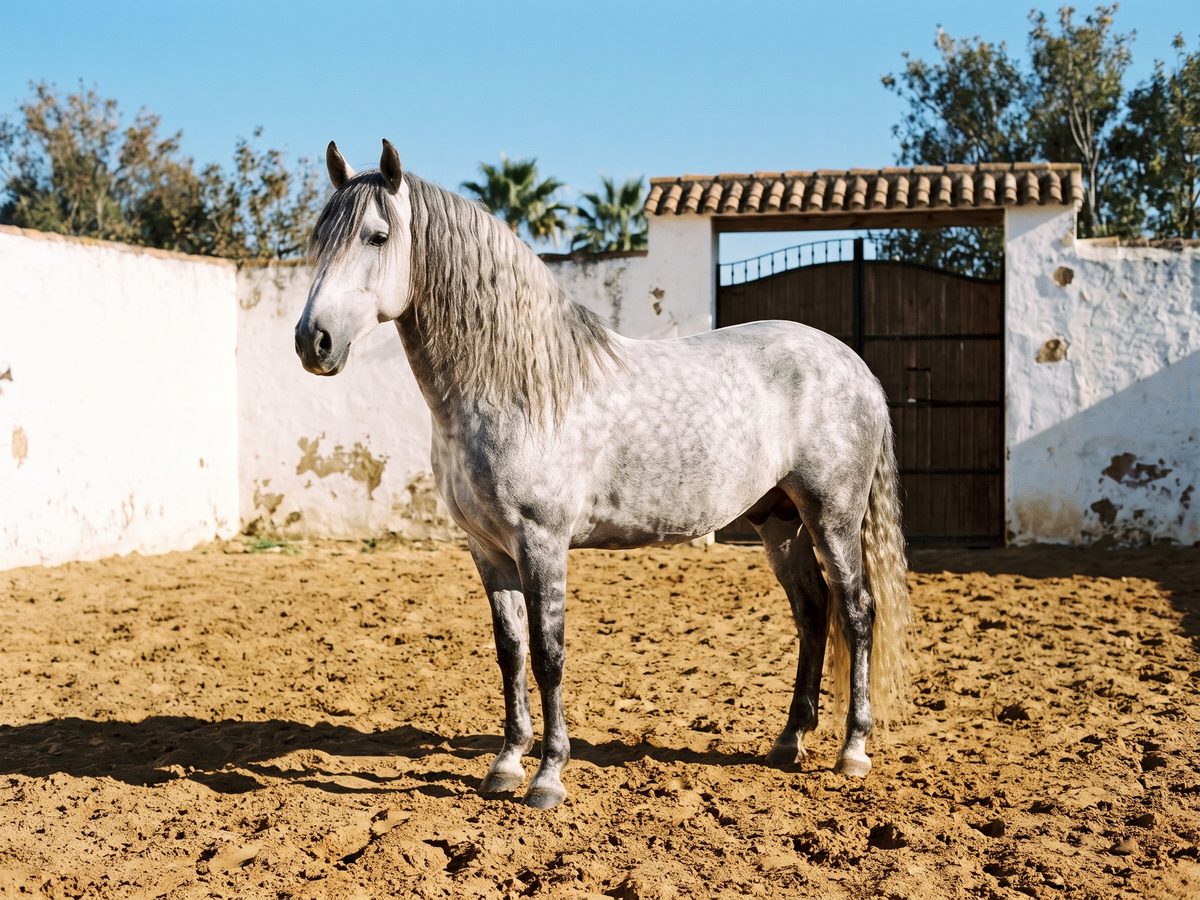
Who an Iberian Horse Suits
Andalusians and Lusitanos suit riders interested in dressage, classical riding and working equitation, and anyone who loves a responsive, people-oriented horse. Many are kind and quick to learn.
Their sensitivity means they do best with tactful riders, and a young or stallion-raised horse may need experienced handling.
Horses of the Iberian Peninsula
Horses have been bred in Spain and Portugal for many centuries, and Iberian horses influenced breeds across Europe and the Americas. The Spanish studbook for the PRE has been managed by ANCCE since 2007; in Portugal, the Lusitano studbook is managed by the APSL.
The two breeds share ancestry, and the Lusitano has been selected particularly for bullfighting and working riding, the PRE for classical riding and show.
Feeding and Grazing
Iberian horses are often good-doers that keep weight easily on forage alone. On rich grass, extra weight raises the risk of laminitis, so ask your vet whether grazing should be limited, especially in spring. Base the diet on weighed hay and sensible grazing, with a balancer or mineral lick for vitamins and minerals.
Hooves, Teeth, Coat and Weather
Pick out feet daily and book the farrier every few weeks, and a dental check at least once a year. See hoof care and the farrier and teeth and dental care.
Grays need extra grooming to stay clean, and long manes and tails stay healthier when detangled gently. Many Iberian horses have fine coats, so shelter and a blanket (rug) may be needed in cold, wet climates.
Gear for an Iberian Horse
Each button opens a search in your own country's Amazon store. As an Amazon Associate we earn from qualifying purchases.
Measure for headcollars and blankets; many Iberian horses are cob to full size. A detangling spray and wide-toothed brush help with long manes, and a whitening shampoo helps with grays. A slow-feed haynet and weigh tape keep feeding on track.
Company, Space and Handling
Iberian horses need company and daily turnout like any horse. See why horses need company.
Health: Preventive Care
Book a check-up soon after your horse arrives, and ask your vet about vaccinations and a worming plan guided by fecal egg counts. Plan for the farrier every few weeks and a dental check at least once a year. Score body condition every few weeks, by hand: weight creeps on quietly, especially on spring grass.
Worming, vaccinations and any medicines: see your vet or a pet supply store with trained staff. They can tell you what suits your horse and where you live.
Buying, Loaning or Rescuing
Breeders, studbook associations and specialist importers are the usual routes. Have a vet do a pre-purchase examination, check the passport and studbook papers, and if importing, ask your vet and your national authority about the paperwork. See buying a horse.
Frequently Asked Questions
PRE, Lusitano or Andalusian?
What is the difference between an Andalusian and a PRE?
PRE (Pura Raza Española) is the official Spanish studbook name for the purebred Andalusian. "Andalusian" is the common name in many countries.
Is a Lusitano the same as an Andalusian?
They are closely related Iberian breeds with shared ancestry, but separate studbooks: the Lusitano in Portugal and the PRE in Spain.
How tall is a PRE?
Spanish rules set minimum heights of about 15 hands (152 cm) for males and 14.3 hands (150 cm) for mares; many are taller.
Are Iberian horses good for dressage?
Yes. Their balance and willingness make them popular in dressage and classical riding.
Are Andalusians good for beginners?
An older, experienced horse can be. Their sensitivity suits tactful riders, so get good instruction.
Related Reading
- Friesian horse: another baroque breed.
- Arabian horse: a sensitive, ancient breed.
- Buying a horse: including vettings for imports.
Breed traits are tendencies, not promises for the horse in front of you. If anything about your horse's health or behavior worries you, call your vet.