Friesian Horse: Size, Temperament and Care
Who a Friesian Suits
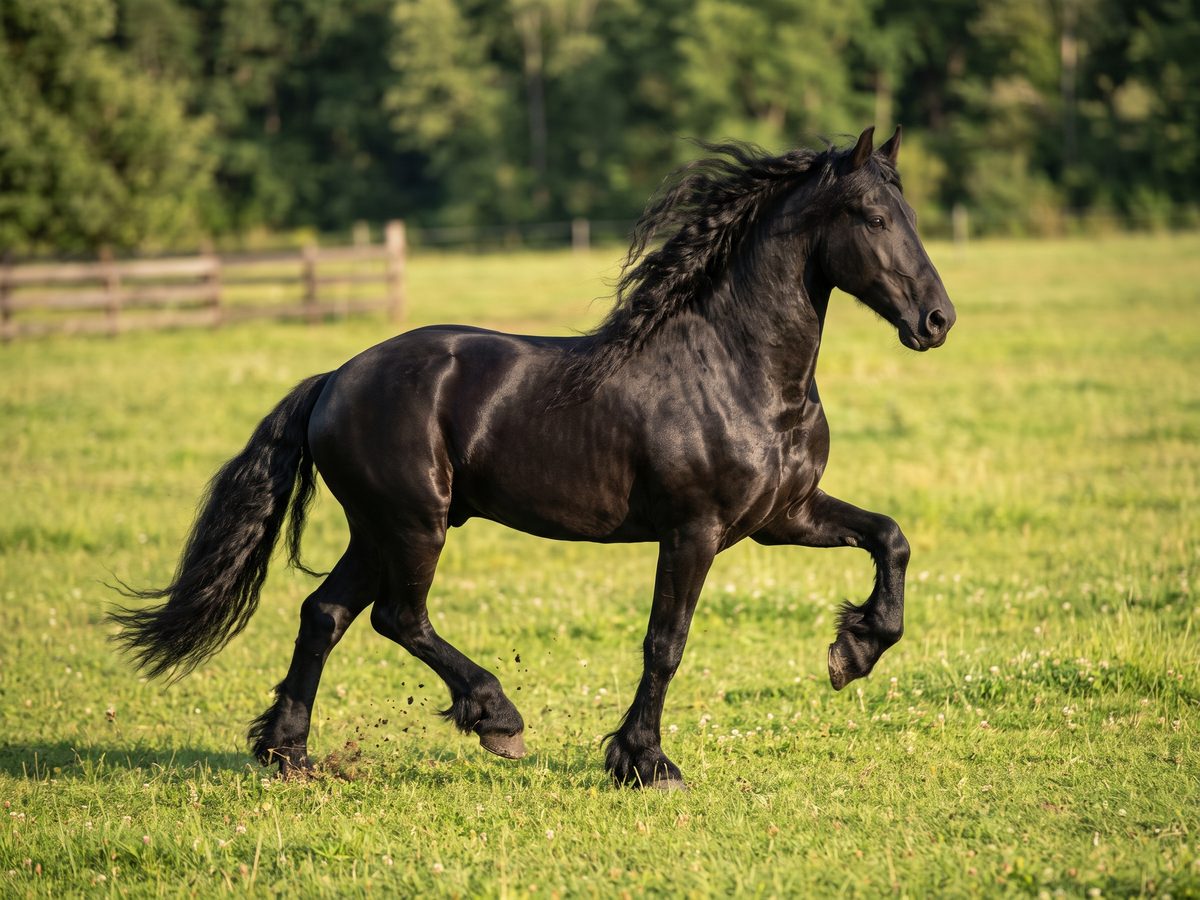
Friesians suit riders and drivers who love a showy, willing horse with presence: they are favorites in carriage driving, dressage and exhibitions. Many are gentle and enjoy people.
Their long hair, feather and dark coat need time and care, and some find hot, sunny weather harder; shade and shelter matter.
From Friesland
The Friesian comes from Friesland in the north of the Netherlands, where it served as a war horse, a farm horse and a carriage horse. The breed's studbook, the KFPS (Koninklijk Friesch Paarden-Stamboek), was founded in 1879 and has member associations worldwide, including the Friesian Horse Association of North America.
Horses are inspected for the studbook, and the best can earn predicates such as Star and Crown.
Feeding and Grazing
Friesians are often good-doers that keep weight easily on forage alone. On rich grass, extra weight raises the risk of laminitis, so ask your vet whether grazing should be limited, especially in spring. Base the diet on weighed hay and sensible grazing, with a balancer or mineral lick for vitamins and minerals.
Hooves, Teeth, Coat and Weather
Keep feather clean and dry, wash out mud when needed and dry it well, and check the skin underneath at every grooming. Ask your vet about any sore or scabby skin. A long mane and tail stay healthier when detangled gently and sometimes braided loosely.
Book the farrier every few weeks and a dental check at least once a year. In hot, sunny weather, provide shade, and some owners use a fly sheet as a sun and insect barrier.
Gear for a Friesian
Each button opens a search in your own country's Amazon store. As an Amazon Associate we earn from qualifying purchases.
Friesians are often full-size, so measure for headcollars and blankets. A detangling spray and wide-toothed brush help with the mane and tail, and a sweat scraper dries feather after washing. A mesh fly sheet protects a black coat from sun and flies, and a slow-feed haynet keeps forage going.
Company, Space and Handling
Friesians need company, daily turnout and shade in summer. See why horses need company.
Health: Preventive Care
Book a check-up soon after your horse arrives, and ask your vet about vaccinations and a worming plan guided by fecal egg counts. Plan for the farrier every few weeks and a dental check at least once a year. Score body condition every few weeks, by hand: weight creeps on quietly, especially on spring grass.
Worming, vaccinations and any medicines: see your vet or a pet supply store with trained staff. They can tell you what suits your horse and where you live.
Buying, Loaning or Rescuing
Studbook breeders and member associations are the best starting points; rehoming charities sometimes have Friesians. Have a vet do a pre-purchase examination, check feather and legs, and check the passport and studbook papers. See buying a horse.
Frequently Asked Questions
Black coats, feather and height.
Are all Friesians black?
Black is the color you'll see in the breed. If color matters to you, check the studbook's current rules.
How tall is a Friesian?
The studbook sets adult minimum heights of around 1.54 m (15.1 hands) for mares and 1.60 m (15.3 hands) for stallions; many are taller.
Are Friesians good for beginners?
Many are gentle and willing, but their size and power mean an experienced, well-schooled horse and good instruction are best.
How do I care for Friesian feather?
Keep it clean and dry, wash and dry it well when needed, and check the skin underneath every grooming.
Do Friesians cope with heat?
Some find hot, sunny weather harder. Give shade, water and turnout at cooler times of day.
Related Reading
- Shire and Clydesdale: more feathered horses.
- Andalusian and Lusitano: the other baroque horses.
- Summer fly control: shade and fly sheets.
Breed traits are tendencies, not promises for the horse in front of you. If anything about your horse's health or behavior worries you, call your vet.