Lilies and Other Plants That Are Toxic to Cats
Why Lilies Are So Dangerous to Cats
The US Food and Drug Administration warns that true lilies (Lilium, such as Easter, tiger, Asiatic, Oriental and stargazer lilies) and daylilies (Hemerocallis) are very dangerous to cats. The whole plant is toxic: stem, leaves, flowers, pollen and even the water in the vase. Small amounts are enough, and dogs don't react the same way, which is why many people are caught out.
Pollen is the sneaky part. It drops onto tables and floors, brushes onto a passing cat, and gets licked off during grooming. Cutting the stamens off a bouquet reduces pollen but doesn't make lilies safe, because the leaves and water are toxic too.
The simplest rule: no true lilies or daylilies in a home with cats, and none in a garden your cat or the neighbors' cats can reach. Ask friends and florists to leave them out of bouquets.
Not Every "Lily" Is the Same
Several plants are called lilies without being true lilies. Peace lilies and calla lilies contain crystals that irritate the mouth, causing drooling and discomfort, which is unpleasant but usually less serious. Lily of the valley is different again and is dangerous to cats because it affects the heart.
Because names are confusing, treat any "lily" as a reason to call your vet if your cat has chewed it. Your vet would much rather hear from you about a harmless plant than too late about a dangerous one.
Other Common Plants to Keep Away From Cats
Lilies are the headline, but they aren't alone. Poison helplines list these among the plants and bulbs they hear about most:
- Sago palm: every part, especially the seeds.
- Oleander and lily of the valley: both affect the heart.
- Autumn crocus: highly toxic, and problems can be delayed.
- Azalea and rhododendron, kalanchoe and cyclamen: common houseplants and garden shrubs.
- Daffodil, tulip and hyacinth bulbs: the bulbs are the most concentrated part, so store them out of reach.
- Dieffenbachia and other plants with irritant crystals: sore mouth and drooling.
No list is complete. Before you buy a new plant, check it against the ASPCA's searchable toxic and non-toxic plant list, or ask a garden center for the botanical name and look it up.
Cat-Safe Swaps for Your Home
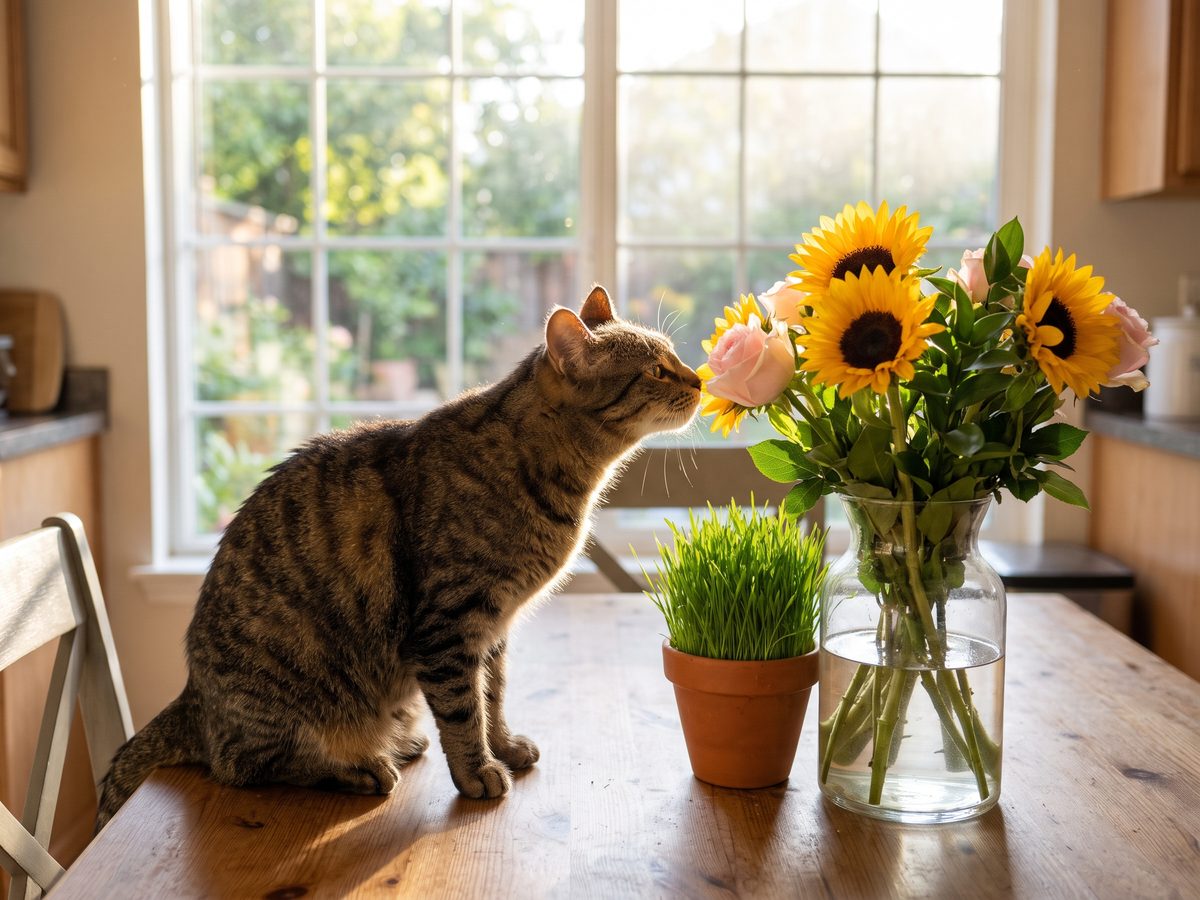
Plenty of flowers and houseplants are listed as non-toxic to cats, including roses, sunflowers, orchids (Phalaenopsis), spider plants, Boston ferns, calathea and parlor palms. "Non-toxic" doesn't mean edible: any plant can upset a cat's stomach if it eats a lot, and thorns and wire can hurt.
Many cats chew plants because they like grass. A pot of cat grass (usually wheat or oat grass) on a sunny windowsill gives them something of their own and makes other plants less tempting. Hanging planters and closed rooms keep the rest out of reach.
Cat-Safe Greenery
Each button opens a search in your own country's Amazon store. As an Amazon Associate we earn from qualifying purchases.
A cat grass kit gives a plant-chewer its own pot, and a catnip plant is a treat for cats that respond to it. Hanging planters and plant stands put your other plants out of reach, and good-quality artificial flowers let you enjoy a lily look without the risk.
If Your Cat Gets Into a Plant
Move your cat away from the plant, gently wipe pollen off its fur and face with a damp cloth if you can do so calmly, and keep the plant or take a photo of it. Then call your vet, an emergency clinic or an animal poison helpline straight away. Don't try to make your cat sick and don't give food, milk or anything else unless a vet tells you to.
Poison helplines differ by country and some charge a fee. In the US, the ASPCA Animal Poison Control Center and the Pet Poison Helpline both run around the clock; in the UK, the Animal PoisonLine takes calls from owners. Save your vet's out-of-hours number in your phone today, so you aren't searching for it in a panic.
Frequently Asked Questions
Quick answers, because with lilies, speed matters.
Are all lilies poisonous to cats?
True lilies (Lilium) and daylilies (Hemerocallis) are the dangerous ones and can cause kidney failure. Peace and calla lilies are less serious but still irritate the mouth, and lily of the valley is dangerous in a different way. If your cat has chewed any lily, call your vet.
Is lily pollen really dangerous?
Yes. The FDA says the whole plant is toxic to cats, including the pollen and the water in the vase. A cat can swallow pollen just by grooming its fur after brushing past a bouquet.
My cat seems fine after touching a lily. Do I still need a vet?
Yes, call now. Cats can seem well at first, and early veterinary care greatly improves the outcome. Take the plant or a photo with you.
Can I keep lilies if my cat never goes near them?
It isn't worth the risk. Pollen drops and travels, cats jump onto tables, and vase water gets knocked over. Choose cat-safe flowers instead.
Is cat grass safe?
Cat grass, usually wheat or oat grass grown from seed, is generally considered safe and gives plant-chewing cats something of their own. Too much can still upset a stomach, so offer it as a nibble, not a meal.
Which flowers are safe for a house with cats?
Roses, sunflowers and Phalaenopsis orchids are commonly listed as non-toxic to cats. Check any new plant on the ASPCA's toxic and non-toxic plant list before you bring it home.
Related Reading
- Indoor cat enrichment: safe ways to keep a curious cat busy.
- Indoor or outdoor?: garden plants and the outdoor cat.
- Cat health basics: preventive care through the year.
This page is general safety information. If your cat has chewed, licked or brushed against a plant you're unsure about, call your vet or an animal poison helpline now, not after you've searched online.