When Should You Switch a Kitten to Adult Food?
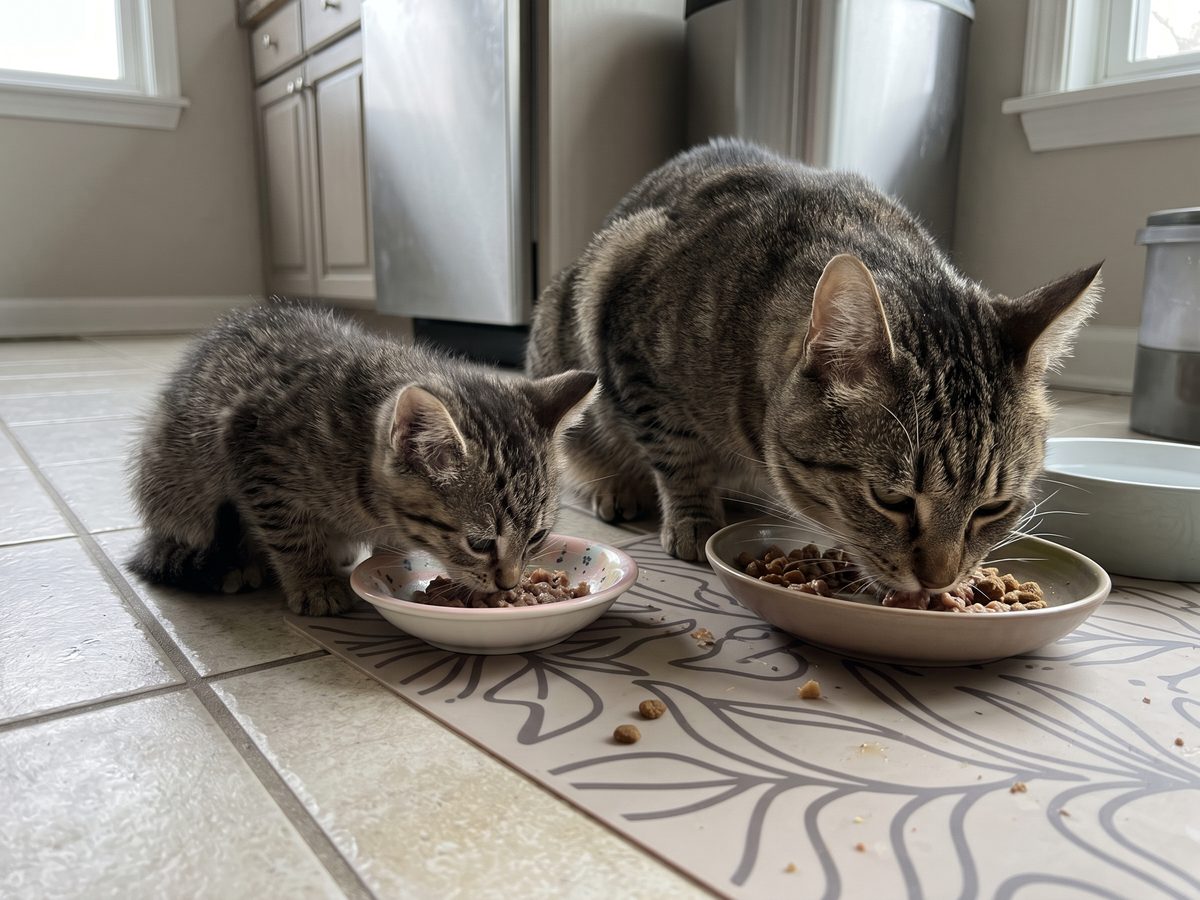
A gradual week-long mix works better than a hard switch, since a sudden change in food can upset a cat's digestion.
- Step 1. For the first couple of days, keep the bowl mostly kitten food with just a modest portion of the new adult formula mixed in.
- Step 2. Over the next few days, bring the two closer to an even split, watching stool and appetite for any sign of an upset stomach.
- Step 3. Shift the balance so adult food makes up most of the bowl, with only a modest amount of kitten food left as a buffer.
- Step 4. Finish the switch to adult food alone once your cat has handled each stage without loose stool or refused meals.
- Step 5. Keep the emptied kitten-food bag or a photo of the label on hand in case anything about the transition needs troubleshooting later.
Why "All Life Stages" Food Is a Compromise
An "all life stages" food is engineered to satisfy the higher fat, protein, and calorie minimums a growing kitten needs (in the US, the AAFCO growth and reproduction profile), since a single bag has to work for kittens, pregnant or nursing cats, and adults all at once. That compromise means most adult cats fed an all-life-stages diet long-term are eating more calories than their slower adult metabolism uses, which shows up over months as gradual weight gain.
It's a convenient option for a multi-cat household with different ages under one roof, and it isn't harmful in the short term, but a cat that's finished growing generally does better on a formula matched to adult maintenance needs instead of growth needs it no longer has.
What a Kitten's Growth Spurt Requires
Kittens grow at a startling pace in their first year, building bone, muscle, and a full set of adult teeth on a compressed timeline that calls for meaningfully more protein and fat per pound of body weight than an adult cat needs to simply maintain itself. A kitten formula concentrates calories into a smaller volume too, which matters because a young kitten's stomach is small relative to its energy needs. Feeding an adult-maintenance food too early can leave a kitten short on the building blocks it needs during this window, one reason the timing of this switch deserves just as much care as the amount fed each day.
None of this requires precision to the day. It's about matching the food's design to the stage the cat is actually in.
Large Breeds and Slow Bloomers
Larger cats such as Maine Coons take longer to finish growing than an average shorthair, often continuing to fill out deep into their second year instead of wrapping up around the one-year mark most other cats follow. A breed on that slower growth curve benefits from staying on a kitten or growth formula for the extra months, since switching early on a generic timeline can shortchange a still-developing frame.
If you can't tell which category applies to your cat, body condition and a veterinarian's read on skeletal maturity are more useful guides than a birthday on the calendar. Mixed-breed cats and unknown backgrounds are common, and a checkup around the time you're considering the switch is a reasonable way to get a second opinion.
What This Means for the Food Bowl
Once your kitten's ready for the switch, an adult maintenance formula such as Purina ONE or a Hill's recipe fits most healthy cats better than staying on a growth-level bag. If your household has both a kitten and an adult cat, an all-life-stages food remains a reasonable single-bag compromise while you manage the age gap, especially paired with separate feeding stations so each cat eats its own portion. A kitten or large-breed growth formula is worth keeping in the cupboard a little longer for a slow-maturing breed, and a simple kitchen scale removes the guesswork from portioning either way.
Frequently Asked Questions
When should a Maine Coon or other large-breed kitten switch to adult food?
Large, slow-maturing breeds often keep growing deep into their second year, so staying on a kitten or growth formula longer than average is normal for them. Body condition and a veterinarian's assessment of skeletal maturity are better guides than a fixed birthday.
What does a growth statement on the label mean?
On US bags, the AAFCO statement for growth or for all life stages shows the food meets nutrient levels set for growing kittens, the most demanding life stage. Labels elsewhere word this differently, so look for a complete food made for kittens or growth. A food for adult maintenance meets a lower bar suited to cats that have stopped growing.
Can I keep a cat on kitten food or an all-life-stages diet forever?
It won't cause immediate harm, but most adult cats fed a growth-level diet long-term take in more calories than they burn, which shows up as gradual weight gain. Switching to a maintenance formula once growth is finished usually keeps a healthy adult cat at a steadier weight.
Can I mix kitten food and adult food during the switch?
Yes. A gradual mix over a week or so, shifting the ratio slowly toward the new food, is easier on digestion than swapping the whole bowl overnight. Watching stool and appetite at each stage tells you whether to slow down or keep going.
Does spaying or neutering change when to switch foods?
Spaying or neutering itself doesn't set the switch date, but it does lower a cat's calorie needs somewhat afterward, which is worth factoring in around the same time you're already reviewing portions. Many owners use the surgery as a natural prompt to reassess the whole feeding plan.
What if my kitten refuses the new adult food during the transition?
Slow the ratio down further, adding smaller amounts of the new food for a few extra days before increasing it again, since a picky eater often just needs more time at each step. If a kitten stops eating altogether for longer than a full day, that's a signal to phone your veterinarian instead of continuing to push the switch.
Do indoor-only kittens need a different transition timeline?
Not fundamentally. Growth needs are about age and body development, not indoor versus outdoor access. Indoor cats do tend to be less active as adults, which is one additional reason to move off a growth-level formula once a kitten reaches adult size instead of leaving it in the bowl indefinitely.
What signs suggest a kitten isn't thriving on its current food?
Slow or stalled weight gain, a dull coat, persistent soft stool, or low energy relative to a normal kitten's activity level are all worth mentioning at a checkup instead of assuming they'll sort themselves out. A veterinarian can tell the difference between normal variation and something that needs a food or health change.
Related Reading
- Bringing home a kitten: the first weeks.
- How much to feed a cat: portions by body condition.
- Cat food guide: choosing an adult food.
This page describes general feeding guidance, not a nutrition plan for your cat. A cat that isn't gaining weight, is vomiting new food repeatedly, or shows ongoing diarrhea during a switch needs a vet visit, not more time to adjust; a veterinarian can also weigh in on the right transition timeline for a large-breed or slow-maturing kitten.