Norwegian Fjord Horse: Size, Color and Care
Who a Fjord Suits
Fjords suit adults and families who want a calm, strong, sure-footed horse for hacking, driving and trekking. Their steady nature makes them popular with less confident riders and in riding for the disabled.
Like any strong horse, they need consistent handling, and their appetite needs watching.
An Old Norwegian Breed
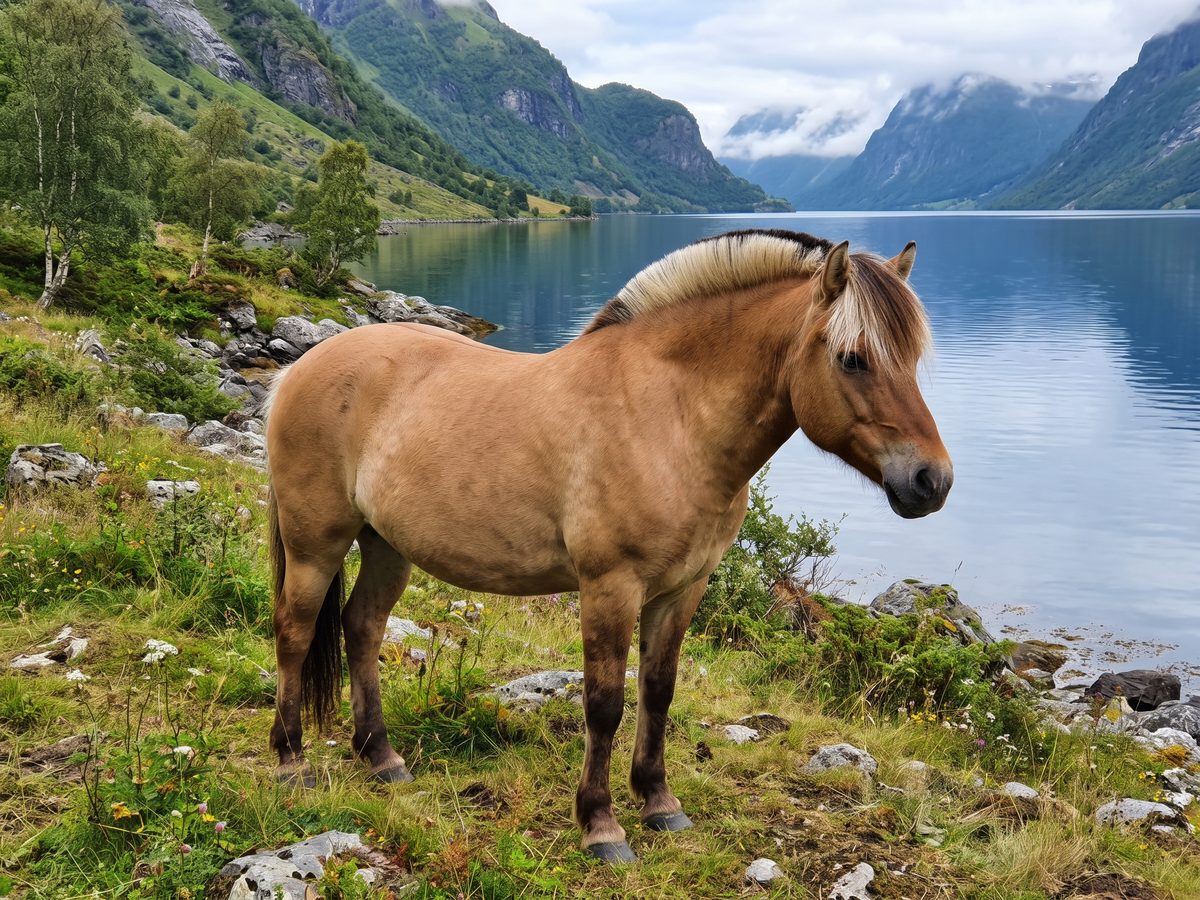
The Fjord comes from western Norway, where it worked farms and mountain tracks. It is always dun, and Norway has recognized five shades officially since 1922, brown dun being the most common.
The dark stripe runs from the forelock through the mane to the tail. Owners often trim the mane short and upright in a crescent so the stripe shows, a tradition that also keeps the mane tidy.
Feeding and Grazing
Fjords are often good-doers that keep weight easily on forage alone. On rich grass, extra weight raises the risk of laminitis, so ask your vet whether grazing should be limited, especially in spring. Base the diet on weighed hay and sensible grazing, with a balancer or mineral lick for vitamins and minerals.
Hooves, Teeth, Coat and Weather
Pick out feet daily and book the farrier every few weeks, and a dental check at least once a year. See hoof care and the farrier and teeth and dental care.
Fjords grow a thick winter coat and, with shelter, many live out without a blanket (rug).
Gear for a Fjord
Each button opens a search in your own country's Amazon store. As an Amazon Associate we earn from qualifying purchases.
Fjords are broad, so cob sizes often fit. A small-hole haynet and weigh tape help keep weight steady, and a grazing muzzle can help on spring grass if your vet suggests one. Mane scissors or clippers keep the traditional upright mane neat.
Company, Space and Handling
Fjords need company and daily turnout, on grazing that won't overfeed them. See grazing and pasture management.
Health: Preventive Care
Book a check-up soon after your horse arrives, and ask your vet about vaccinations and a worming plan guided by fecal egg counts. Plan for the farrier every few weeks and a dental check at least once a year. Score body condition every few weeks, by hand: weight creeps on quietly, especially on spring grass.
Worming, vaccinations and any medicines: see your vet or a pet supply store with trained staff. They can tell you what suits your horse and where you live.
Buying, Loaning or Rescuing
National Fjord horse societies, breeders and rehoming charities are good starting points. Have a vet do a pre-purchase examination and check the passport. See buying a horse.
Frequently Asked Questions
Dun shades, manes and size.
What color are Fjord horses?
Always dun, in five recognized shades, with brown dun the most common.
Why is the Fjord's mane cut short?
Owners often trim it to stand upright so the dark center stripe shows. It is tradition and keeps the mane tidy.
Can adults ride Fjords?
Yes. Fjords are strong for their size and carry adults well.
Are Fjords good for nervous riders?
Many are calm and steady, but choose an experienced, well-schooled horse and get good instruction.
How tall is a Fjord?
Most stand about 13.1 to 14.3 hands (135 to 150 cm).
Related Reading
- Haflinger: another sturdy mountain breed.
- Highland pony: dun shades from Scotland.
- Grazing and pasture management: limiting grass for good-doers.
Breed traits are tendencies, not promises for the horse in front of you. If anything about your horse's health or behavior worries you, call your vet.