Summer Fly Control for Horses: A Layered Plan
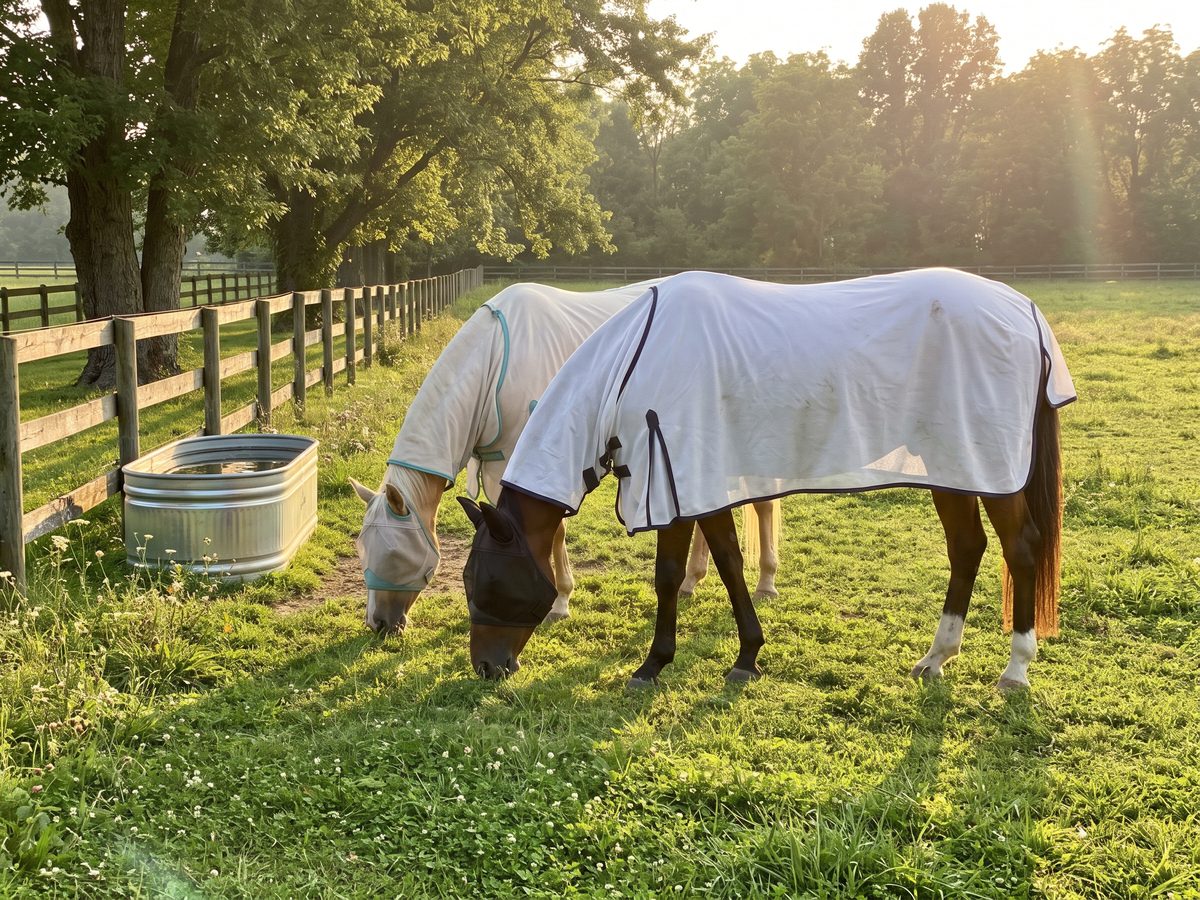
Four Layers That Work Together
- Barriers on the horse: a fly mask, a mesh fly sheet and, for some horses, fly boots.
- Fewer breeding sites: droppings picked up, a well-placed muck heap and no standing water.
- Fewer flies around the yard: traps and, in some countries, fly predators.
- Smart timing: turnout and stabling that avoid the busiest biting hours.
Each layer fills a gap the others leave. Skip the muck heap and the rest are always playing catch-up.
Masks, Sheets and Boots
A fly mask protects the eyes and, with ear covers, the ears, which are two of the places flies love most. A mesh fly sheet covers the body, and versions with a neck cover and belly flap protect more skin for horses that are bothered badly. Fly boots stop stamping on hard ground.
Fit matters. A mask should sit clear of the eyes without gaps at the edges, and a sheet should not rub at the shoulders or withers. Take the mask off every day to check the face and clean the mesh, and never leave one on overnight unless it is designed for that and your horse is checked.
Muck Heaps, Droppings and Water
Many common yard flies breed in manure and wet bedding. That makes poo-picking and muck heap care the layer with the biggest payoff and no shopping list.
- Pick up droppings from small paddocks often, ideally daily in summer.
- Site the muck heap away from stables and gateways, keep it compact, and have it removed regularly.
- Tip out standing water in buckets, tires and blocked gutters every few days. Keep troughs clean and topped up.
Picking up droppings helps with worms too: see modern worming.
Traps and Fly Predators
Bag traps and sticky tapes catch adult flies around the yard. Hang them away from where horses stand, because they attract flies to wherever they are.
Fly predators are tiny wasps, harmless to people and horses, that lay their eggs in fly pupae in manure. They are sold by mail order in some countries and work over a whole season, released on a schedule from spring onward. Check what is available, and allowed, where you live.
Turnout Times and Shade
Biting midges are most active around dawn and dusk, while many flies are busiest in the heat of the day. Some owners bring horses in during the worst hours and turn out overnight or in the evening, depending on which insects bother their horse. A cool, airy stable with a fan out of a horse's reach can give welcome relief, and shade in the field helps on hot days.
Stocking the Fly Layers
Each button opens a search in your own country's Amazon store. As an Amazon Associate we earn from qualifying purchases.
A fly mask with ears and a mesh fly sheet are the first things to buy, sized for your horse. A full-cover sheet with a neck and belly flap suits a horse that is badly bothered. Fly boots help a stamper. Bag traps and sticky tapes cut yard numbers, and a manure fork keeps the breeding sites down.
Repellents and Itchy Horses: Ask First
Fly repellents, insect treatments and anything for itchy skin: see your vet or a pet supply store with trained staff. They can tell you what suits your horse, how to patch-test it, and what is allowed where you live.
Some horses react far more than others to bites. If your horse is very itchy, rubbing its mane or tail, or has sore skin, talk to your vet before summer comes round again. They can help you plan the season.
Frequently Asked Questions
Masks, muck and midges, in roughly that order.
Can I leave a fly mask on all the time?
Take it off at least once a day to check the eyes and face and clean the mesh. A dirty or badly fitting mask can rub or trap grit against the eyes.
Do I need every layer?
One layer is better than none, but they cover different gaps. A mask and sheet protect the horse, and manure care cuts how many flies breed in the first place, so the two together beat either alone.
How often are fly predators released?
Suppliers usually send them on a schedule every few weeks through the fly season, because they work on the next generation of flies. A single release does little.
Where should the muck heap go?
Away from stables, gateways, water and boundaries with neighbors, on a site where it can be emptied easily. Some countries have rules on storing manure near watercourses, so check with your local authority.
My horse is rubbing its mane raw every summer. What should I do?
Call your vet. Some horses react strongly to biting insects, and your vet can help you plan barriers, turnout times and anything else your horse needs.
Related Reading
- Blankets, boots and stable gear: fly sheets sit alongside the winter wardrobe.
- Grazing and pasture management: shade, water and resting fields.
- Horse grooming: a daily brush is the best time for a skin check.
This page covers everyday fly management. For any skin problem, or before using a repellent for the first time, ask your vet.