Shire and Clydesdale Horses: Gentle Giants and Their Care
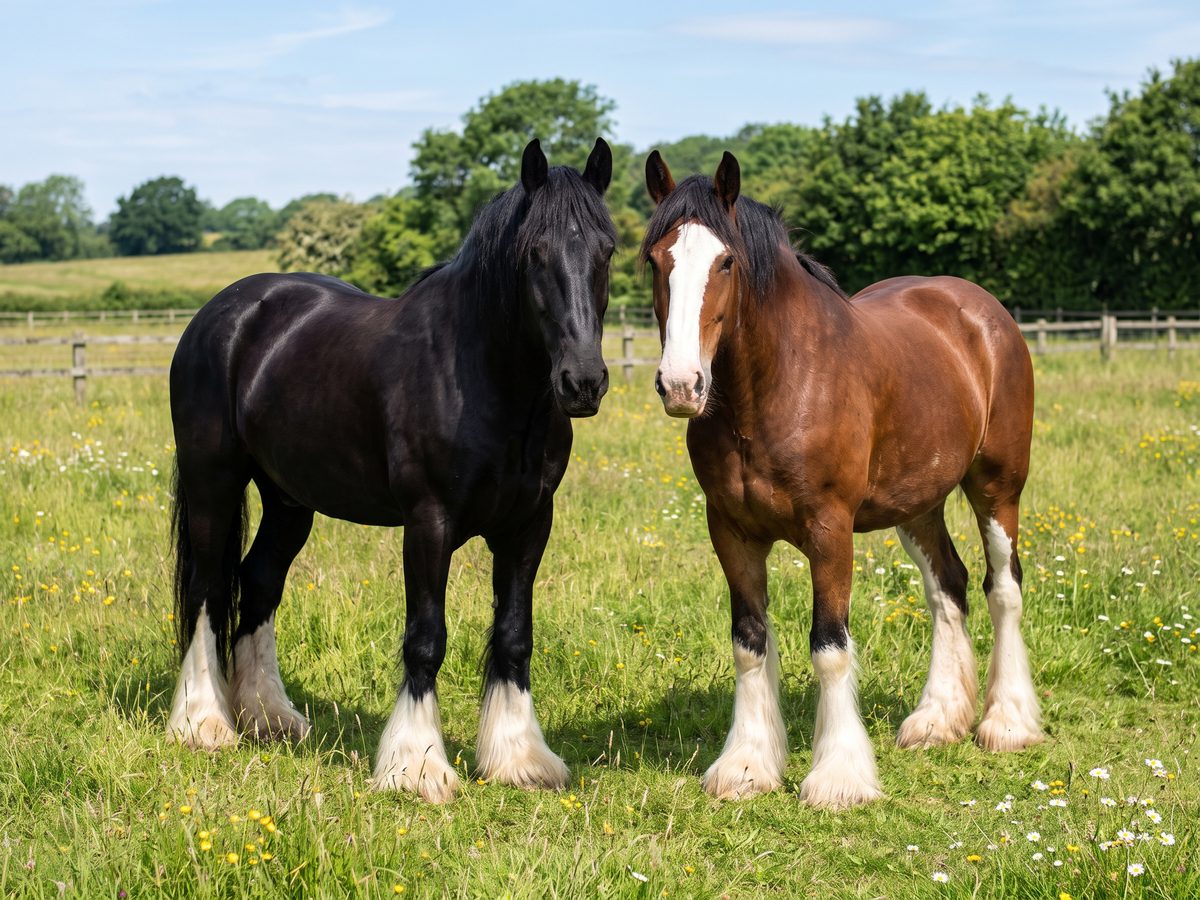
Who a Heavy Horse Suits
Shires and Clydesdales suit people who love heavy horses for driving, showing, logging, plowing matches or as calm riding horses for taller or heavier riders. Their gentle nature makes them popular with first-time heavy horse owners who have good help.
Everything costs more with a heavy: larger stables, trailers, blankets, saddles and shoes, and more hay. Check that your farrier, vet and transporter are happy with heavy horses before you buy.
Working Horses of Britain
The Shire developed in the English Midlands and fens as a farm and haulage horse, and the Clydesdale in the Clyde Valley of Scotland, where it hauled coal and worked farms. Both were exported widely, and both declined when tractors arrived, before enthusiasts revived them.
The Shire Horse Society and the Clydesdale Horse Society keep the stud books in the UK, with sister societies in North America, Australia and elsewhere. Rare breed charities keep an eye on their numbers.
Feeding and Grazing
Heavy horses are often efficient doers: they need plenty of forage by weight, but many need little bucket feed when not working hard. Weigh hay, watch condition, and ask your vet or a nutritionist about feeding a horse this size, especially in work.
See feeding horses forage first and body condition scoring; heavy breeds naturally have thicker necks, which can make scoring trickier.
Hooves, Teeth, Coat and Weather
Feather is the heavy horse's crown and its biggest care job. Keep it clean and dry, wash out mud when needed and dry it well, and check the skin underneath every time you groom. If the skin looks sore, scabby or swollen, ask your vet.
Big feet need a farrier experienced with heavies, every few weeks. Book a dental check at least once a year.
Gear for a Heavy Horse
Each button opens a search in your own country's Amazon store. As an Amazon Associate we earn from qualifying purchases.
Look for draft or extra-large sizes in headcollars, blankets and boots, and use big, strong haynets and buckets. A stiff brush and a sweat scraper help clean and dry feather after washing, and a weigh tape sized for heavies tracks condition.
Company, Space and Handling
Heavies need company and daily turnout, safe, strong fencing and a stable sized for them: the British Horse Society's minimum for horses over 17 hands (68 inches, 173 cm) is 12 × 14 ft (3.65 × 4.25 m), and many heavies need more. See stabling and field shelters.
Health: Preventive Care
Book a check-up soon after your horse arrives, and ask your vet about vaccinations and a worming plan guided by fecal egg counts. Plan for the farrier every few weeks and a dental check at least once a year. Score body condition every few weeks, by hand: weight creeps on quietly, especially on spring grass.
Worming, vaccinations and any medicines: see your vet or a pet supply store with trained staff. They can tell you what suits your horse and where you live.
Buying, Loaning or Rescuing
Breed societies, heavy horse shows and specialist breeders are the best starting points, and some rehoming charities have heavies. Have a vet do a pre-purchase examination, check feather and legs closely, and check the passport. See buying a horse.
Frequently Asked Questions
Size, feather and the cost of big.
How tall is a Shire horse?
Shire stallions average a little over 17 hands (173 cm), and many Shires are taller.
What is the difference between a Shire and a Clydesdale?
Both are British heavy horses with feather. Shires come from England and are generally heavier; Clydesdales come from Scotland and often have more white and a slightly lighter, more active build.
Can you ride a Shire or Clydesdale?
Yes. Many are ridden, and their calm nature suits taller or heavier riders. You'll need a saddle that fits a broad back.
How do I care for heavy horse feather?
Keep it clean and dry, wash and dry it well when needed, and check the skin underneath every grooming. Ask your vet about any sore skin.
Do heavy horses cost more to keep?
Usually. They eat more hay and need bigger stables, blankets, trailers and shoes.
Related Reading
- Cobs and Gypsy cobs: smaller feathered horses.
- Friesian horse: another feathered black horse.
- Horse grooming: brushes and baths for feather.
Breed traits are tendencies, not promises for the horse in front of you. If anything about your horse's health or behavior worries you, call your vet.