Feeding an Older Horse When Its Teeth Wear Down
Why Teeth Change the Menu
A horse's cheek teeth keep erupting for much of its life, worn down by all that grinding. In old age the reserve runs out: teeth wear smooth, loosen or are lost, and long-stemmed hay gets hard to chew.
If your older horse drops balls of half-chewed hay (quidding), eats more slowly, or leaves whole grains in its droppings, book a dental check and talk to your vet before you change the diet. Our horse teeth and dental care guide explains who does what.
Soaked Hay Cubes and Pellets
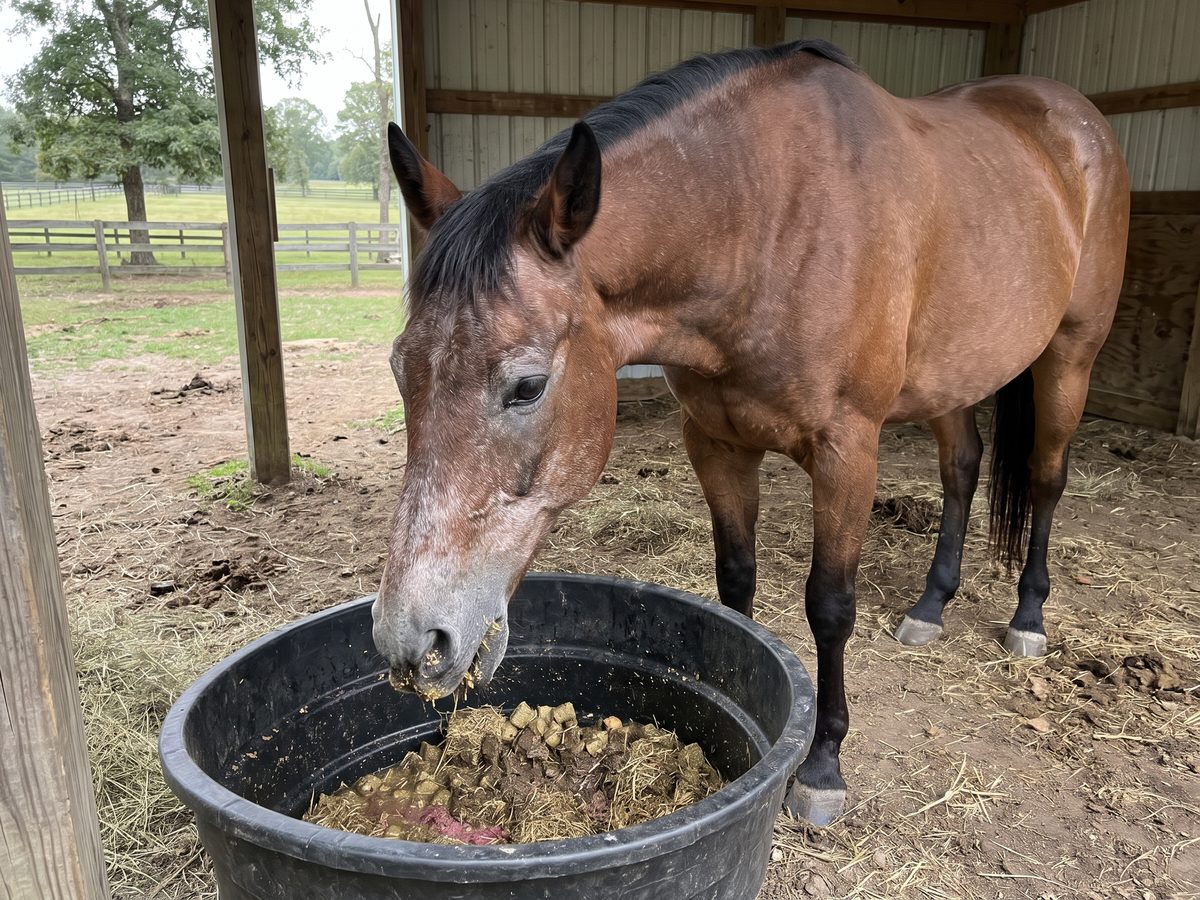
Hay cubes, hay pellets and chopped forage give fiber that is far easier to eat than long hay once soaked. Follow the bag for soaking time, and aim for soft and sloppy, not just damp. Many older horses keep picking at some long hay or grass alongside, which is good for them and passes the time.
Senior and High-Fiber Feeds
Senior feeds and high-fiber complete feeds are designed to be soaked into a mash and can, if needed, stand in for most of the forage. The feeding rate on the bag will be much higher than for a balancer, because it is doing the job hay used to do. Split it into several meals through the day.
Beet Pulp
Beet pulp is a very digestible fiber that swells a lot when soaked. It adds calories and bulk to a senior's mash and is easy to eat. Always prepare it exactly as the bag says, introduce it gradually, and keep in mind it is calorie-rich: great for a thin senior, less so for a pony that's already round.
Keeping Weight On
- Little and often. Three or four soaked meals a day suit an older horse better than one or two big ones.
- Feel, don't just look. A thick winter coat or a blanket hides a lot. Run your hands over the ribs, back and hindquarters every couple of weeks, and use a weigh tape. See body condition scoring.
- Eat in peace. Older horses often get pushed off food by younger field mates. Feed them separately so they can take their time.
- Warm water in winter. Many old horses drink better when the water isn't icy.
If weight keeps dropping despite good feeding, talk to your vet.
Gear for a Senior Feeding Plan
Each button opens a search in your own country's Amazon store. As an Amazon Associate we earn from qualifying purchases.
A soaked senior feed or high-fiber feed forms the base, with beet pulp and hay cubes for extra fiber. A wide, shallow tub is easier to eat a sloppy mash from than a deep bucket, and a few lidded soaking buckets let you prepare the next meal while one is eaten. A weigh tape keeps an eye on the result.
Frequently Asked Questions
Old horses, soft food and a lot of soaking.
When should I switch my horse to soaked feeds?
When it struggles with hay: quidding, slow eating or weight loss are reasons to book a dental check and talk to your vet first. The switch is often gradual, with soaked feeds replacing more hay over time.
Is beet pulp safe to feed every day?
For most horses, yes, when prepared exactly as the bag says and introduced gradually. Ask your vet first if your horse is on a special diet.
Can an older horse still eat some hay?
Often, yes. Let it eat what it can manage comfortably, and watch for dropped wads of hay, which show where it has reached its limit.
How often should I check an older horse's weight?
Every couple of weeks by hand, plus a weigh tape. Winter coats and blankets can hide weight loss for a surprisingly long time.
Does every older horse need senior feed?
No. Plenty of older horses with good teeth do well on hay or grass and a balancer. Senior feeds are most useful once chewing gets harder or weight is hard to hold.
Related Reading
- Caring for an older horse: retirement, company and comfort.
- Horse teeth and dental care: checks, technicians and vets.
- Reading a feed label: what is in the bag.
An older horse that is losing weight, eating slowly or dropping food needs a dental check and a vet's advice before its diet is rebuilt.