Plants Poisonous to Horses, and the Rules on Ragwort
Think your horse has eaten a poisonous plant? Call your vet straight away. For any medicine or treatment, see your vet or a pet supply store with trained staff. Don't wait for signs, and don't give anything unless your vet tells you to.
Why Horses Eat Plants They Shouldn't
Most horses avoid bitter, poisonous plants when there is plenty of good grass. Trouble starts when fields are bare and hungry horses pick at whatever is left, when poisonous plants are cut and wilted (some taste better then), or when they end up dried in hay, where horses can't sort them out.
So the best protection is good grazing, plenty of forage, and keeping poisonous plants out of fields and hay altogether. See grazing and pasture management.
Ragwort: The Big One in the UK
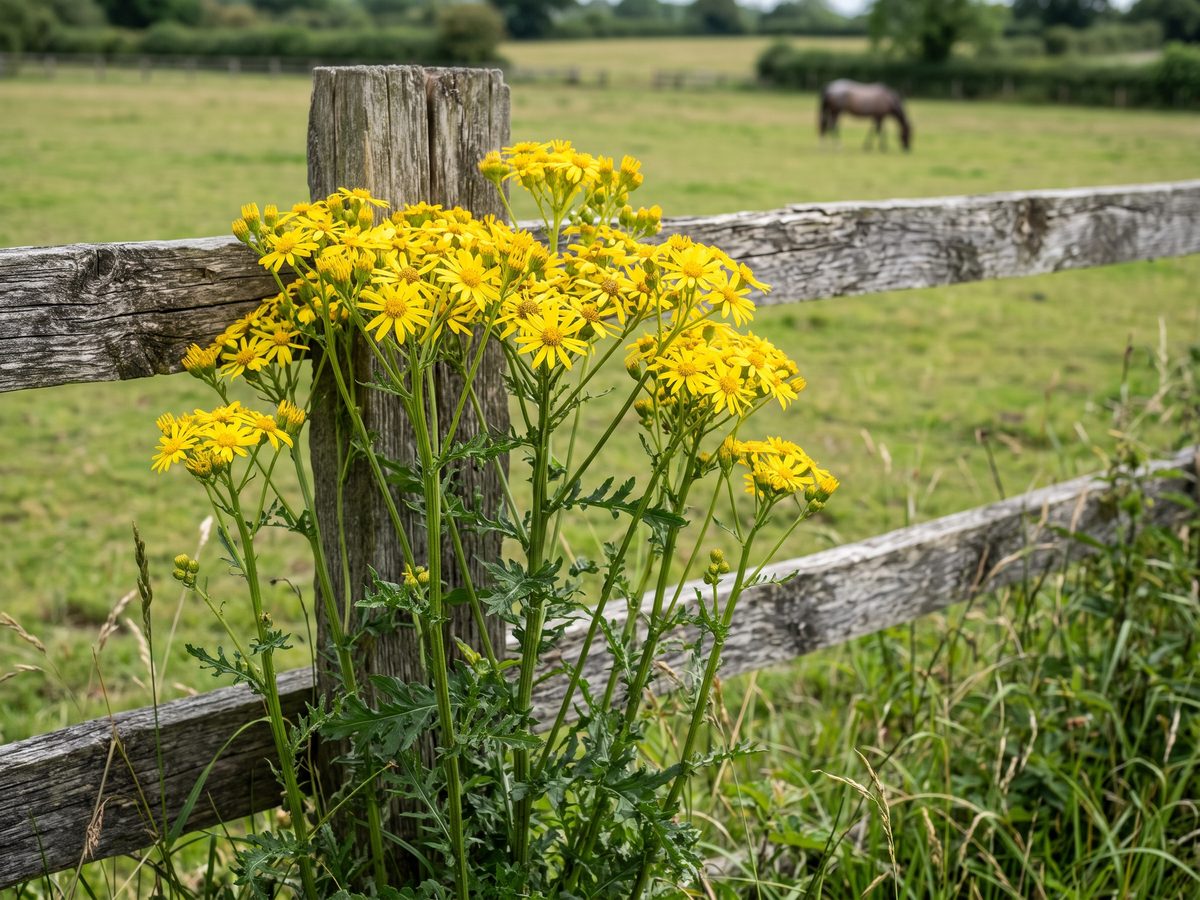
Common ragwort is a tall plant with flat-topped clusters of yellow, daisy-like flowers in summer, growing from a rosette of ragged leaves in its first year. It is poisonous to horses, ponies, cattle and sheep, and it stays poisonous when dried, which makes ragwort in hay or haylage especially risky.
- Pull or dig it out before it seeds, getting as much root as you can. Wear gloves.
- Never leave pulled plants in the field. Wilted ragwort is more tempting.
- Dispose of it safely. gov.uk says small amounts can rot down in a lidded container such as a compost bin; larger amounts need a permitted site or a registered waste carrier.
- Check your hay supplier's fields and reject hay with ragwort in it.
Trees and Hedges to Watch
- Yew: extremely poisonous, including clippings and dried leaves. Fence it well out of reach, and never throw hedge trimmings into a field.
- Oak: acorns, and young leaves, are a risk in autumn and after storms. Some horses develop a taste for acorns. Fence off or collect them in heavy years.
- Sycamore and box elder (its North American relative): seeds and seedlings carry a toxin linked to a serious muscle condition in grazing horses. Seedlings often carpet fields in spring. Fence off, collect seeds, and ask your vet about the risk on your land.
- Red maple (North America): wilted or dried leaves are the danger, especially after storms bring branches down.
- Laburnum, privet, laurel and rhododendron: common garden and hedge plants that are poisonous to horses.
Field and Garden Plants
- Bracken and horsetail (marestail), in fields and in hay.
- Foxglove, hemlock and deadly and woody nightshade, in hedgerows and field margins.
- Buttercups, which horses usually avoid when fresh; they are much less of a worry once dried in hay.
- Oleander (warmer climates, often planted in gardens): very poisonous even in small amounts, including dried leaves.
- Garden waste of any kind. Lawn clippings, hedge trimmings and garden plants should never be fed to horses or tipped over the fence.
This isn't a complete list, and what grows depends on where you live. A local vet, a grassland adviser or your national horse welfare charity can tell you what to look out for.
Bedding and Hay
Black walnut shavings can harm horses even as a small part of the bedding, so buy shavings sold for horses from a supplier who can tell you the wood. Buy hay from fields you can trust, and look through each bale for weeds, mold and dust as you feed it.
Tools for Clearing Weeds
Each button opens a search in your own country's Amazon store. As an Amazon Associate we earn from qualifying purchases.
A ragwort fork or weed puller lifts the root as well as the plant. Thick gloves protect your skin, and heavy-duty bags or a lidded compost bin keep pulled plants out of horses' reach. A plant identification guide helps you learn what is growing, and wide electric tape fences off trees in minutes.
Frequently Asked Questions
Weeds, trees and what to do if you're worried.
Is it illegal to have ragwort on my land?
In England, no, but you should stop it spreading to neighboring farmland, and you must not let animals graze land where you know it is growing. Rules elsewhere differ, so check with your national authority.
Is ragwort still dangerous when it's dried?
Yes. Dried ragwort stays poisonous and horses can't pick it out of hay, so reject any hay that contains it.
Will my horse avoid poisonous plants on its own?
Usually, when there is plenty of good grass. Hungry horses on bare fields, wilted plants and weeds in hay are where the risk lies.
Are acorns dangerous to horses?
They can be, especially in years with a heavy crop or after storms, and some horses seek them out. Fence off oak trees or collect fallen acorns.
What should I do if my horse has eaten something poisonous?
Move it away from the plant, keep a sample or photo of what it ate, and call your vet straight away. Don't give anything unless your vet tells you to.
Related Reading
- Grazing and pasture management: healthy fields mean fewer weeds.
- Feeding horses forage first: choosing and checking hay.
- Spring hazards: the seasonal list for other pets.
If you think your horse has eaten something poisonous, call your vet at once. Keep your vet's number where everyone on the yard can see it.