Why Is My Cat Overgrooming?
The order matters more than any single step.
| Step | Who | Why |
|---|---|---|
| 1. Health check | Your vet | Itchy skin, parasites and pain can all look like stress licking |
| 2. Calmer home | You | Routine, hiding places and enough resources ease everyday stress |
| 3. Expert help | Your vet and a qualified behaviorist | For a pattern that carries on despite steps 1 and 2 |
Why the Vet Visit Comes Before Anything Else
Flea, mite and other parasite treatments, and any medicine: see your vet or a pet supply store with trained staff. They can tell you what suits your cat.
From the outside, stress licking looks almost the same as licking caused by itchy skin, fleas or pain, which is why guessing at a cause without an exam so often goes wrong. Your vet can check the skin, look for parasites and assess for pain in ways no amount of watching at home can.
This page doesn't try to tell medical and behavioral causes apart. That judgment belongs with your vet, and everything below assumes that step has already happened.
Once Medical Causes Are Ruled Out: Environment and Predictability
When a vet has confirmed there's no physical driver, the next step looks at what's changed or what's missing in a cat's daily environment. A new pet, a house move, reduced access to a favorite resting spot, or fewer resources than the household's cat count calls for can all raise stress levels.
Restoring predictable routines around feeding, litter access, and quiet resting spots, alongside the enrichment pillars covered on this site's indoor cat enrichment guide, addresses the environmental side of a confirmed stress-driven pattern. The vet still stays involved throughout, tracking how the skin and coat respond as the weeks go on.
Supportive Tools and When to Escalate
A pheromone diffuser is sometimes used alongside environmental changes as a supportive, low-risk option once medical causes are excluded. Our pheromone diffuser guide covers what they can and can't do.
A pattern that continues despite a confirmed medical clearance and consistent environmental changes calls for a veterinary behaviorist working alongside your own vet, not more time spent guessing at home. Persistent, worsening, or newly bleeding areas always warrant a prompt return to the vet, regardless of how long the behavioral management has been underway.
After the Vet Visit: Supporting a Calmer Environment
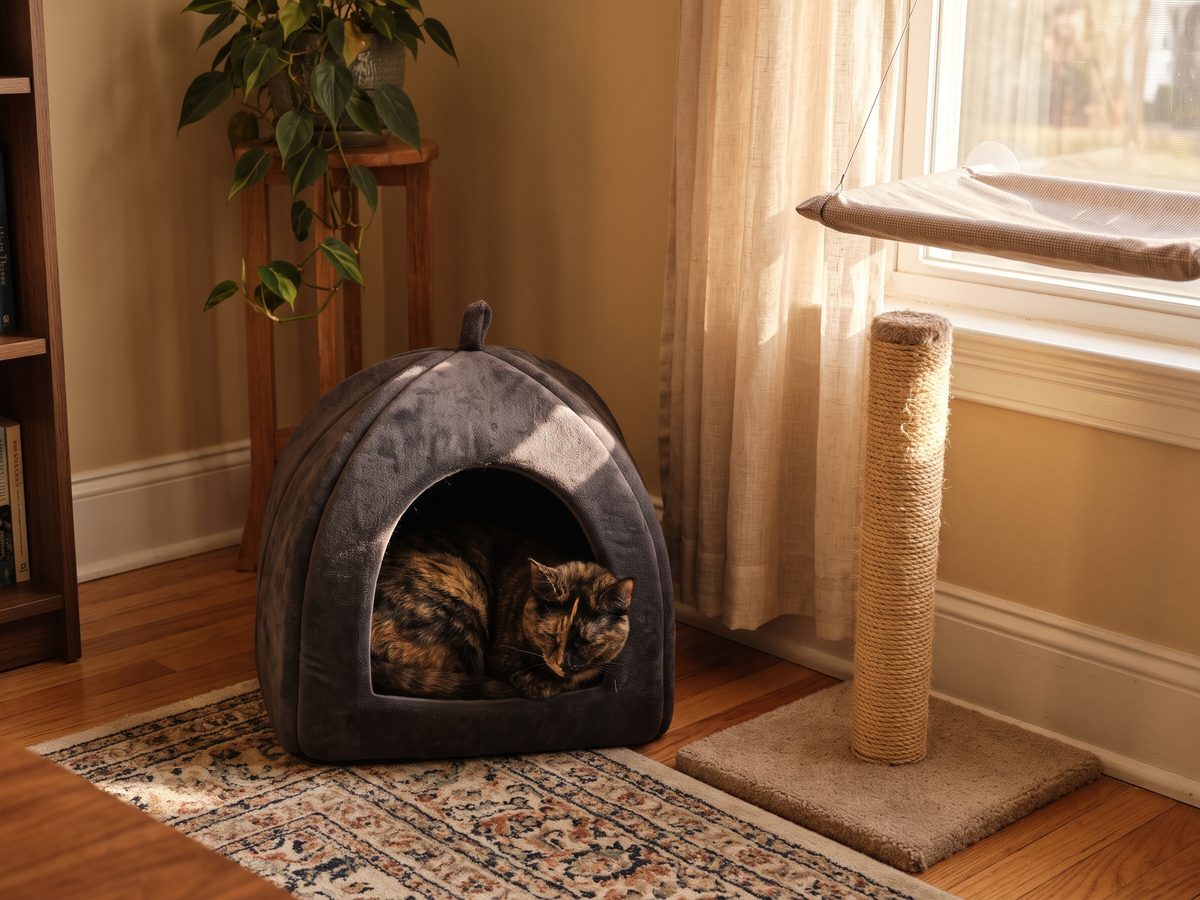
Once a veterinarian has confirmed there's no physical cause and stress management is the appropriate next step, a plug-in pheromone diffuser, an extra resting perch, and rotation-ready enrichment toys can all support the calmer, more predictable environment that behavioral recovery depends on. A soft, washable bed placed in a quiet, low-traffic spot gives a stressed cat somewhere reliably calm to retreat to during the adjustment period. None of these products replaces the vet visit or ongoing check-ups. They support a plan; they don't replace the health check that comes first.
Frequently Asked Questions
Whether stress alone explains it, with no medical piece at all, is the first question almost everyone asks.
Can overgrooming be caused by stress alone, with no medical component at all?
Yes, some cases are stress-driven once a vet has ruled out skin, pain and parasite causes. That ruling-out step has to happen first, since the two can look identical from the outside.
Which body areas does stress-related overgrooming usually affect?
The belly, inner thighs, and front legs are commonly reported areas, often mirrored fairly evenly across both flanks of the body. That pattern isn't a substitute for a veterinary exam, though, since some medical causes produce a similar symmetrical look.
Will changing my cat's litter or food stop the overgrooming?
It might, if the underlying cause is a specific stressor tied to one of those changes, but guessing at a fix before a veterinary visit risks missing a medical cause that a diet or litter switch would never address. A vet visit should come first, with any resource changes layered in afterward.
Is overgrooming more common in certain breeds?
Some breeds are reported to show it more often, but individual temperament and household circumstances play at least as large a role as breed does. A breed tendency is never a reason to skip a veterinary check for a specific cat showing the behavior.
How does a vet tell a skin problem from stress grooming?
By examining the skin, checking for parasites and running any tests they think are needed, one cause at a time. A behavioral explanation only comes to the top once those checks are clear.
Can moving house or a new pet trigger overgrooming?
Yes, a household change is a commonly reported trigger once medical causes are ruled out, since a change in routine is a real source of stress for many cats. That timing detail is worth mentioning to a vet, since it helps build the fuller picture once physical causes are excluded.
Related Reading
- Cat body language: signs of stress.
- When neighbors' cats visit: a common stressor.
- Multi-cat harmony: tension at home.
This page draws no line between medical and behavioral causes; that call belongs to your vet, not a website. Any bald patch, open sore, bleeding, or sudden worsening needs prompt veterinary attention, and a pattern that persists despite a medical clearance belongs with a vet and a qualified behaviorist working together, not a longer wait at home.