Cat Body Language: Reading Tail, Ears, Eyes and Voice
Read the Whole Cat
Single signals can mislead. A swishing tail can mean focus on a toy or rising irritation, and wide pupils can mean excitement, fear or simply a dim room. Look at the tail, ears, eyes, body posture and voice together, and at what's going on around the cat.
Cats are also individuals. Over time you'll learn your own cat's version of "happy", "playful" and "please stop". Changes from its normal behavior are often the most useful signal of all.
The Tail
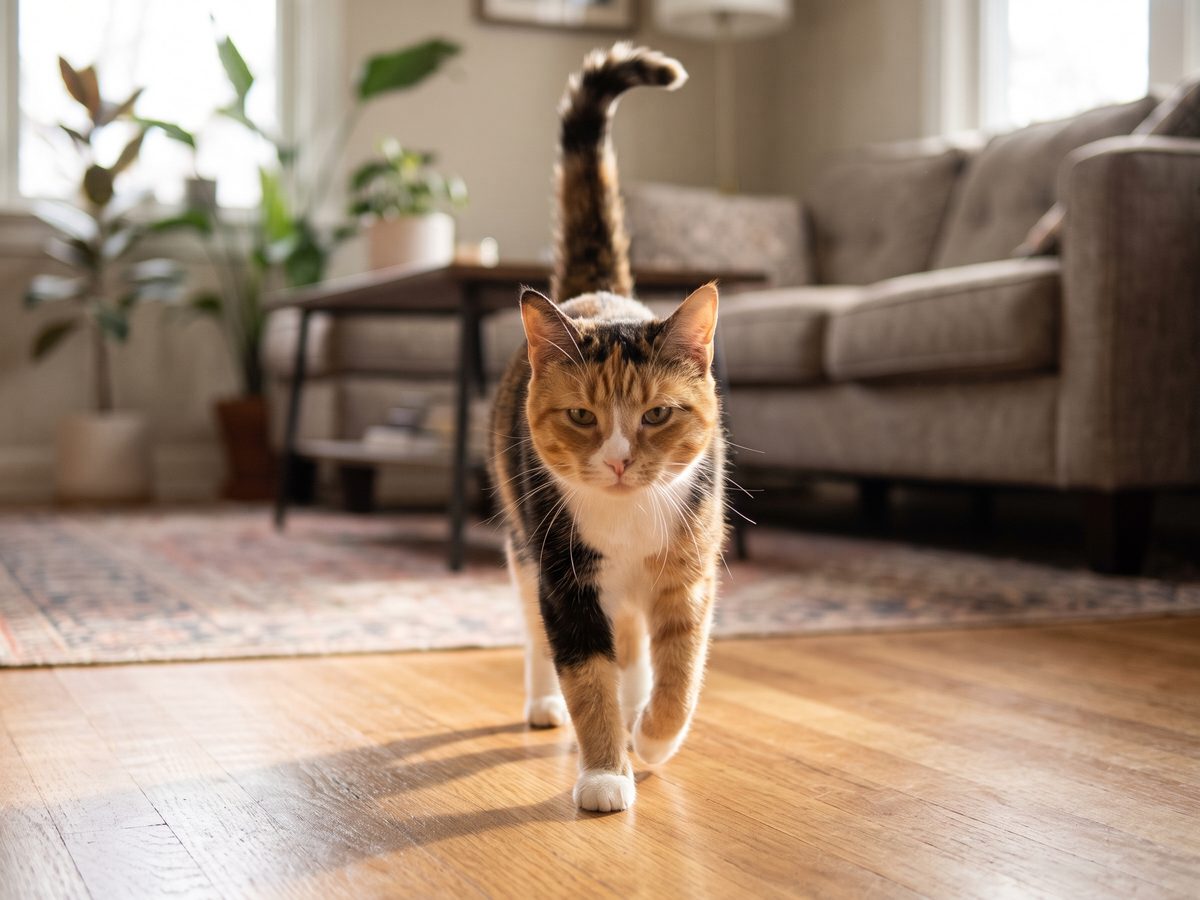
A tail held straight up, sometimes with a little curve at the tip, is a friendly greeting, often given as a cat walks toward you. A tail wrapped around the body suggests a cat is settled, or sometimes a little withdrawn.
A tail that twitches at the tip shows interest or mild irritation; lashing from side to side or thumping on the floor means a cat is annoyed or overstimulated. A puffed-up "bottle-brush" tail means fright, and a tail tucked under the body means fear.
Ears and Eyes
Ears facing forward show a relaxed or interested cat. Ears turned sideways or back, or flattened against the head, show worry, fear or annoyance.
Half-closed eyes and a slow blink are a sign of a relaxed, trusting cat; many owners find their cat blinks back if they slowly blink at it. A hard, unblinking stare between cats is a challenge. Pupils widen with excitement, fear and low light, so read them with the rest of the body.
Posture and Touch
A relaxed cat lies on its side or sits loosely. A "loaf", with paws tucked under, is usually comfortable too. A crouched, tense body with the head low, or a cat making itself as small as possible, is frightened. An arched back with fur standing up and a sideways stance is a scared cat trying to look big.
Rolling over to show the belly is a sign of trust, but many cats dislike having their belly touched and may grab or bite. Rubbing its cheeks on you or the furniture leaves scent and marks you as "family". Kneading with the front paws is a leftover kitten behavior usually seen when a cat is content.
Voice
Adult cats meow mostly at people, not at each other, and each cat develops its own vocabulary with its household. Chirps and trills are friendly greetings; a rapid chatter at the window usually means a cat is watching birds.
Purring usually means contentment, but cats also purr when stressed, in pain or unwell, so take a purring cat seriously if other signs suggest something is wrong. Hissing, spitting and growling mean back off.
Gear That Helps a Cat Feel Safe
Each button opens a search in your own country's Amazon store. As an Amazon Associate we earn from qualifying purchases.
A cat that feels secure shows more relaxed body language. Hiding places and high perches give a worried cat choices, and a wand toy lets you play at a distance with a cat that is wary of hands. A covered bed in a quiet spot is a good refuge in a busy home.
Signs That Say "Please Stop"
Many bites during stroking come after warnings that are easy to miss: a twitching or thumping tail, skin rippling along the back, ears turning sideways, the head turning toward your hand, or the cat going still. Stop stroking when you see them.
Most cats prefer short strokes around the cheeks, chin and head to long strokes along the back or belly. Let the cat come to you, and let it choose when to leave. Our play guide explains overstimulation during play.
Frequently Asked Questions
Translating cat, one signal at a time.
What does it mean when a cat slow blinks at you?
A slow blink is a sign of a relaxed, trusting cat. Try slowly blinking back; many cats return it.
Why does my cat show its belly and then bite me?
Showing the belly is a sign of trust, not usually an invitation to touch. Many cats dislike belly rubs and will grab or bite to protect that area.
Does purring always mean a cat is happy?
No. Cats usually purr when content, but they also purr when stressed, in pain or unwell. If other signs suggest something is wrong, call your vet.
What does a twitching tail mean?
A tip twitching can mean interest or mild irritation. A tail lashing or thumping means your cat is annoyed or overstimulated, so give it space.
Why does my cat knead me?
Kneading is a leftover from kittenhood, when kittens knead their mother while nursing. Adult cats often do it when they're relaxed and content.
How can I tell if my cat is stressed?
Look for hiding, a crouched body, flattened ears, wide pupils, a tucked tail, changes in eating or litter habits, or overgrooming. A sudden change in behavior is a reason to see your vet.
Related Reading
- Play and the hunt sequence: spotting overstimulation in play.
- Introducing a second cat: reading two cats meeting.
- Multi-cat harmony: tension signs between cats.
A sudden change in your cat's behavior, such as hiding, aggression or a change in voice, can be a sign of pain or illness. If your cat seems different, call your vet.