When the Neighbors' Cats Visit: Keeping the Peace for Your Cat
Why It Matters to Your Cat
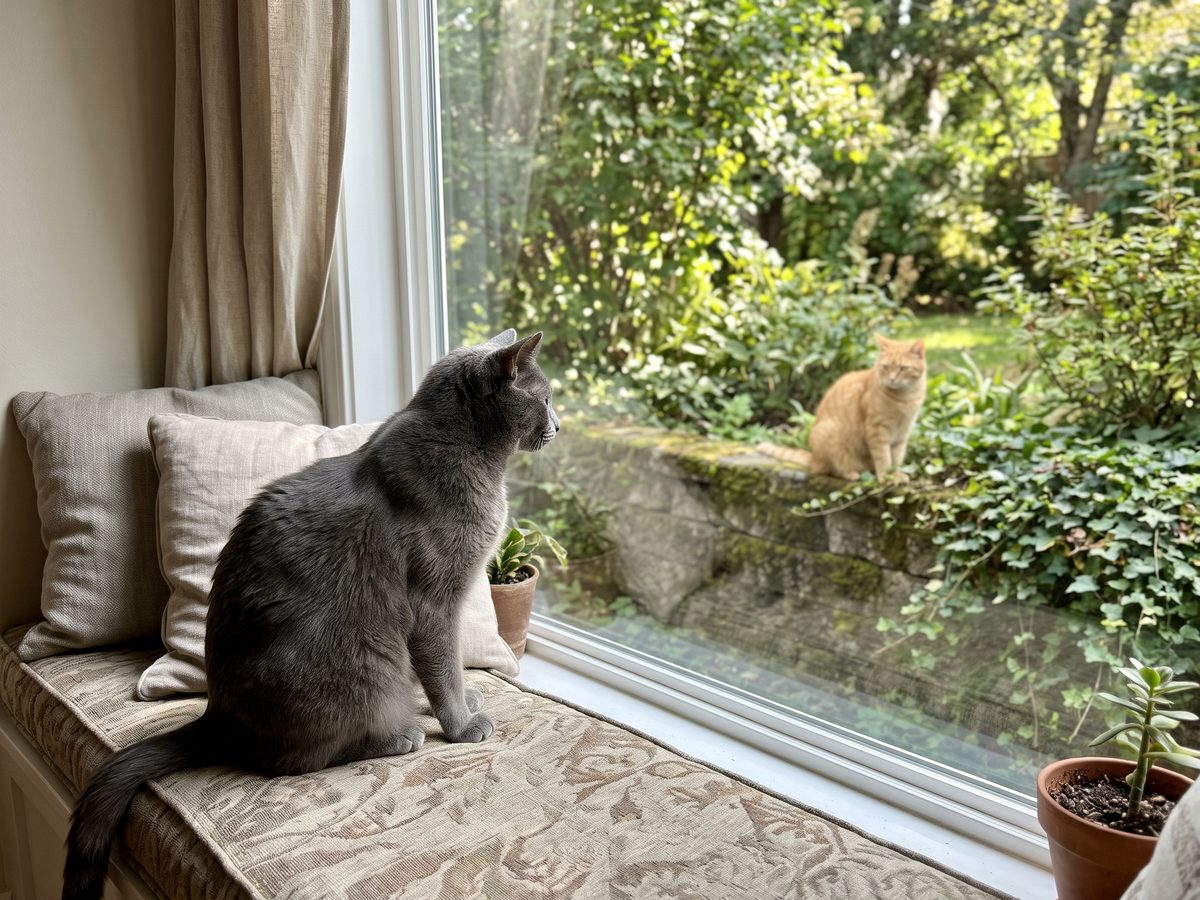
Cats are territorial, and home is the core of the territory. A strange cat coming in through the flap, eating your cat's food or staring through the window can leave a resident cat on edge. Signs include spraying or peeing near doors and windows, hiding, overgrooming, fighting at the window, or a cat that stops using the cat flap.
Any of those changes is also worth a vet check, because health problems can cause the same signs. Once your vet is happy, you can work on the visitors.
Keep Visitors Out of the House
An ordinary cat flap opens for anyone. A microchip cat flap opens only for cats you've registered, which is usually the single most effective change. Our microchip cat flap guide explains how to choose and fit one.
Feed your cat indoors and pick up leftover food, and don't leave food outside for wildlife where a neighbor's cat can find it. Close windows that visitors can reach, especially at night.
Block the View
Some cats get worked up simply watching another cat in the yard. Frosted window film or a screen over the lower part of the window where your cat sits can calm things down. Give your cat a perch at a different window, overlooking a quieter view, so it doesn't lose its lookout altogether.
Make the Yard or Garden Less Inviting
You can discourage visiting cats without harming them. Motion-activated sprinklers, prickly cuttings or plastic mesh on bare soil, and dense planting on border paths all make a yard less appealing. Never use poisons, glue traps or anything that could injure a cat; as well as being cruel, it is illegal in many countries.
Cats like easy, open, sunny spots and soft soil. Covering fresh beds and planting closely can stop them treating your garden as a litter box.
Kit for a Peaceful Territory
Each button opens a search in your own country's Amazon store. As an Amazon Associate we earn from qualifying purchases.
A microchip cat flap is the most useful single item. Window film blocks the view your cat stares through, an enzymatic cleaner removes the scent of spraying so it isn't repeated, and a motion-activated sprinkler or ground mesh discourages visitors in the yard without harming them.
Cleaning Up Spraying
If a visiting cat, or your own stressed cat, sprays indoors, clean the spot thoroughly with an enzymatic cleaner made for pet urine. Ordinary cleaners, especially ones containing ammonia, can leave a smell that invites more marking. Test on a hidden patch first.
Talking to the Neighbors
Most owners have no idea their cat is causing trouble. A friendly chat works better than a complaint: explain what's happening, and you may find they're happy to keep their cat in at night or close a gap in their fence.
Rules on roaming cats differ by country and area. Cats are generally allowed to roam in the UK and Ireland, while some Australian councils and some US cities have containment or nuisance rules. If a problem continues, your local council or animal services can tell you what applies where you live.
Frequently Asked Questions
Kind ways to settle a territory dispute.
How do I stop a neighbor's cat coming through my cat flap?
Replace it with a microchip cat flap that opens only for your registered cats. It's usually the most effective fix.
Why does my cat spray near the windows?
Often because it sees or smells another cat outside and feels its territory is threatened. Block the view, keep visitors out, clean with an enzymatic cleaner, and see your vet to rule out a health problem.
What deters cats from my yard without hurting them?
Motion-activated sprinklers, mesh or prickly cuttings on bare soil, and close planting all help. Never use poisons, traps or anything that could injure a cat.
Can I ask my neighbor to keep their cat in?
You can ask politely; many owners will help, for example by keeping their cat in at night. Whether they have to depends on local rules, which differ by country and area.
My cat fights with a neighbor's cat. What should I do?
Keep your cat in at the times the other cat is about, especially at night, and check your cat for bites and scratches. Bites often become infected, so see your vet if you find a wound or a swelling.
Related Reading
- Microchip cat flaps: keep visitors out.
- Multi-cat harmony: when the tension is inside the house.
- When a cat stops using the box: spraying and toileting problems.
Spraying, hiding, overgrooming and fighting can all have health causes as well as stress. See your vet first, and get any bite wound or swelling checked promptly.