Do Pheromone Diffusers Work for Cats?
Where and how a diffuser is placed affects how well it can work.
- Step 1. Plug the diffuser into an outlet in the room your cat occupies most, ideally at cat height and not behind furniture.
- Step 2. Keep it away from drafts, air vents, and direct sunlight, all of which can disperse or break down the pheromone faster than intended.
- Step 3. Avoid covering the diffuser with curtains, furniture, or other objects that block airflow around it.
- Step 4. Run it continuously instead of switching it on and off, since a steady background level is how these products are designed to work.
- Step 5. Give it a full trial period of several weeks before deciding whether it's helping, since behavior change from pheromones tends to be gradual.
- Step 6. For a multi-room household, plug in an additional diffuser in another frequently used room instead of relying on just one to cover the whole house.
What Pheromone Diffusers Do (and Don't)
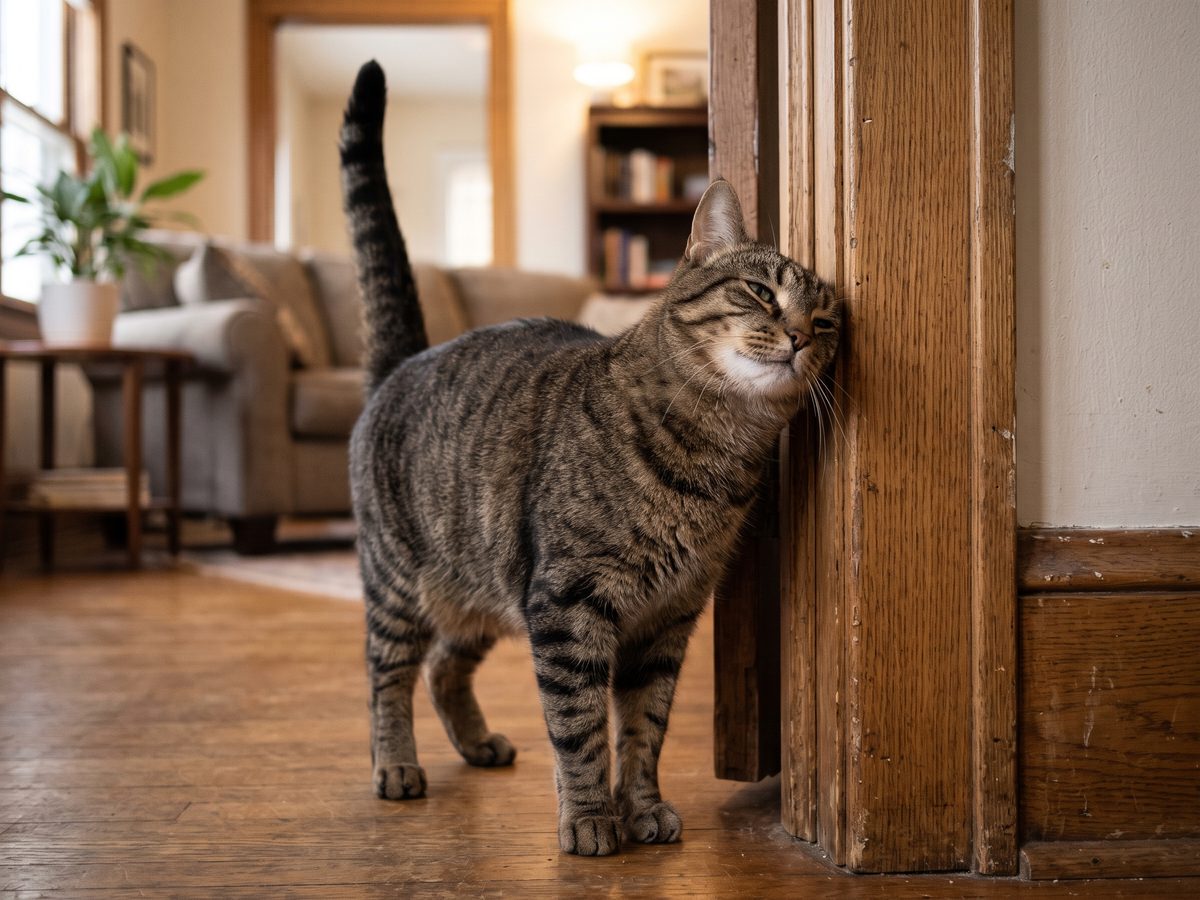
These diffusers release a synthetic version of a facial pheromone cats naturally leave when they rub against furniture, doorways, or people, a signal associated with familiarity and safety. The idea is that a steady background level of that signal can reduce behaviors linked to stress or unfamiliarity, including some vertical scratching, urine marking, and tension around a new pet or a move.
What a diffuser doesn't do is address a medical cause of the same behaviors, retrain an established habit on its own, or replace a proper introduction process between cats. It's a supporting tool, most useful alongside the behavior and environment changes that address why a cat is stressed in the first place, not a stand-alone fix.
What the Research Shows
Studies on synthetic cat pheromones give a mixed picture, not a settled verdict. Some find less marking or stress behavior in the cats studied; others find effects too small or inconsistent to separate from the effect of a calmer routine.
That mixed record doesn't mean the products are useless. It means they help some cats and situations more reliably than others, and no study promises a guaranteed result for any individual cat. Reasonable expectations matter here: treat a diffuser as a low-stakes experiment worth several weeks of patience, not a guaranteed behavior fix, and keep watching for whether your own cat's specific behavior actually improves.
Classic vs Multi-Cat Formulas
Feliway and similar product lines typically come in two classes: a classic formula built around the facial pheromone tied to marking and general stress, and a multi-cat formula built around a different pheromone associated with a mother cat's calming signal to kittens, marketed for tension between cats sharing a household.
The classic version is the more common starting point for scratching, marking, or general moving-day stress in a single-cat home, while the multi-cat version specifically targets the friction that shows up between cats living together. Using the wrong class for your situation won't cause harm, but it may simply do less for the specific behavior you're trying to change, so matching the formula to the real problem pays off with the extra minute spent reading the packaging.
When Behavior Needs More Than a Diffuser
A diffuser is meant for baseline stress support, not for treating aggression, sudden litter box avoidance, or a behavior change that came on suddenly. Spraying that starts abruptly, a new intensity of scratching, or a previously calm cat becoming aggressive toward another pet or a person are all reasons to loop in a veterinarian, since sudden behavior shifts can have a medical cause that no pheromone product addresses. A veterinary behaviorist can also help when a diffuser and basic environment changes haven't moved the needle after a fair length of trial, building a fuller plan around what's driving the specific behavior.
What This Means for a Calmer Household
A classic Feliway-style diffuser is the reasonable starting point for general stress, scratching, or moving-day anxiety in a single-cat home, while a multi-cat formula targets tension between cats sharing space. Refill cartridges are worth having on hand so the diffuser never sits empty and stops working without you noticing. A calming spray from the same product family travels well for carriers and vet visits. A covered bed or cave gives a worried cat somewhere to hide, which matters as much as anything in the air. None of these replace addressing the root stress trigger directly.
Frequently Asked Questions
Do pheromone diffusers calm cats down?
For many cats, yes, though the effect is gradual and varies from cat to cat. Research on these products gives a mixed picture, so it's reasonable to expect help for some situations without guaranteeing a dramatic change.
How soon does a pheromone diffuser start working?
Give it a full trial period of several weeks before judging results, since the behavior changes these products aim for tend to build gradually. If nothing has shifted after a reasonable trial, it's fair to reconsider the approach.
What's the difference between classic and multi-cat pheromone formulas?
The classic formula is built around a facial marking pheromone tied to general stress and scratching, while the multi-cat version uses a different pheromone associated with easing tension between cats living under one roof. Matching the formula to your specific situation gets better results than guessing.
Can I use a pheromone diffuser in more than one room?
Yes, and for a larger home or a multi-cat household, plugging in more than one diffuser to cover the rooms cats use most is a reasonable approach. One diffuser in a single room won't do much for behavior happening somewhere else in the house.
Is a pheromone diffuser safe around other pets?
These products are formulated to be species-specific to cats and are generally considered low-risk around dogs and other household pets. Where a particular pet's health is a worry, ask your veterinarian before introducing any new product into the home.
Will a diffuser stop my cat from spraying?
It may help with stress-related marking in some cats, but spraying that starts suddenly or intensifies quickly can also have a medical cause, so a veterinary check is worth doing before relying on a diffuser alone. Combining it with addressing the underlying stress trigger works better than the diffuser by itself.
Do I need a diffuser in every room of the house?
Not necessarily. Placing one in whichever room your cat occupies most and where the stress-related behavior shows up most is usually enough. A whole-house setup fits better in a large multi-cat household with tension spread across several rooms.
Related Reading
- Moving house with a cat: a common use.
- Introducing a second cat: another common use.
- Cat body language: reading stress.
This page describes a supportive product category, not a fix for a diagnosed behavior or medical condition. A cat with sudden aggression, new spraying, or a marked change in litter box habits should see a veterinarian first to rule out a medical explanation, instead of assuming it's pheromone-responsive stress alone.