Stabling, Turnout and Field Shelters: Where Your Horse Lives
In, Out or Both?
Horses are built to walk and graze for much of the day with other horses. Turnout gives them movement, grazing and company, all of which help body and mind. Many native ponies, cobs and hardy types live out all year with a good shelter, while others come in at night in winter or during the hottest, fly-heavy part of a summer day.
Stables are useful for feeding, grooming and vet visits, for horses recovering from injury on their vet's advice, and in bad weather. A horse that is stabled a lot needs daily turnout or exercise, plenty of forage to chew, and the sight of other horses. See why horses need company.
A Good Stable
- Size: at least the BHS minimums in the table, more for a big horse or one that spends long hours in. The horse should be able to turn, lie down and get up easily.
- Air: plenty of ventilation without drafts at horse height. Stale, dusty, ammonia-smelling air is bad for lungs.
- Doors and fittings: a door wide and high enough to lead through safely, a top door that can be left open, and no sharp edges or protruding bolts.
- Light: safe, protected light fittings out of reach, with switches outside the stable.
- Water: clean water always available, from buckets or an automatic drinker you check daily.
Bedding and Mucking Out
Common beddings are wood shavings, straw, paper, hemp and wood pellets, often over rubber mats. Choose dust-extracted bedding where you can, and avoid black walnut shavings, which can harm horses. Straw is cheap in many places, but some horses eat it, which may not suit a good-doer.
Remove droppings and wet patches every day, and top up or change the bed regularly. A deep, clean bed encourages a horse to lie down and rest.
Field Shelters
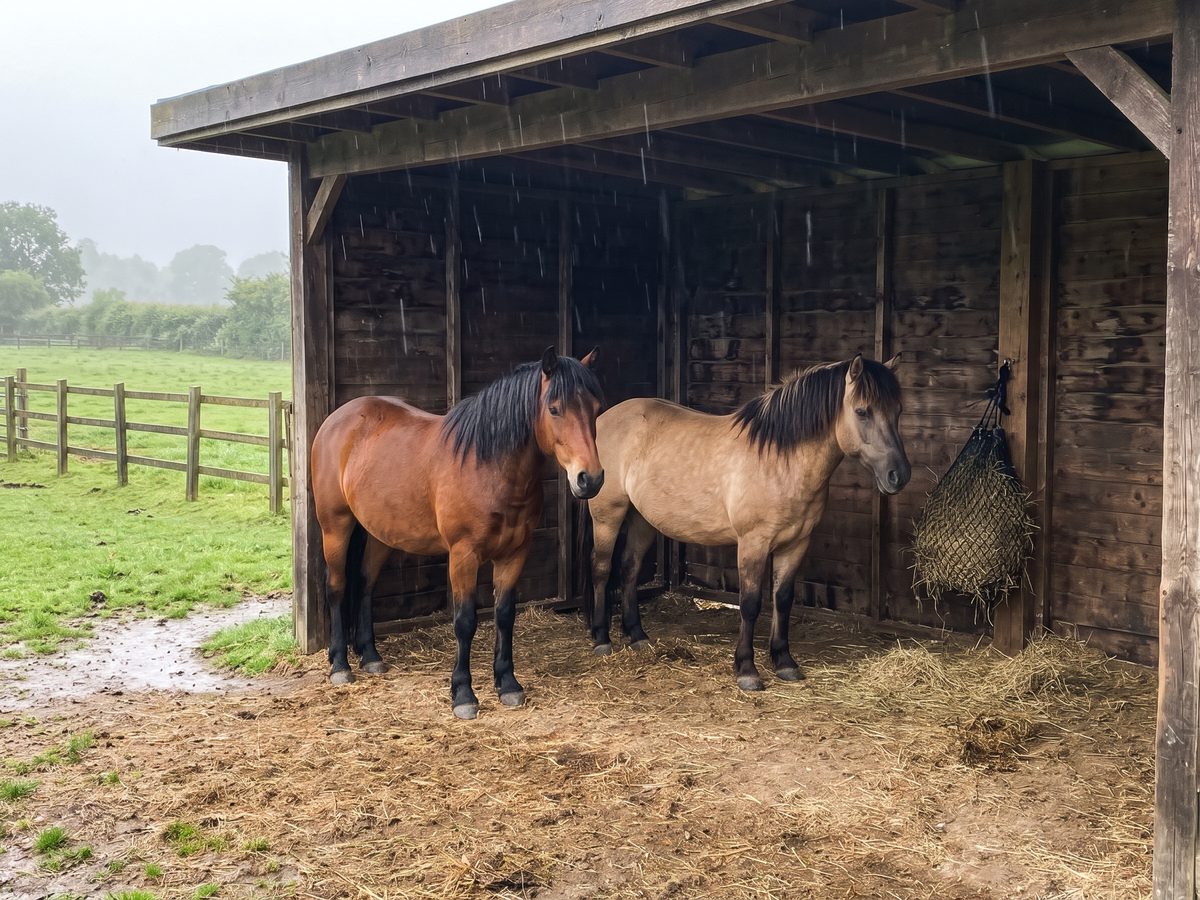
A field shelter is an open-fronted building in the field that horses can walk in and out of. It gives shade, a windbreak and a dry place in rain. Trees and thick hedges help too, but a solid shelter is better in a wet, windy winter or a hot, fly-heavy summer.
- Make it big enough for every horse in the field to shelter at once, with a wide opening so a lower-ranking horse can't be trapped inside.
- Face the open side away from the prevailing wind, on well-drained ground.
- Check whether you need planning permission or a building permit; rules on field shelters differ by country and area, so ask your local authority.
Donkeys need a shelter more than most, as their coats are less waterproof: see donkeys.
Stable and Shelter Kit
Each button opens a search in your own country's Amazon store. As an Amazon Associate we earn from qualifying purchases.
Rubber stable mats give a warmer, safer floor and save bedding. Dust-extracted shavings or other low-dust bedding help lungs. A shavings fork and muck tub make daily mucking out quicker, a slow-feed haynet keeps hay off the floor, and a sturdy water bucket holder stops a bucket being knocked over. A field shelter kit can work where you have no building.
Turnout Safely
- Every day if possible, ideally with friends.
- Safe fencing: post and rail, horse mesh or wide electric tape, checked often. See grazing and pasture management.
- A dry patch, hard standing or a track can save a winter field and keep feet healthier.
- Check twice a day: every horse, the water and the fences.
If your horse has to stay in for health reasons, follow your vet's advice on how much it can move. Ask your vet before any medicine or treatment.
Medicines and treatments for a horse on box rest: see your vet or a pet supply store with trained staff. Your vet will set the rest and exercise plan.
Frequently Asked Questions
In, out, big enough? The usual questions.
How big should a stable be?
The British Horse Society's minimum is 12 × 12 ft (3.65 × 3.65 m) for a horse and 10 × 10 ft (3.05 × 3.05 m) for a pony, larger for big horses. Bigger is better, especially for a horse that spends long hours inside.
Can horses live out all year?
Many can, especially hardy types, with good grazing or hay, a field shelter or thick hedges, fresh water and company. Older, thin or clipped horses may need more help in winter.
Is it cruel to keep a horse stabled at night?
Not if it has a good-sized, airy stable, plenty of forage, the sight of other horses and daily turnout or exercise. The trouble comes with long hours in and little time out.
What is the best bedding?
It depends on your horse, budget and what is available locally. Low-dust shavings, straw, paper, hemp and pellets all work; avoid black walnut shavings.
Do I need permission for a field shelter?
Often, depending on the size, whether it is fixed or mobile, and where you live. Rules differ by country and area, so check with your local planning or building authority first.
Related Reading
- Blankets, boots and stable gear: shop the tack room.
- Blanket weight guide: shelter or blanket?
- Hoof care and the farrier: dry ground and healthy feet.
If your horse has a cough or seems unwell when stabled, ask your vet about air quality and bedding.