Horse Blankets (Rugs): When to Use One and How Warm
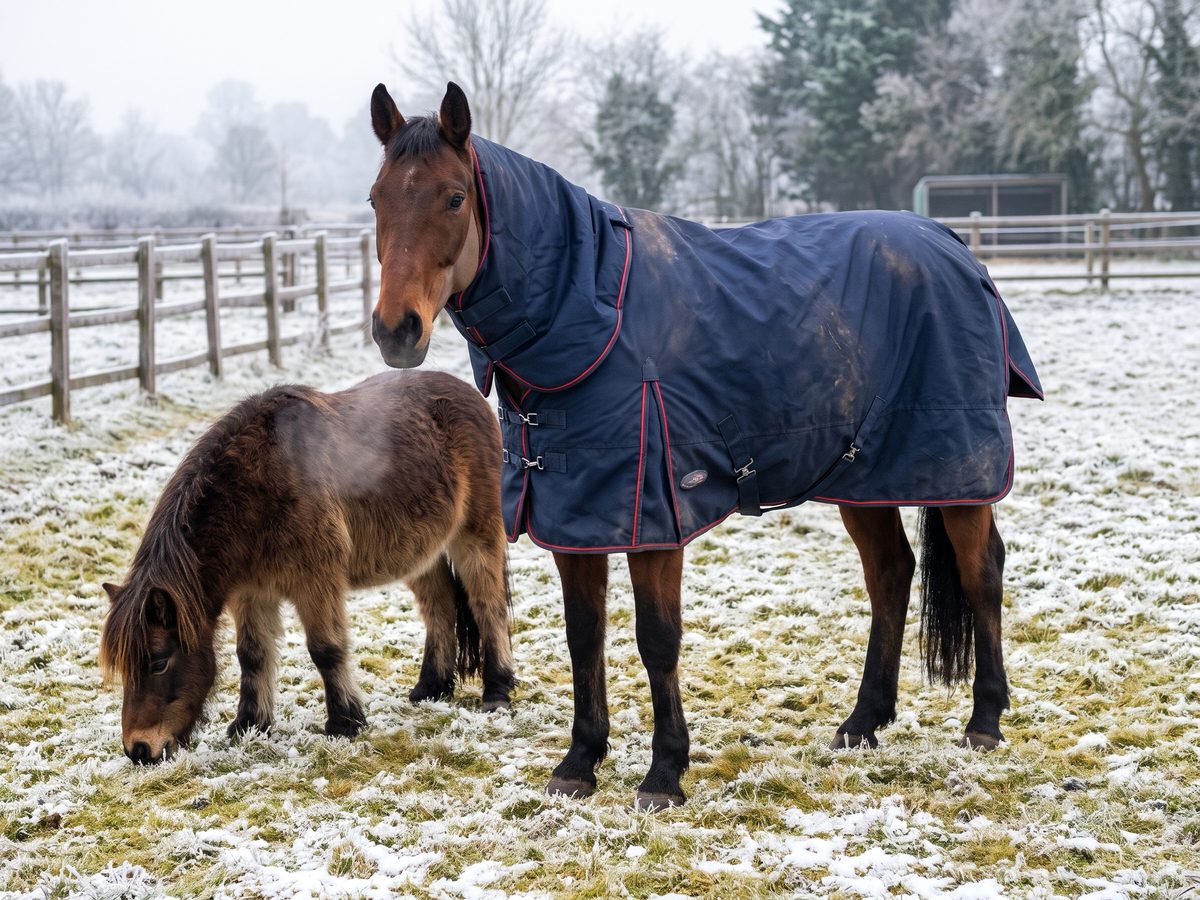
Does Your Horse Need a Blanket?
Horses cope with cold far better than people expect. University of Minnesota Extension puts the temperature below which a horse with a full winter coat starts using extra energy to keep warm at about 18°F (minus 8 Celsius), compared with about 41°F (5°C) in a summer coat. A good coat, shelter and plenty of hay to munch do most of the work.
Wet and wind change the picture: a soaked coat loses much of its insulation. Extension guidance suggests a blanket when a horse:
- has been clipped;
- is very young or very old;
- isn't used to the cold, for example after moving from a warmer place;
- is thin (a low body condition score);
- has no shelter from cold rain and wind.
Many native ponies and cobs grow coats that do the job on their own, and for an overweight good-doer, going without an unnecessary blanket can help it use up some of the summer's extra weight. Donkeys are different: their coats are less waterproof, so they need good shelter (see donkeys). Ask your vet if you aren't sure.
Clipped or Unclipped Changes Everything
Clipping removes the coat that would have kept your horse warm, so a clipped horse needs a warmer blanket than an unclipped field mate in the same weather. A small clip (such as a bib or trace clip) takes off less coat than a full clip and needs less blanket. Two horses in one field can need completely different wardrobes, which is why a single temperature chart can mislead.
Denier and Fill: Two Different Numbers
Denier measures how tough the outer fabric is. A higher denier resists tears from fences, hedges and playful field mates; it doesn't make a blanket warmer. Fill, usually given in grams, is the insulation inside. A mediumweight from one maker may be warmer or cooler than another's, so read the description, not just the label.
Layering Beats Owning One Perfect Blanket
Weather changes through a season, and from morning to night. A small wardrobe gives you options:
- a turnout sheet for wet, mild days;
- a mediumweight turnout for most of winter;
- a liner or a heavier blanket for the coldest spells, if your horse needs it.
Many systems let a liner clip inside a turnout. Swap as the weather changes, and don't leave a winter blanket on through a warm, sunny day.
Five Fit Checks
- Withers: the blanket sits clear of the withers without pressing or gaping.
- Shoulders: your horse can stride forward freely without the blanket pulling tight.
- Chest: the front closes snugly without pressing on the windpipe or rubbing the point of the shoulder.
- Leg straps or fillet string: loose enough to lie down and roll, not so loose a leg can step through.
- Length: it covers to the top of the tail without dragging behind.
Recheck after the first full day of wear, when rubs show up first.
Building a Small Blanket Wardrobe
Each button opens a search in your own country's Amazon store. As an Amazon Associate we earn from qualifying purchases.
Start with a waterproof turnout sheet and a mediumweight turnout in the right size from the maker's chart. A clip-in liner adds warmth on the coldest days without buying another blanket. A shoulder guard or anti-rub vest helps a horse that rubs, and a cooler dries a sweaty horse before its blanket goes back on.
Daily Checks and When to Leave It Off
- Check underneath every day. Slide a hand under the blanket at the shoulder and behind the withers. Damp or sweaty means too warm; cold ears and a cold, tucked-up horse may mean too cool.
- Take it off now and then to check for rubs, weight changes and skin problems a blanket can hide.
- Don't blanket a wet horse unless the blanket is designed to wick moisture: dry it off first.
- Leave it off when the horse doesn't need it. An overheated horse in a heavy blanket on a mild day is a more common sight than a cold one.
Frequently Asked Questions
Warm, cool or just right? The usual questions.
Does a heavier blanket always mean a warmer, happier horse?
No. A heavy blanket on an unclipped horse with a full coat can make it sweat and overheat. Match the blanket to the horse's coat or clip and the weather.
How do I know if my horse is too hot under its blanket?
Slide your hand under the blanket at the shoulder and behind the withers. Damp or sweaty skin means it is too warm for the conditions.
Do native ponies need blankets?
Many don't, if they have a full coat, shelter and enough forage. Old, thin or clipped ponies may need one. Ask your vet if you aren't sure.
Can I put a blanket on a wet horse?
It is best to dry the horse first, under a cooler if needed. Some turnouts are designed to wick moisture, so check what yours says.
Why does my horse rub its shoulders under a blanket?
Usually the fit or cut is wrong for that horse's shape. Try a different cut or a shoulder guard, and check the size against the maker's chart.
How long should a blanket stay on?
Only as long as the weather calls for it. Take it off at least once a day to check the horse underneath, and change to a lighter one, or none, on mild days.
Related Reading
- Blankets, boots and stable gear: the full wardrobe and tack room.
- Stabling, turnout and field shelters: shelter often matters more than a blanket.
- Body condition scoring: what is going on under the blanket.
Older, thin or unwell horses lose heat faster. If you are unsure whether your horse is warm enough, ask your vet.