New Forest Pony: Size, Temperament and Care
Who a New Forest Pony Suits
New Forest ponies suit families who want one pony that a child and a smaller adult can share, riders who want an all-rounder for hacking, jumping and riding club, and drivers. Larger Forest ponies carry adults well.
Ponies bred on the Forest may arrive unhandled, which needs an experienced person. A well-schooled, older pony makes the best first pony.
Ponies of the Forest
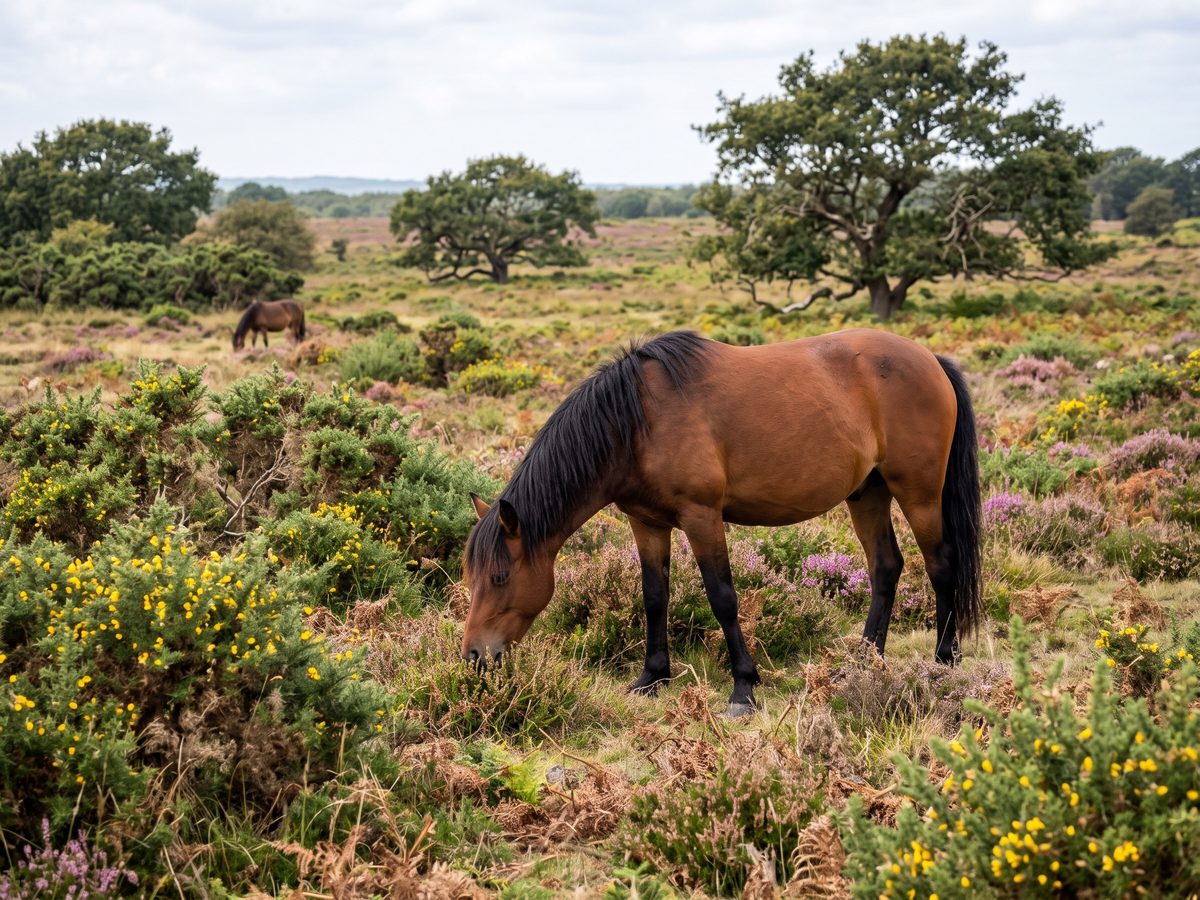
Ponies have grazed the New Forest for centuries. They are owned by commoners, local people with the right to turn animals out on the Forest, and their grazing helps shape its heaths and lawns. The New Forest Pony Breeding and Cattle Society keeps the stud book.
Semi-wild ponies living on the Forest need a passport in England only if they are enclosed on private land or treated by a vet. If you visit the Forest, admire the ponies from a distance and don't feed them.
Feeding and Grazing
Like most native ponies, New Forest ponies evolved on poor, rough grazing and are very good at turning a little food into a lot of pony. On rich lowland grass that talent becomes a problem: they put on weight fast, and extra weight raises the risk of laminitis. Ask your vet whether your pony's grazing should be limited, especially in spring and early summer.
Base the diet on forage: grass in moderation and weighed hay, often in a small-hole haynet. Most need little or no bucket feed, just a ration balancer or mineral lick for vitamins and minerals, plus salt and fresh water. Read feeding horses forage first and body condition scoring.
Hooves, Teeth, Coat and Weather
Forest ponies are known for sound legs and feet; still, pick out feet daily and book the farrier every few weeks. Dental checks at least once a year keep them comfortable in the bit.
Most grow a good winter coat. A pony in regular work may be clipped and need a blanket (rug), while one living out unclipped with shelter often doesn't. See the blanket weight guide.
Gear for a New Forest Pony
Each button opens a search in your own country's Amazon store. As an Amazon Associate we earn from qualifying purchases.
Sizes span small ponies to near horse-size, so measure for headcollars, bridles and blankets. A small-hole haynet and weigh tape help keep a good-doer trim, and a grazing muzzle can help on spring grass if your vet suggests one. A turnout sheet suits a clipped pony in wet weather.
Company, Space and Handling
Like all ponies, New Forests need equine company and daily turnout. They are used to roaming, so plenty of space or a track system suits them well. See grazing and pasture management.
Health: Preventive Care
Book a check-up soon after your pony arrives, and ask your vet about vaccinations and a worming plan guided by fecal egg counts. Plan for the farrier every few weeks and a dental check at least once a year. Score body condition every few weeks, by hand: weight creeps on quietly, especially on spring grass.
Worming, vaccinations and any medicines: see your vet or a pet supply store with trained staff. They can tell you what suits your pony and where you live.
Buying, Loaning or Rescuing
Breeders, breed society events and rehoming charities are good places to look; Forest-bred youngsters are often sold at local sales. Have a vet do a pre-purchase examination, check the passport, and ask about handling, traffic and the farrier. See buying a horse.
Frequently Asked Questions
Forest life, size and who can ride one.
How tall is a New Forest pony?
The breed society's upper limit is 148 cm (14.2 hands). There is no lower limit, but most are over 12 hands (122 cm).
Can adults ride New Forest ponies?
Yes. Larger, well-built New Forest ponies carry adults well, which makes them popular family ponies.
Are New Forest ponies wild?
They live semi-wild on the Forest but are owned by commoners. Don't feed or approach them when you visit.
Do New Forest ponies need passports?
In England, yes, once they are enclosed on private land or treated by a vet. Ponies living on the Forest are exempt.
Is a New Forest pony a good first pony?
A well-schooled, experienced one can be excellent. Young, Forest-bred ponies need experienced handling first.
Related Reading
- Connemara pony: another athletic family pony.
- Dartmoor pony: a smaller native from the South West.
- Horse passports and microchips: the Forest exemption explained.
Breed traits are tendencies, not promises for the pony in front of you. If anything about your pony's health or behavior worries you, call your vet.