Dartmoor Pony: Size, Temperament and Care
Who a Dartmoor Suits
Dartmoors suit young riders who need a sensible, well-made pony, families looking for a companion pony, and smaller adults who want to drive. The breed society values them as children's ponies and companions, and they compete in many disciplines.
As with any pony, temperament depends on the individual and its training. An experienced Dartmoor makes a better first pony than a young, unhandled one.
Ponies of the Moor
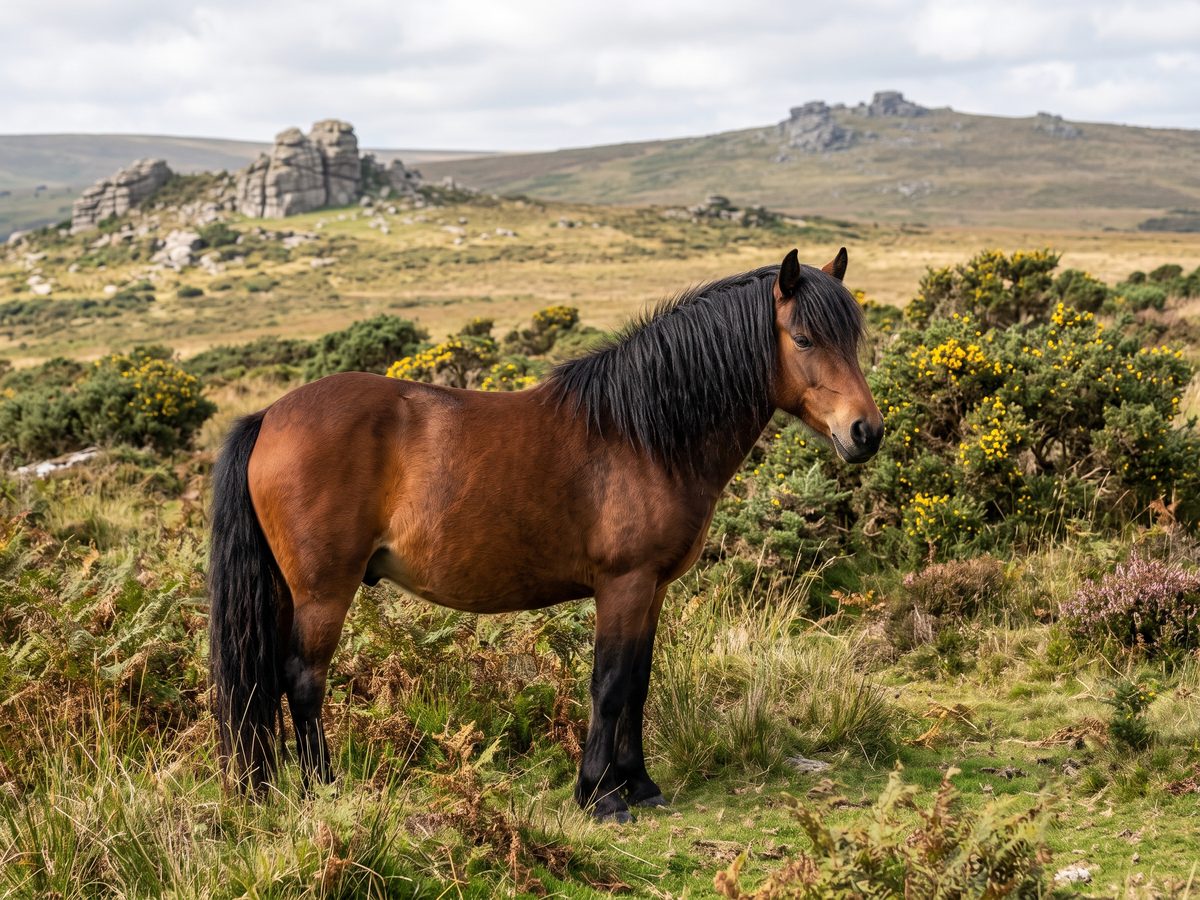
Dartmoor ponies have been recorded on the moors of Devon since the Middle Ages. Herds still graze Dartmoor today, owned by local farmers, and their grazing helps keep the moorland habitat in good shape.
Ponies that live semi-wild on Dartmoor have a special passport rule in England: they only need one if they are kept enclosed on private land or treated by a vet. Once a moor-bred pony comes into a home, it needs a passport and microchip like any other.
Feeding and Grazing
Like most native ponies, Dartmoors evolved on poor, rough grazing and are very good at turning a little food into a lot of pony. On rich lowland grass that talent becomes a problem: they put on weight fast, and extra weight raises the risk of laminitis. Ask your vet whether your pony's grazing should be limited, especially in spring and early summer.
Base the diet on forage: grass in moderation and weighed hay, often in a small-hole haynet. Most need little or no bucket feed, just a ration balancer or mineral lick for vitamins and minerals, plus salt and fresh water. Read feeding horses forage first and body condition scoring.
Hooves, Teeth, Coat and Weather
Dartmoors generally have hard, hardy feet. Pick them out daily and book the farrier every few weeks. Dental checks at least once a year keep a small mouth comfortable.
The thick winter coat and full mane and tail are built for moorland weather, so many Dartmoors with shelter manage without a blanket (rug). Check by hand under the coat for weight changes.
Gear for a Dartmoor Pony
Each button opens a search in your own country's Amazon store. As an Amazon Associate we earn from qualifying purchases.
A pony-sized headcollar and lead are the first buy. A small-hole haynet and weigh tape help keep a good-doer trim, and a grazing muzzle can help on spring grass if your vet suggests one. A child-sized grooming kit gets young riders involved in daily care.
Company, Space and Handling
Dartmoors need equine friends and daily turnout, on grazing that won't overfeed them. Safe fencing and a field shelter or good hedges complete the picture. See grazing and pasture management.
Health: Preventive Care
Book a check-up soon after your pony arrives, and ask your vet about vaccinations and a worming plan guided by fecal egg counts. Plan for the farrier every few weeks and a dental check at least once a year. Score body condition every few weeks, by hand: weight creeps on quietly, especially on spring grass.
Worming, vaccinations and any medicines: see your vet or a pet supply store with trained staff. They can tell you what suits your pony and where you live.
Buying, Loaning or Rescuing
Breed society members, reputable breeders and rehoming charities are good starting points. Ponies bred on the moor may be unhandled, which is a job for an experienced person. Have a vet do a pre-purchase examination and check the passport. See buying a horse.
Frequently Asked Questions
Size, temperament and life on the moor.
How tall is a Dartmoor pony?
Up to 12.2 hands (50 inches, 127 cm), according to the Dartmoor Pony Society's breed standard.
Are Dartmoor ponies good for children?
Yes, the breed is prized as a children's pony. Choose an experienced, well-handled pony for a beginner.
Can an adult ride a Dartmoor?
Dartmoors are children's ponies for riding, though a strong one can carry a small, light adult for short spells. Many adults drive them instead.
Do Dartmoor ponies need passports?
In England, yes, once they are kept on private land or treated by a vet. Semi-wild ponies living on the moor are exempt.
Can a Dartmoor live out all year?
Many can, with good grazing or hay, shelter, water and company. Watch their weight on rich grass.
Related Reading
- Exmoor pony: the other moorland pony of the South West.
- New Forest pony: a taller native that carries adults.
- Horse passports and microchips: the moorland exemption explained.
Breed traits are tendencies, not promises for the pony in front of you. If anything about your pony's health or behavior worries you, call your vet.