Puppy, Adult and Senior Dog Food: What Changes?
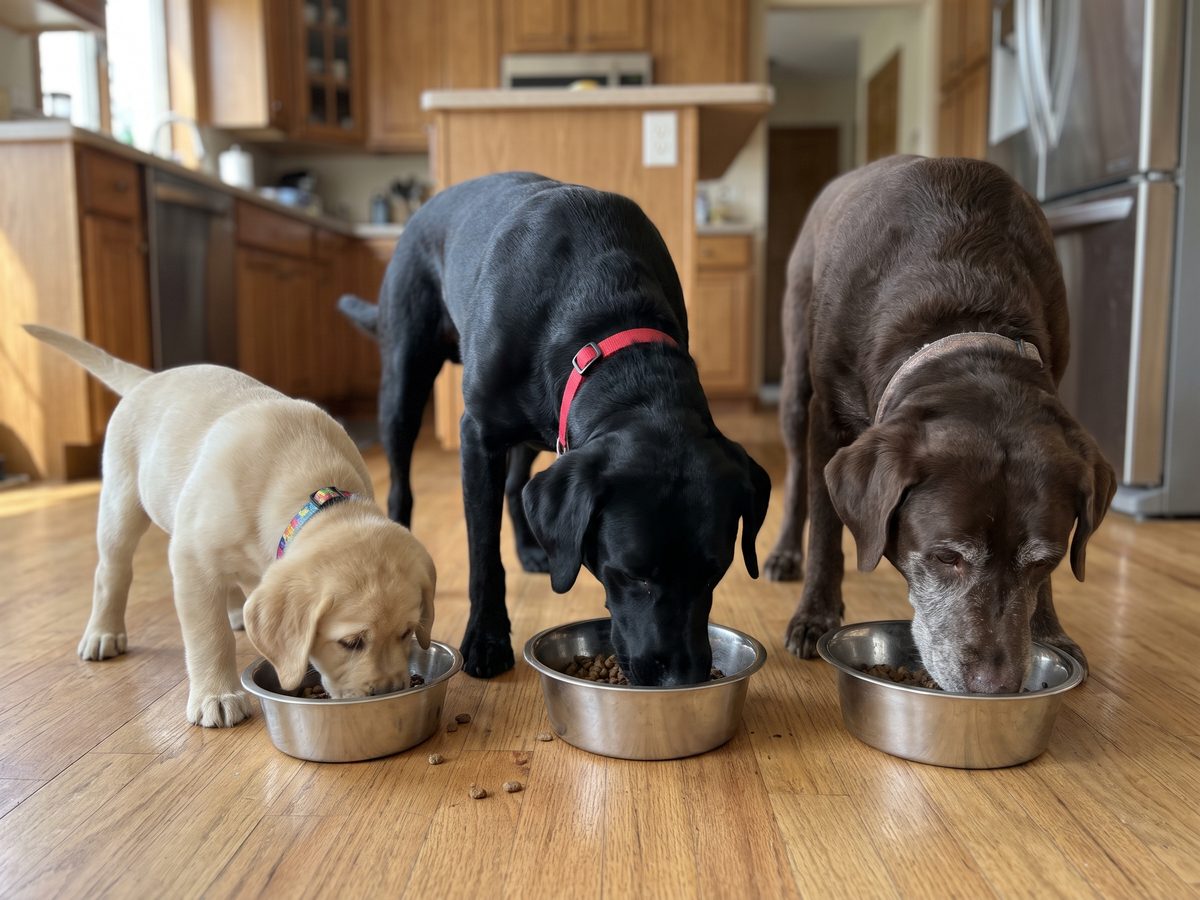
Large-Breed Puppies Need Their Own Food
Big breeds grow for longer, and growing too fast isn't good for developing joints. Large-breed puppy foods control calories and calcium to support steady growth. Feed measured portions, keep your puppy lean, and don't add calcium or other supplements unless your vet advises it. Genes and exercise matter too, so ask the breeder for the parents' hip and elbow results.
Reading the Label
Look for a statement that the food is complete for a life stage. In the US, it will say it meets AAFCO nutrient profiles for "growth", "adult maintenance" or "all life stages". In the UK and Europe, look for "complete" and the life stage on the pack. An "all life stages" food is formulated for growth, so it can suit puppies; check it covers large-breed puppies if yours will be big.
When to Switch
- Puppy to adult: small breeds often switch around their first birthday; large and giant breeds usually later, as they grow for longer. Ask your vet.
- Adult to senior: there's no fixed age. Many dogs do well on adult food for years; a change may help if your dog is gaining or losing weight, or has particular health needs your vet has spotted.
Switch gradually over about a week; see switching dog food without upset.
Do Senior Dogs Need Special Food?
Not always. Older dogs are often less active and may need fewer calories, but some lose weight and need more. "Senior" foods vary widely in recipe. The best guide is your dog's weight and body condition, checked by your vet at regular visits, which become more important as dogs age.
Food for Every Stage
Each button opens a search in your own country's Amazon store. As an Amazon Associate we earn from qualifying purchases.
Choose a complete food for your dog's stage and size. Kitchen scales make portions accurate, which matters at every age.
Frequently Asked Questions
Growing, grown and graying: the common questions.
Can a puppy eat adult food?
Not as its main diet, unless the food is complete for growth or all life stages. Puppies need the nutrients a growth food provides.
When should my puppy switch to adult food?
It depends on size: often around a year for small breeds, later for large and giant breeds. Ask your vet.
Should I add calcium for a big puppy?
No, unless your vet advises it. A complete large-breed puppy food already has the right balance, and extra calcium can do harm.
My older dog is losing weight. Should I switch food?
See your vet first. Weight loss in an older dog needs a check before you change diet.
Related Reading
- Dog food: the shelves explained.
- Kibble, wet, fresh or raw: formats compared.
- Great Dane: growing a giant puppy.
Ask your vet to check weight and body condition at each visit; it's the best guide to whether the food suits your dog.